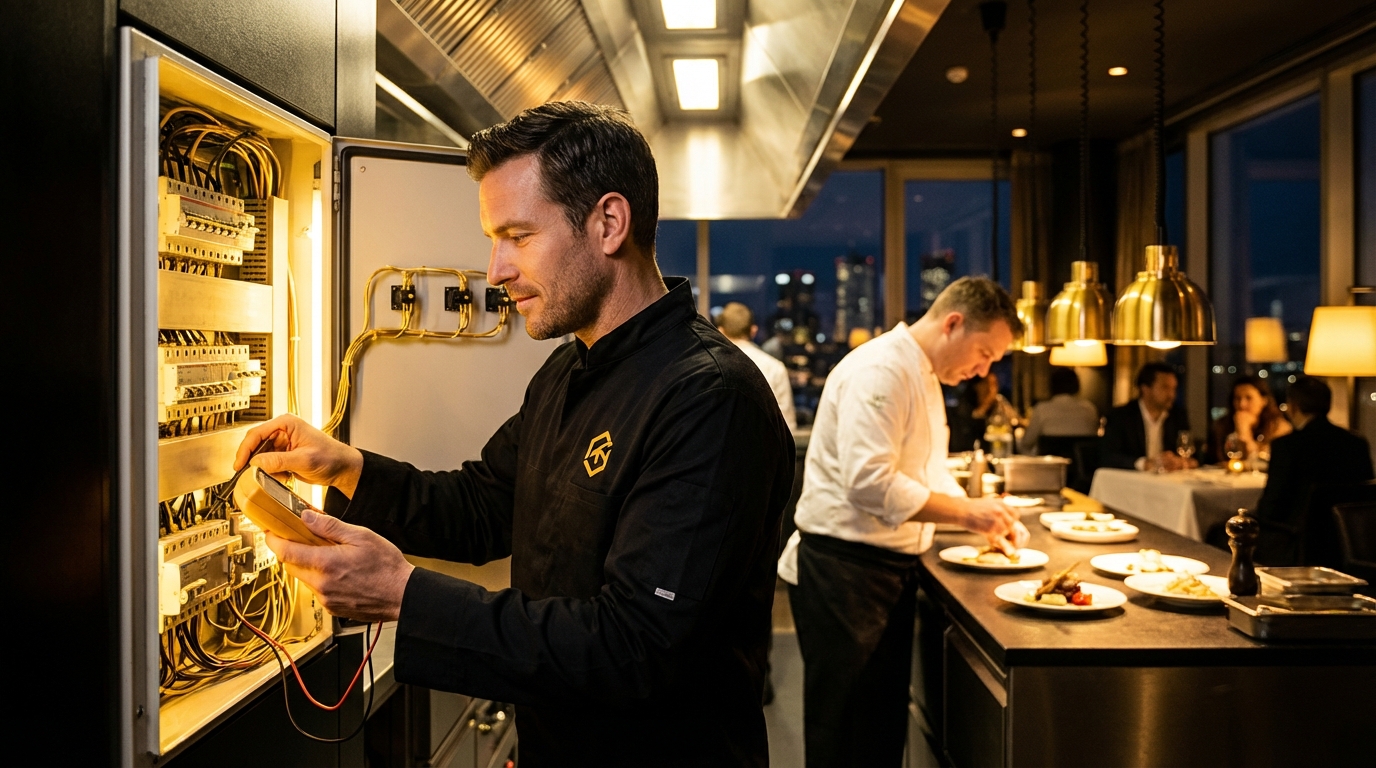
If you run a restaurant in central Iowa, Des Moines electrical contractors matter because they keep your kitchen, lighting, and safety systems working the way you need them to, day after day, during real service hours, not just on paper. Without a skilled electrical team, you risk outages right before dinner, failed coolers, surprise code problems during inspections, and higher utility bills that slowly eat your profit. Working with experienced Des Moines electrical contractors is less about wires and panels, and more about keeping your walk-in cold, your fryers hot, and your doors open.
I know that sounds a bit dramatic, but if you have ever tried to finish a Friday dinner rush by flashlight, you probably agree.
Electricity is as basic to a restaurant as ingredients
We talk a lot about food costs, menu design, staff training, all of that. It is easy to forget that none of it matters if the power is unstable or poorly set up.
Electric work is not just a background detail. It shapes what you can serve, how quickly you serve it, and how safe your space is for guests and staff.
Good electrical work is invisible during service and obvious when it is missing.
If you are planning a new menu or a remodel, or even just adding one more piece of equipment, it helps to think about your electrician almost like another supplier. Not glamorous, but central to how you cook.
What restaurants really need from an electrical system
Before talking about contractors, it helps to lay out what a typical restaurant needs from its electrical system. Most kitchens are not asking for anything fancy. They want three simple things:
- Reliable power that does not trip during rush
- Safety for staff, guests, and equipment
- Enough capacity to grow or change the menu
On paper, that sounds simple. In practice, it touches almost every part of the building.
Kitchen equipment that actually runs at full power
If you stand on the line on a busy night, you know how much is going on at once:
- Multiple fryers heating and recovering
- Flat tops and charbroilers pulling serious current
- Convection ovens cycling
- Salamanders, warmers, heat lamps running nonstop
- Walk-ins and reach-ins starting and stopping
- Dish machines kicking on, often at the worst time
If the electrical design is weak, this shows up in small but annoying ways: a fryer that takes too long to recover, a prep cooler that never really gets cold enough during lunch rush, or the line that keeps losing half its outlets when a breaker trips.
When capacity is too tight, your menu feels smaller than it looks, because you cannot run everything at once without fear of tripping something.
A good contractor looks at your equipment, the power draw, and the way your cooks actually work. Then they size circuits, panels, and outlets so you can run the kitchen the way your tickets demand, not the way a catalog drawing assumes.
Lighting that helps, not hurts
Lighting in restaurants is more than decor. Guests need to read menus. Cooks need to check color and doneness. Dish staff need to see if plates are really clean.
An electrician with restaurant experience thinks about things like:
- Task lighting on prep tables so knife work is safe
- Bright, even light on the line without glare
- Front of house lighting that can dim smoothly but never feels gloomy
- Outdoor and sign lighting that survives Iowa weather
You can ask a general contractor for this, but if the electrical team does not understand how a kitchen actually runs, it is easy to end up with dark corners or bright hotspots that annoy staff and guests.
Cold storage that stays cold, all day and night
Refrigeration is one of the quiet risks in any restaurant. A small electrical mistake here can spoil hundreds or thousands of dollars of food over time.
Common problems when the electrical work is not planned well:
- Shared circuits that overload when a few pieces of equipment start at once
- Undersized wiring that warms up and hurts compressor life
- Poor outlet placement that forces you to run long cords that get damaged
- No dedicated circuits for key coolers or freezers
Good contractors isolate major cold storage units on their own circuits and often suggest surge protection or monitoring so you know if something fails overnight. That might sound like overkill, but one spoiled walk-in can erase months of careful cost control.
Why restaurant work is different from normal commercial work
Some owners think any commercial electrician is fine for a buildout or remodel. I do not fully agree. A restaurant has a unique mix of demands that are easy to underestimate.
| Type of Space | Typical Electrical Needs | Restaurant Specific Issues |
|---|---|---|
| Office | Computers, lighting, HVAC | Rarely high-load equipment, usually steady draw |
| Retail | Lighting, POS, small appliances | Mostly predictable usage, fewer heavy circuits |
| Restaurant | High-load cooking, refrigeration, HVAC, lighting | Huge peaks during service, heat, grease, moisture, safety and code complexity |
That last column is why the contractor you pick really matters. Here are a few points where restaurant work is just tougher.
Load spikes during service
Restaurants do not pull power at a steady rate. Breakfast spots spike in the morning. Dinner houses spike in the evening. Some places spike both. Many kitchens hit near their maximum draw over a short period while the front of house has almost every light on.
A contractor who treats your place like a basic office condo might size shared circuits too tight. That can look fine during a mid-day walkthrough, then fall apart when your grill, fryer, coffee maker, undercounter cooler, and dish machine all run together.
Grease, heat, and moisture
Kitchens are rough on hardware. Sockets near the line see heat, steam, and sometimes grease. Panels in back halls see temperature swings. Exterior boxes get snow and ice.
An experienced restaurant electrician pays attention to:
- Equipment ratings for high temperature or damp locations
- Proper covers and boxes that hold up to cleaning and splashes
- Routing conduit away from the hottest or wettest areas when possible
If you shortchange that part, you end up with outlets that corrode or fail, or breakers that keep tripping once humidity goes up.
Local code and health inspections
Health inspectors do not care who your contractor was. They care that your hot-holding stays hot, your cold-holding stays cold, and your handwashing sinks have proper lighting and outlets nearby without being unsafe.
City and state electrical inspectors worry about panel access, GFCI protection, wiring in walls, outdoor circuits, and many other small details that most owners do not think about day to day.
A good Des Moines contractor does not just pass inspection; they design the work so you are less likely to run into surprise code issues during future remodels or expansions.
Restaurants tend to grow. Add a bar. Add patio seating. Turn a storage room into a dessert station. If the original electrical work leaves no room for this, every future change costs more money and time.
Common electrical problems restaurants run into
You can tell when a restaurant has not had strong electrical support. You see little clues everywhere. I have seen some of these firsthand in places I have worked or visited, and some through owners who share their stories.
Breakers that trip during rush
This is probably the most common complaint. Lights flicker when a big piece of equipment turns on. A part of the line goes dark when both fryers run at full power. The espresso machine and toaster cannot run together without trouble.
Often, the panel is overloaded or circuits are shared in ways that do not match how the kitchen actually runs. An electrician who understands restaurant flow can re-balance loads, add circuits, or upgrade panels so these daily headaches stop.
Old or undersized panels
Many Des Moines restaurants work out of older buildings that started as something else. A small retail unit that became a cafe. A house that turned into a brunch spot. The original electrical service might not match what a real kitchen needs.
Signs that your panel is not up to the job:
- Multiple “tandem” breakers jammed into a small panel
- No spare spaces for new circuits
- Lights dim for a moment when big equipment starts
- The panel feels warm to the touch
An experienced contractor can recommend when an upgrade makes sense and how much capacity you need. That might feel like a heavy cost at first, but compared to losing service or equipment, it often pays for itself over time.
DIY fixes and unsafe shortcuts
This is the uncomfortable part. Some owners, especially in smaller places, try to “make it work” without calling a contractor. Extension cords under mats, splitters, taped outlets, borrowed power from the nearest plug.
Everyone knows it is not ideal. The problem is that these shortcuts can cause fires, shock risks, or repeated equipment failures. Insurance companies, inspectors, and landlords do not react kindly when they see this stuff.
A contractor can usually find cleaner ways to solve the same problems: adding outlets where staff actually need them, pulling dedicated circuits for key gear, and cleaning up old or unsafe wiring.
How electrical contractors support different restaurant styles
Not every place cooks the same way. The needs of a fast casual spot differ from a fine dining room, and both differ from a food truck or ghost kitchen. Good contractors adapt their work to the way you cook and serve.
Fast casual and counter service
In these places, speed matters more than almost anything. The electrical setup can support or slow that pace.
- Multiple POS stations with clean power and backup options
- Line or assembly-style kitchen layouts with plenty of outlets
- Hot holding and undercounter refrigeration near the service area
- Menu board lighting and digital panels that do not flicker or glitch
If the contractor understands your peak volumes and layout, they can wire the space so staff move less and do not fight for outlets or trip breakers mid-lunch.
Full service and fine dining
These restaurants often care more about atmosphere and quiet service flow. Electrical work matters in a different way.
- Smooth dimming controls without hum or buzzing
- Hidden outlets for candle warmers, decor, or accent lighting
- Sound system wiring that does not interfere with POS or kitchen circuits
- Bar equipment power for blenders, coolers, wine storage, and glass washers
Here the contractor helps balance guest comfort with practical service needs. That means placing panels out of guest view but still accessible, and wiring bar areas so bartenders are not tripping on cords or moving gear around to reach outlets.
Ghost kitchens and delivery focused spots
These kitchens often pack a lot of equipment into small spaces. No dining room, more cooking area. That means high electrical density.
Key needs:
- Plenty of dedicated circuits for multiple lines or brands under one roof
- Reliable power for order screens, printers, and routing systems
- Backup or protection for refrigeration in case of short outages
If you want to run multiple virtual brands, your contractor needs to plan for the worst service period, not the average one.
Planning a new restaurant with the electrician at the table
If you are opening a new place or doing a major remodel, it helps to get your electrical contractor involved early. Not as an afterthought once walls are up.
There is a small but real advantage in walking the space with both your kitchen designer and your electrician at the same time. You catch conflicts before they get expensive.
Questions to ask while planning
You do not need to be an expert. You just need to ask clear questions and listen carefully. For example:
- Can this panel handle the equipment list we are planning, plus future growth?
- Where will we have dedicated circuits, and where will things share?
- Are there spots where you would not put outlets because of heat or water?
- What are the most common electrical issues you see in other local restaurants?
- How do we protect refrigeration and critical equipment?
A contractor who works with restaurants should have direct, practical answers. If the answers feel vague or too sales focused, that might be a signal to keep looking.
How good electrical work affects your food
This might sound strange at first: wiring and panels affect taste and quality. Not directly, of course. There is no “flavor breaker” in your panel. But the consistency of your equipment changes what ends up on the plate.
Cooking consistency
If ovens or fryers do not hold temperature because they are running on weak circuits or unstable power, your food changes from batch to batch.
Examples:
- Fryers that struggle to recover temp when multiple baskets go in, leading to greasy fries or uneven browning
- Electric ovens that cycle too widely, so one pan of bread or cookies looks different from the next
- Flat tops that drop in temperature during rush, slowing sears and changing texture
Some of this is equipment quality. Some of it is electrical support. When equipment gets steady power and is wired as the maker intended, your cooks can rely on timing and feel, not guesses.
Food safety and holding
Unstable power can also mess with holding temperatures. That is where you start to brush against food safety risk.
Examples include:
- Prep coolers that struggle to stay under safe temperature because they share circuits with hot equipment
- Undercounter units that randomly warm up at peak load
- Heat lamps that dim slightly under full load, dropping hot-holding temps more than you expect
Food safety is not only about training and procedures; it is also about giving your cold and hot holding equipment the power setup it needs to be reliable.
A contractor who understands this will separate major loads and suggest upgrades where they see risk, not only where something has already failed.
Day-to-day support: why an ongoing relationship helps
Many owners treat electricians like emergency contacts. Something breaks, they call. Problem solved, at least for a while. That approach works in small bursts, but restaurants tend to do better when they have a recurring relationship with a contractor they trust.
Scheduled inspections and quick fixes
Some problems build slowly: outlets that feel loose, GFCI units that trip more often, lights that flicker randomly. A basic, scheduled inspection once or twice a year can catch these before they become service killers.
During these visits, a contractor can:
- Open the panel and check for heat, corrosion, or overloaded circuits
- Test GFCI and AFCI protection, especially near sinks and outdoor areas
- Check key equipment circuits and cord conditions
- Confirm that emergency and exit lighting works correctly
Things you might ignore on a busy day stand out to an electrician who is trained to look for them.
Planning small changes without big surprises
Restaurants rarely stay static. You add a second fryer, a new combi oven, a bigger espresso machine, a dessert freezer. If you call your contractor before you buy, they can help you decide where it should go and what it will take to power it.
This prevents the common pattern of buying first, then discovering you need expensive electrical changes just to turn the new machine on.
Cost, budgets, and what is worth paying for
Many owners worry that contractors will always push for more work than they need. That sometimes happens. You are right to be careful. At the same time, some electrical spending gives you better returns than others.
Where spending often makes sense
- Panel upgrades in older buildings with no spare capacity
- Dedicated circuits for walk-ins, key freezers, and main line equipment
- Lighting upgrades that cut energy use without hurting guest comfort
- Surge protection for critical gear like POS systems and sensitive ovens
These changes reduce downtime, lower repair costs, and often trim utility bills. They also make future changes easier.
Where you can be cautious
On the other side, there are areas where you can push back a little or ask more questions:
- Extra fancy lighting controls that staff find confusing
- Outlets or circuits in areas you know you will never use for equipment
- Top-tier fixtures in back-of-house spaces where durability matters more than appearance
If something feels more like a showroom choice than a kitchen choice, ask what problem it really solves, and whether there is a simpler option.
Picking the right contractor for your restaurant
This might be the hardest part. You want someone skilled and reliable, but not everyone who can wire a building really understands what a busy kitchen faces.
Things to ask before you hire
- How many restaurants have you worked on in the last couple of years?
- Can I talk to one or two restaurant clients you work with regularly?
- How do you handle emergency calls during nights and weekends?
- Who actually shows up on site, and how experienced are they with kitchens?
- Will you walk the kitchen with my chef or kitchen manager and adjust the plan based on how they work?
Contractors who treat restaurants as serious clients usually have solid answers ready. If they talk only in general terms and never mention line flow, equipment loads, or health inspections, that is a mild red flag.
A quick Q&A to wrap things up
Q: My restaurant has never had a major electrical problem. Do I still need to think about any of this?
Yes, but maybe in a smaller way. If you have been lucky so far, a basic inspection and conversation about your equipment list and panel capacity might be enough. You do not need to redo everything. You just want to know where your weak spots are before they surprise you on a busy night.
Q: Is a panel upgrade really worth the money for a small restaurant?
Not always, and anyone who says it is always worth it is overselling. For some small cafes with light equipment loads, the existing panel is fine. For places running multiple high-draw appliances in an older building, the upgrade reduces constant tripping, protects equipment, and makes growth possible. The right answer depends on your actual loads, not just square footage.
Q: Can I handle small electrical fixes myself to save money?
I understand the temptation. Many owners try. Changing a bulb is one thing. Rewiring outlets, panels, or circuits in a commercial kitchen is another. Fire risk, code violations, and insurance problems are real. In most cases, the money saved on DIY work is small compared to the risks and the cost of fixing mistakes later. It is usually better to focus on what you do best, which is running your restaurant, and let people who work with electricity every day handle that part.
Q: What is one simple step I can take this month?
Walk your space with a notepad during a real service. Write down every outlet that feels loose, every light that flickers, every breaker that staff mention as a problem, and any extension cords you see in daily use. Then have a contractor look at that list with you. Fixing just those small points can make your kitchen feel calmer and safer, without a giant project.
Q: How much should I worry about energy costs from electrical issues?
Not every problem is an energy problem. Some are safety or reliability issues. But old lighting, tired motors, and poor circuit planning can raise your bills more than you might think. A contractor can often suggest targeted changes, like better lighting and dedicated circuits for big loads, that help control your monthly costs without changing how you cook.