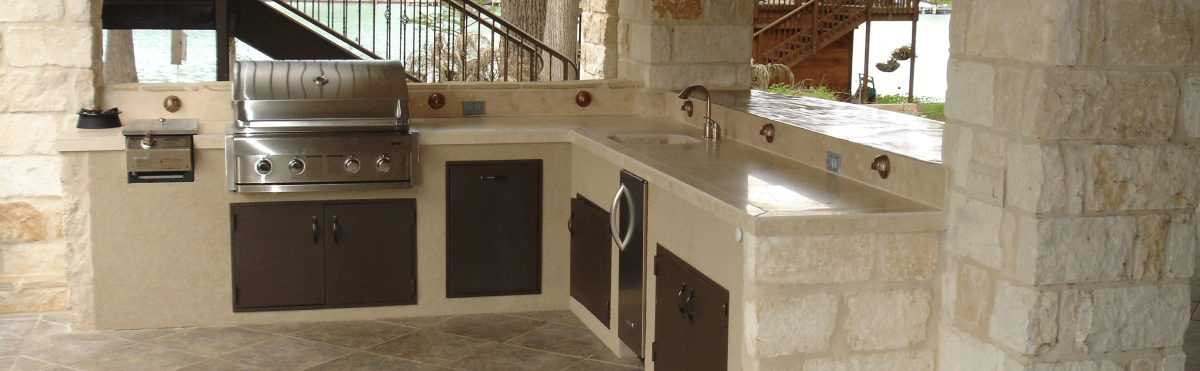

Before service, a kitchen has its own kind of quiet: the walk-in compressor humming, a pot of water just starting to tick before it boils, the scrape of a stone on a knife while somebody checks their station for the fifth time.
I’ve spent years around food trucks, pop-ups and small restaurants, and that quiet only happens when someone planned the work ahead of time. From a few new cabinet pulls to a kitchen remodel in Greenville, the home projects that go well follow the same rule. Here’s how I’d run one the way I’d run a pop-up: scope first, schedule second, and a plan for dinner while the room is torn apart.
Prep: plan the project like a business
Write the scope on one page
Every restaurant has a menu, and the menu decides everything else: what gear you buy, how big the kitchen needs to be, how many hands you need on a Friday night. A remodel needs the same document. Write one page that says what’s changing, what’s staying and what you need the room to do. Cabinets and counters are the obvious items. Add the dull ones too, like where the trash goes and whether two people can work in there at once without a collision.
Then sort the list into three piles: must have, would like, and not now. Anything in the third pile is 86’d, kitchen shorthand for taken off the menu, and it stays off until the project is done. Adding things halfway through is how a small project turns into a big one, and the cost of that mistake lands on you.
Set a budget with a cushion
I can’t tell you what a remodel should cost, and I won’t pretend to, because it depends on the house, the choices and the market. What I can tell you is how an operator thinks about it. Pick the number you’re comfortable with, then hold part of it back for whatever turns up once the walls are open. A reserve you never touch is a nice surprise. A reserve you needed and didn’t have is a stopped project.
If you’re borrowing for the work, talk to your bank or a financial adviser about how to pay for it. That’s their job, not a cook’s.
Do the paperwork before the demolition
Do this part before the first crowbar swings and the house starts to smell of sawdust and primer, because nobody makes good decisions in the middle of the noise. Ask the local building department which permits your project needs and who is responsible for getting them. A good contractor will walk you through that without being asked, and will show you their license and proof of insurance when you request them. Get the agreement in writing, with the scope, the schedule, how payments tie to progress and how changes get priced. If any of it confuses you, have a lawyer read the contract before you sign.
One more thing if you sell food made in your home kitchen: the rules for that space vary by place. Call your local health department or licensing office before demolition day and ask whether a remodel changes anything about your approval.
Chef’s note: Keep one notebook for the whole project and write every question in it before each visit from the contractor. An answer you wrote down is worth more than a promise you remember, and it’s easy to find when two people remember it differently.
Cook: keep dinner moving while the room is gone
Build a temporary kitchen
Working out of a food truck teaches you that a kitchen can fit in a very small box as long as every tool has a place. Set up your temporary kitchen well away from the work zone, because the dust from drywall settles on everything and tastes like chalk. A table, a cooler or spare fridge, a kettle and one or two small countertop appliances, such as a slow cooker or a microwave, will carry you a long way.
Ask your contractor which outlets are safe to use during the work, and don’t improvise with extension cords. Anything that touches power, gas or water lines belongs to licensed professionals. Plan a dish station as well: running water, a tub and a rack to dry things on, somewhere you’d be comfortable washing a cutting board.
Stock the freezer before day one
The best prep for a long disruption is batch cooking. Make a few simple meals, such as soups, braises or casseroles, and freeze them in labeled containers so dinner is a reheat, not a decision. Pack the pantry into boxes labeled by category, wrap your knives well and put the cast iron in a sturdy box that won’t split. Humid summers are hard on cardboard, so store the boxes somewhere dry.
Keep one tote of everyday items within reach: a good pan, a knife, a cutting board, salt and oil. When you’re hungry at six in the evening with nothing unpacked, that tote earns its space.
Meet the schedule every week
When a kitchen is in the weeds, meaning so far behind that every new order makes it worse, the cause is almost never slow cooking. It’s a decision nobody made in time. Remodels fail the same way. Ask your contractor for the order of work, set a weekly check-in and ask what happens if a delivery runs late.
Choose appliances and finishes early, because cabinet openings, plumbing and wiring all depend on them. Changing your mind after the cabinets are built costs time and money, and that is the most expensive kind of change in a project like this.
Plate: finish it and live in it
Walk the punch list
At the end of a build-out I walk the space with a pen and a list before I call it done. Do the same in your own kitchen. Open every drawer and listen for the soft click of a good close, run every tap, switch on every light, and check the doors and the lines of caulk. Write down whatever’s off and hand the list to your contractor, with a date for each fix. Check your agreement for when the last payment is due, so the list gets finished and doesn’t get forgotten.
Set the new kitchen up to last
Run the range hood whenever you cook. Steam and grease have to go somewhere, and in humid weather they linger on cabinet doors and walls. Wipe spills the same day, and ask the contractor to write down how to care for each surface. A countertop that’s treated right looks good for years, and one that’s treated wrong shows it quickly.
Chef’s note: Make one folder, paper or digital, for the contract, the permits, the receipts, the appliance manuals and the names of everyone who worked in your house. When something needs service years from now, you’ll know who to call and what was installed.
Clean down
At the end of every shift, I write tomorrow’s prep list while the details are still fresh, and I recommend the same habit once the remodel is done. Jot down the drawer that sticks, the grout line that needs touching up, the question for the installer, and handle it on a set day each month. It’s a small habit, it keeps a new kitchen from slowly sliding back into a list of problems, and it works in a food truck and in a family kitchen alike.