If you own a restaurant in New Jersey, you need a working sump pump if there is any risk of water getting into your basement, crawlspace, or lower level. It protects your kitchen equipment, food storage, and electrical systems from flooding, and it can be the difference between a normal dinner rush and a shut-down with health inspectors involved. If you are thinking about sump pump installation New Jersey, the short answer is: yes, it matters, and yes, it should be planned carefully, not at the last minute after a storm.
Water problems are not the most fun topic for people who love food. Still, if your walk-in is downstairs or your liquor inventory sits near the floor, moisture and flooding can quietly ruin your day. I have seen owners shrug off a tiny leak near the dry storage room, then months later complain that half their paper goods smell musty. It creeps up on you.
New Jersey weather does not really help. You get heavy summer thunderstorms, snow melt, nor’easters, and random days where the streets feel like small rivers. If your building has an older foundation, you are dealing with constant pressure from groundwater. A sump pump is not a fancy upgrade. It is more like a hidden appliance that keeps the rest of your equipment safe, a bit like a hood system that no guest ever sees but everyone depends on.
How a sump pump connects to your restaurant operation
Let me start with something practical. Flooding is not just a mess to mop up. It touches almost every part of a restaurant:
- Food safety
- Health inspections
- Insurance claims
- Labor scheduling
- Equipment downtime
If water backs up in your basement, you might lose:
- Cases of dry goods like flour, sugar, and paper products
- Stored wines and spirits kept in cooler basement rooms
- HVAC units or water heaters
- POS servers if they live in a network closet downstairs
A working sump pump is one of the few building systems that quietly protects your food inventory, your staff safety, and your ability to stay open during storms.
When inspectors walk through, they do not want to see damp walls, standing water, or mold on baseboards. Those things hint at neglect. Even if your kitchen is spotless, a wet storage room can raise questions.
So yes, talking about concrete pits and pumps is not glamorous. But for a restaurant, especially in New Jersey, it is about staying open, avoiding mold, and keeping repair bills under control.
Quick explanation of how a sump pump works
If you are not a building person, the idea is simple:
- There is a pit (called a sump pit) in the lowest part of your basement or crawlspace.
- Water collects in that pit, either from groundwater or from perimeter drains.
- When the water level rises, a float or sensor tells the pump to turn on.
- The pump pushes the water out of the building through a discharge pipe.
When the pump turns off, the water level in the pit drops. The room stays dry. That is the whole story. But the details around location, power, backup systems, and discharge can get more involved, especially in a restaurant with a lot at stake.
Why New Jersey restaurants need to think differently about sump pumps
New Jersey has a wide mix of buildings. Some restaurants sit in old brick structures on tight streets. Others are in small shopping centers with shared walls and complex drainage. The same basic pump works in both kinds of places, but the risks and rules are not quite the same.
Typical water risks in New Jersey restaurant buildings
You might face one or more of these:
- High groundwater after days of rain
- Hydrostatic pressure against old foundations
- Poor exterior drainage on crowded lots
- Snow melt that seeps through basement walls
- Neighboring buildings that push water toward your property
Owners sometimes tell themselves that “it only happened once” after a storm. But water problems often repeat, just not always in the same way. A summer thunderstorm may not match a winter storm with frozen ground and sudden thaw. So judging risk off one season can be misleading.
If water has entered your basement even one time, you should treat that event as a warning, not a fluke.
This is even more true for restaurants with below-grade kitchens or prep areas. If your cooks are working a few feet below the sidewalk, you are depending on that sump pump every minute of every shift, whether you see it or not.
Types of sump pumps and what works best for restaurants
The two main types are simple:
| Type | How it sits | Pros | Cons | Good for restaurants? |
|---|---|---|---|---|
| Submersible pump | Lives inside the pit, under water | Quieter, safer to walk around, handles more water, cleaner look | Harder to inspect at a glance, service can be trickier | Usually the best choice for busy kitchens and storage areas |
| Pedestal pump | Motor sits above the pit, only the intake is in the water | Easy to reach and service, simple to replace | Louder, exposed parts, easier to bump or damage | Works in low-traffic storage, not ideal where staff move fast |
For a restaurant, noise and safety matter. You do not want staff tripping over exposed equipment or hearing a loud motor kick on during a quiet service. That is why submersible pumps are usually better in these settings. They stay out of the way.
Primary vs backup pumps
Restaurants depend heavily on power. When a big storm hits, you may lose power right when you need drainage the most. A single pump tied only to the main electrical panel is a risk. Many New Jersey restaurant owners now use:
- A primary electric submersible pump for daily use
- A battery backup pump or a second pump on a different circuit
- Sometimes a generator connection that keeps the primary pump running
I think backup pumps feel like buying extra insurance. You hope to never see them running. But when you do need them, it is usually on the worst day of the year, with phones ringing and staff asking if the shift is canceled.
Planning sump pump installation in a restaurant space
Before anyone cuts concrete, you should look at how your restaurant actually uses the space. Not just the blueprint, but the daily movement of people, carts, and deliveries.
Questions to ask yourself
- Where is your lowest floor, and what sits there? Dry storage, keg room, walk-in, office?
- Has water entered the building before? If yes, from where?
- How close are electrical panels and gas lines to possible pump locations?
- Do you have grease traps, floor drains, or trench drains nearby that might interact with drainage?
- Where can the discharge pipe go without bothering neighbors or freezing outside?
Some owners skip this step and just let a contractor pick any corner for the pit. That works on paper but sometimes creates minor problems later, like having to push heavy product carts over a small raised lid, or dealing with a constant hum near a quiet dining room wall.
Choosing a location for the sump pit
A good location usually has:
- The lowest floor level in the space
- Enough room for a pit, pump, and service access
- Reasonable distance to an exterior wall for discharge piping
- Clear space overhead for electrical connections
At the same time, you want to avoid:
- The middle of your main walking paths
- Areas under heavy freezers or cooklines that might move later
- Right next to sound-sensitive zones like a quiet bar or private dining room
There is a small trade-off here. The best hydraulic location is not always the best operational spot. A good installer who has worked in food service buildings can talk through those choices with you. If the person planning the job ignores how your staff moves through the space, that is a red flag.
Basic steps of sump pump installation
I will keep this in plain terms. Here is what usually happens during a typical install in a basement or lower level.
1. Assessing the site
The installer will usually:
- Measure the lowest points of the floor
- Check for signs of past water (stains, efflorescence, mold)
- Identify existing drains and plumbing
- Confirm where the discharge pipe can exit and drain safely
In a restaurant, they also need to think about health rules. For example, discharge cannot go into a sanitary sewer without proper approval. Eye-level inspections of piping and code issues matter here.
2. Cutting and digging the pit
The crew cuts a circle in the concrete floor and digs the pit to the right depth. This step is noisy and dusty, so it is typically done during off-hours. Many restaurants schedule this on a closed day or early morning before prep.
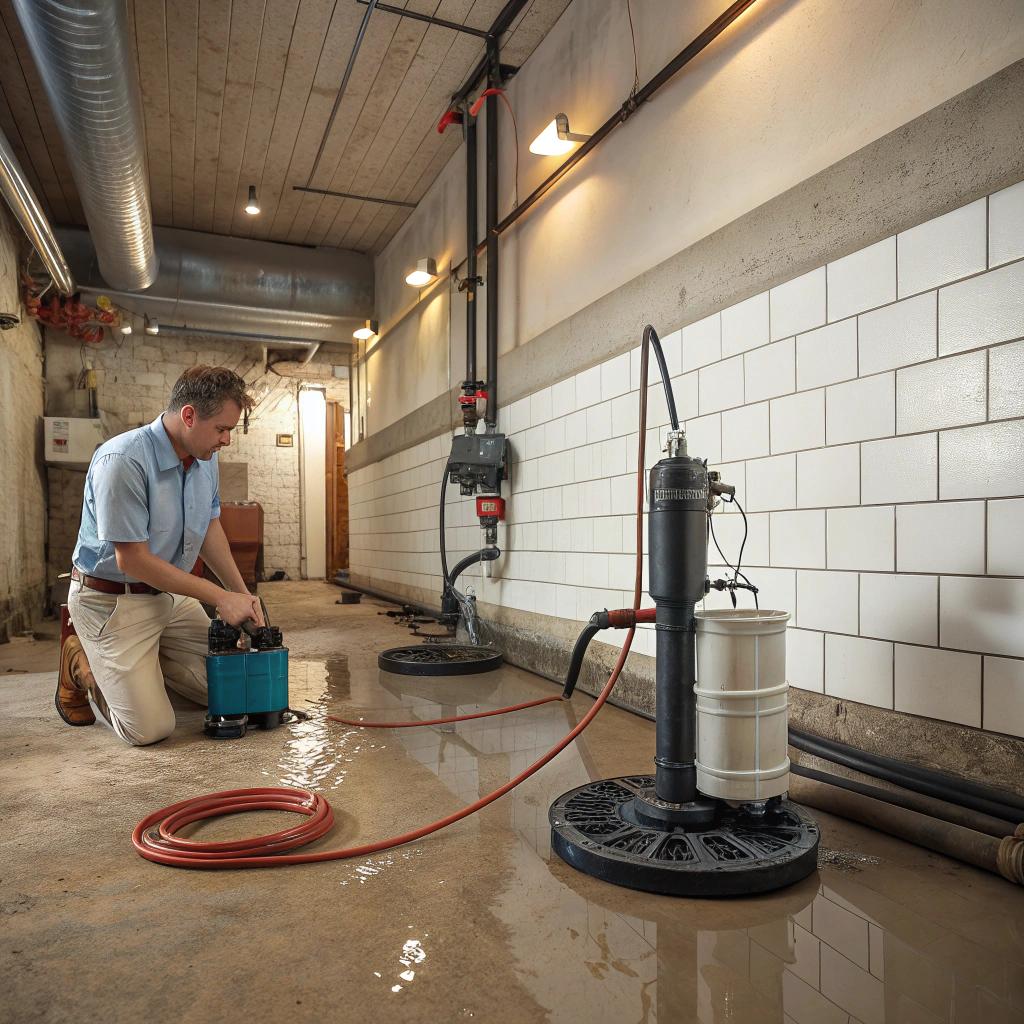
The pit often holds a sump basin, which looks like a heavy plastic bucket with holes or slits. That basin keeps soil from collapsing into the pump.
3. Installing the basin and pump
The basin gets leveled and set into the pit. The pump then goes inside, with the float or sensor placed so it triggers at the correct water level. Getting that level right matters. If the pump kicks on too late, water can rise over the floor. If it kicks on too early, the pump short cycles and wears out faster.
4. Connecting the discharge line
This part can make or break the system. The discharge pipe:
- Rises from the pump outlet
- Passes through a check valve that stops water from flowing back into the pit
- Runs horizontally to an exterior wall or other approved exit
- Exits outdoors and drains away from the foundation
In New Jersey winters, the outdoor section has to handle freezing temperatures. If the outlet area turns into an ice block, water backs up and the pump struggles.
5. Power and alarms
The pump connects to a dedicated electrical circuit, often with a GFCI outlet. For a restaurant, it is smart to think beyond the bare minimum:
- Battery backup system for power outages
- Water level alarm that sounds if the pump fails
- Optional text or app alerts tied to building monitoring
Imagine getting a call at 3 a.m. from a smart alarm that water is rising, instead of walking into a flooded basement at 10 a.m. when prep is supposed to start. Both situations are stressful, but one gives you a chance to act.
6. Testing the system
After installation, the installer should fill the pit with water and watch the pump work. You want to see:
- The float rising and turning on the pump
- Water exiting at the discharge point outside
- The pump turning off at a safe level
Do not accept a new sump pump without seeing it run through at least one full cycle with your own eyes.
This is like a test fire for an oven. You would never accept a new range without turning on the burners. Same idea here.
New Jersey codes and practical rules restaurants should know
I will avoid legal language here, but restaurants have some extra layers compared to a normal house.
Permits and inspections
Many towns in New Jersey require permits for sump pump installation, especially if it affects electrical, plumbing, or exterior drainage. A licensed contractor will usually pull the permit and schedule inspections. If someone says “we do not need any permits, we just show up and drill,” that is not comforting.
Permits matter because:
- They protect you with your insurance company
- They help with future building sales or lease changes
- They create a record if inspectors ask questions later
Where the water can go
Most towns do not allow sump pumps to discharge into sanitary sewers. The goal is to send pumped water to:
- A storm sewer, if allowed
- A safe distance away from the building foundation
- An approved drainage area that does not affect neighbors
In tighter commercial areas, this can get tricky. Some restaurant owners think of just running a hose to the curb. That might create icy sidewalks in winter or muddy areas in warm months, which can be a liability problem.
Health and safety intersections
Your health inspector may not mention sump pumps by name very often. But they do care about:
- Standing water in storage rooms
- Mold or mildew on walls and framing
- Wet conditions that attract pests
You do not want water problems to create hidden spots where insects or rodents thrive. From a pest control point of view, a dry, well-ventilated basement is much easier to manage.
Protecting food, equipment, and staff with proper design
If you are planning a new sump pump system, think of the whole lower level, not just the pit.
Floor layout around the pump
Try to keep:
- Dry goods and packaging on raised shelving
- Heavy equipment on small platforms where practical
- Clear walking paths around the pump lid
Do not store flour bags or paper takeout containers directly on the floor near the pump pit. Even if the pump works well, there can be moments during storms when humidity spikes or small splashes occur during service work.
Power reliability
For restaurants with a lot of value in the basement, pairing the sump pump with:
- A generator or at least a strong battery backup
- A clear labeling of the pump circuit on the panel
- Simple rules for staff not to unplug the pump for extra outlet space
It sounds silly, but someone looking for a place to plug in a temporary fridge during a busy night might unplug the sump pump by mistake, not realizing what it does. Clear labeling and some basic staff awareness prevent that.
Routine maintenance for New Jersey restaurants
Sump pumps are not install-and-forget. They sit in dirty water and deal with fine sediment. In a commercial setting, neglect becomes expensive quickly.
Simple checks you or your staff can handle
- Once a month, look at the pit. Check for trash, plastic, or debris.
- Every few months, pour water into the pit to trigger the pump.
- Listen for unusual sounds like grinding or repeated short cycling.
- Make sure the discharge line outside is clear and not blocked by ice or debris.
You do not have to be an engineer for this. It is like walking the line before service and checking burners, fridges, and dish machines. A quick look can save a big mess later.
Professional servicing
Once a year, most commercial spaces should have a professional look at the pump, especially if:
- You have had past flooding issues
- You have valuable equipment or inventory downstairs
- Your building sits in a known wet area
Service often includes:
- Checking pump capacity against current needs
- Cleaning the basin and intake
- Inspecting the check valve and discharge line
- Testing backup systems and alarms
It is easy to delay this when things feel calm. People usually care most right after a storm, then they forget. If you can, tie maintenance to a fixed calendar point. For example, “Every April before heavy spring rains, we test and service the pump.” Having a set month makes it less likely to slip.
Common mistakes restaurant owners make with sump pumps
I have heard some of these patterns again and again from owners.
1. Waiting for a disaster first
Some owners consider a sump pump only after a flood has already shut them down for days. That is understandable, but it often leads to rushed decisions and quick fixes. It is cheaper and less stressful to plan before that point.
2. Treating it like a residential system when it is not
A small pump that would be fine for a house might not keep up with a large commercial footprint under heavy rain. Restaurants with big basements, long exterior walls, and complex drainage need bigger capacity and better backups.
3. Ignoring noises or odd behavior
Short cycling, strong vibrations, or visible rust are not “normal quirks.” They are early warnings. Waiting until full failure can double or triple your costs, once you add in cleanup and lost product.
4. Poor coordination with other building systems
Sometimes the sump pump sits near grease traps, floor sinks, or other plumbing. If one contractor changes plumbing and does not think about the pump, that can cause trouble. Whenever you remodel, ask how the planned work might affect drainage and sump performance.
Balancing cost with risk for New Jersey restaurants
You might be wondering how far to go. Not every restaurant needs an oversized pump, battery system, generator link, and smart alarms. On the other hand, some do. It depends on:
- Your flood history
- The value of what lives in the basement
- How hard it would be to recover after a shutdown
Here is a simple way to think about it.
| Situation | Suggested setup |
|---|---|
| Small restaurant, dry basement, little stored downstairs | Single submersible pump, basic alarm, yearly check |
| Medium restaurant with dry storage and some equipment below grade | Primary pump, battery backup, clear discharge, semi-annual checks |
| Large restaurant or multi-unit space with critical equipment in the basement | High-capacity primary pump, secondary backup pump, generator plan, alarms with remote alerts, scheduled service |
You can overbuild, of course. Spending heavily on a complex setup in a bone-dry building might not make sense. But many New Jersey restaurant basements are not dry by default. They sit close to water tables, near rivers, or in dense areas with limited drainage. In those locations, erring slightly toward caution makes sense.
How sump pump planning connects back to your food program
It might feel strange to connect drainage to your menu, but they do relate in a loose way. Your ability to prep consistently, keep food safe, and run events depends on the building staying dry and predictable.
If your staff is moving racks of dry goods every time it rains, or if you avoid storing wine downstairs because of dampness, that is not just a building flaw. It is a limit on how you operate. A solid sump pump setup can quietly expand what you feel comfortable doing with your space.
I have seen some owners start to use their once-ignored basements more confidently after they fixed water issues. They built better wine programs, added extra prep areas, or created more efficient storage. That is not marketing talk, it is just what happens when part of your building becomes stable instead of risky.
Q & A: Common restaurant questions about sump pump installation in New Jersey
Q: Do I really need a sump pump if my restaurant has never flooded?
A: Not always. If your building sits on high ground and has a long, dry history, you might be fine. Still, it is smart to look for small signs: musty smells, damp spots, efflorescence on walls, or dark lines near the floor. If any of those exist, a basic assessment is worth it.
Q: Can my kitchen staff take care of sump pump checks, or do I need a contractor every time?
A: Staff can handle basic checks. A quick monthly look at the pit and a test run with a bucket of water are simple tasks. For yearly in-depth cleaning, wiring checks, and capacity questions, a professional is better. Think of it like the difference between daily fryer cleaning and professional hood service.
Q: Is a battery backup really necessary, or is that overselling the risk?
A: In some buildings it might be more than you need. In areas with frequent outages, or if your most valuable assets are below grade, I think a backup is reasonable protection. Power often fails during the same storms that raise groundwater.
Q: Will a sump pump solve every basement moisture problem in my restaurant?
A: No, not by itself. It handles liquid water that collects at the lowest point. For wall seepage, condensation, or roof leak paths, you may need other repairs. But for groundwater and many flood events, a pump is the main defense.
Q: How long does a sump pump last in a busy commercial setting?
A: Many pumps last 5 to 10 years, sometimes more, sometimes less. Heavy run time, dirty water, poor maintenance, or undersized equipment can shorten that. Having someone track installation dates and replacement plans in your maintenance log helps avoid surprise failures.
Q: Can I run kitchen wastewater or mop sink water into the sump pit?
A: You should not. Sump pits are for clear or slightly dirty groundwater, not greasy or food-laden water. Sending kitchen waste into a sump can clog the pump, cause smells, attract pests, and run into code problems.
Q: What is one simple step I can take this week if I am not ready for a full project?
A: Walk your basement or lower level with fresh eyes. Look at corners, under stairs, near exterior walls, and behind stored items. If you see any sign of old water lines, staining, or mold, take a few photos and date them. Then, next heavy rain, look again. If those signs grow or change, it is probably time to talk with a sump pump or waterproofing professional before the problem grows larger.