If you run a restaurant and rely on a septic system, you should plan a regular septic tank pump out every 1 to 3 years, watch for early warning signs like slow drains or bad smells, train your kitchen team to keep grease and food waste out of the drains, and keep simple records so you can fix small problems before they shut your kitchen down.
That is the short version. Now let us walk through what that really means in day to day restaurant life, because it touches the kitchen, the bar, the bathrooms, and even your team culture more than people expect.
Why septic care matters more for restaurants than homes
A home kitchen might cook dinner once or twice a day. Your kitchen could be pushing out food for 8 to 16 hours straight. That is a very different amount of:
– Water
– Grease
– Food scraps
– Cleaning chemicals
All of that ends up in the pipes.
Residential advice usually says “pump the tank every 3 to 5 years”. For many restaurants that is simply too long. By the time you see obvious problems, you are already close to backups, bad smells, or health inspection trouble.
You do not need to obsess over the system every day, but you cannot treat it like it is invisible either. Think of it a bit like a walk-in fridge. You do not see the compressor, but you respect it because if it dies in the middle of service, you feel it right away.
For most restaurants on septic, the tank should be pumped every 1 to 3 years, depending on volume, size, and how well the kitchen controls grease and solids.
If you are serving a steady stream of guests, especially with a busy fryer and heavy dishwashing, leaning toward the short end of that range is usually safer.
How a septic tank actually works (without the jargon)
Understanding the basics helps the pump out schedule make sense.
Here is the simple version of what happens after you or your staff hit the sink handle.
The three layers inside your tank
Inside the tank, the waste water separates into layers:
– Top: a floating layer of grease, oils, and fats (often called “scum”)
– Middle: relatively clear water that flows out to the drain field
– Bottom: solids that sink and turn into “sludge”
Bacteria in the tank break some of this down over time, but not all of it. Grease and sludge slowly build up. If they get too thick, they start to move out of the tank and into the drain field pipes.
That is where the real trouble starts. Clogged drain fields are slow to fix and can get expensive. A pump out is not magic, it just removes the scum and sludge before they escape.
What a pump out actually does
A proper pump out:
– Removes sludge from the bottom
– Removes grease and scum from the top
– Lets the technician measure how full those layers were
– Gives a quick look at the walls and baffles for damage
If someone only sucks water off the top, that is not a real pump out. It might make the tank look “empty” at a glance, but it leaves the heavy build-up behind, which sort of defeats the point.
Ask your pumper to show you the sludge and scum levels before and after. You do not need to watch every second, just confirm it is not a quick splash and dash job.
Some owners do not like to ask questions because they feel they should already know. I think it is better to ask once and then you understand it for years.
How often should a restaurant pump its septic tank?
The honest answer is that no single schedule fits everyone. A small cafe with mostly coffee and sandwiches is not the same as a steakhouse with a busy bar and deep fryer.
Still, you can get close with a basic guide and then adjust.
| Restaurant type / volume | Kitchen style | Suggested pump out frequency |
|---|---|---|
| Small cafe, 20–40 seats | Light cooking, limited frying | Every 2–3 years |
| Medium restaurant, 40–80 seats | Regular cooking, some frying, steady lunch/dinner | Every 1–2 years |
| Busy restaurant, 80+ seats | Heavy cooking, multiple fryers, bar, long hours | Every 12 months |
| High volume venue or function center | Events, buffets, frequent large groups | Every 6–12 months |
This table is not a legal rule. It is just a starting point. The right schedule depends on:
– Tank size
– Local rules
– Whether you have a separate grease trap
– How your team handles food waste and cleaning
One practical approach is to start with the shorter interval, then ask the technician for feedback. If after a year the sludge and scum layers are still thin, you can sometimes stretch it. If the tank is already quite full, you might even shorten the gap.
Warning signs your restaurant tank is overdue
Many restaurant owners only call for a pump out when something feels wrong. At that point, they are reacting, not planning.
Here are some common signs, from mild to urgent:
Early signs
- Water in sinks drains slower than usual, especially during service
- Toilets that used to flush strongly now seem weak or need a second flush
- Bubbles or gurgling sounds in sinks or floor drains when other fixtures run
These do not always mean a septic emergency, but they are worth taking seriously if they appear together or get worse.
Mid level warnings
- Occasional whiffs of sewage smell near floor drains or outside near the tank
- Wet or soft ground above the drain field area, even when there has been no heavy rain
- The grease trap seems to fill much faster than normal
At this point I would not wait. Call someone, because you still have a chance to fix it without serious damage.
Serious red flags
- Sewage backing up into sinks, toilets, or floor drains
- Strong, constant sewage odor in or around the building
- Brown or gray water surfacing in the yard or car park
That is not just a plumbing issue. It can lead to health inspection problems and may force you to close for at least part of a day.
If your restaurant reaches the point where sewage is backing up, you are seeing the result of a long term build up, not a one day problem.
So the real win is to act much earlier, when the signs are subtle.
How the kitchen affects your septic tank
Most strain on the septic system comes from two places:
– The kitchen and bar
– The bathrooms
The bathrooms are fairly simple. Your team and guests use them, you keep them clean, and you cannot change that much. The kitchen is different. Small daily choices can change how hard the septic system has to work.
Grease is the main enemy
Hot grease down a drain might seem harmless in the middle of service. It is liquid, it moves quickly, and the line needs to keep moving. Then it cools.
When that happens, it sticks to pipes, the grease trap, and even the tank itself.
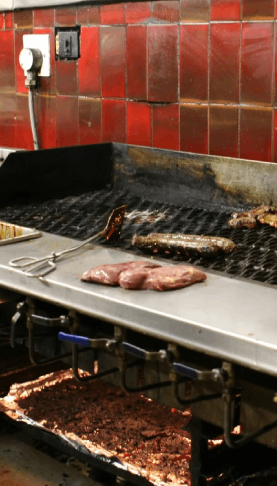
If you run a fryer, grill, or even a busy flat top, grease is part of life. The trick is to keep as much of it as possible out of the drain lines.
Good habits include:
- Scrape plates and trays into the bin before rinsing
- Use sink strainers and actually clean them often
- Pour used cooking oil into collection containers, not the sink
- Wipe greasy pans with paper before washing
If this feels like extra work, think about it this way. Every minute the team spends scraping and wiping is usually less time spent dealing with clogs, smells, or angry guests later.
Food scraps and solids
Some kitchens rely heavily on garbage disposals. From a septic point of view, that can be rough.
Ground up food still behaves like solid waste in the tank. It just gets there faster because there is more of it. That means faster sludge build up and more frequent pump outs.
You do not have to rip out your disposals, but you can limit what goes into them:
– Avoid sending large amounts of peelings, pasta, rice, or fibrous foods down the drain
– Make compost or food waste bins part of your prep routine
– Treat the disposal like a backup, not the main waste path
Rice and pasta are sneaky problems. They swell with water and can clog pipes before they even reach the tank.
Cleaning chemicals and hot water
Most restaurants use strong cleaning products and very hot water. Both are helpful for hygiene. At the same time, they can affect the bacteria in the tank that help break down waste.
You do not need to switch to weak cleaners, but you can:
– Avoid pouring pure chemical concentrates down drains
– Try not to empty large buckets of sanitizer into the same drain all at once
– Spread heavy cleaning jobs through the day instead of one huge dump at closing
Balanced use keeps the tank bacteria alive, which in turn keeps the system more stable.
Working with your grease trap, not against it
If your restaurant has a grease trap, it should sit between the kitchen drains and the septic tank. Its job is to catch fats, oils, and grease so they do not pack into the tank or drain field.
That only happens if the trap:
– Is the right size
– Is cleaned on schedule
– Is respected by the kitchen team
How often to clean the grease trap
A simple rule many people use is the “25 percent rule”. When the trap is about one quarter full of grease and solids, it needs cleaning.
If you ignore it, several things happen:
– Grease starts slipping past the trap into the septic tank
– Smells build in the trap itself
– The chance of clogs increases
Most busy kitchens need service every 1 to 3 months. Some fast food places need it more often. A quiet cafe might get away with less.
It is easy to forget about the trap because you do not usually see it. Putting a recurring reminder on your calendar and having a service company on file can keep it from becoming an emergency.
Planning a pump out around service
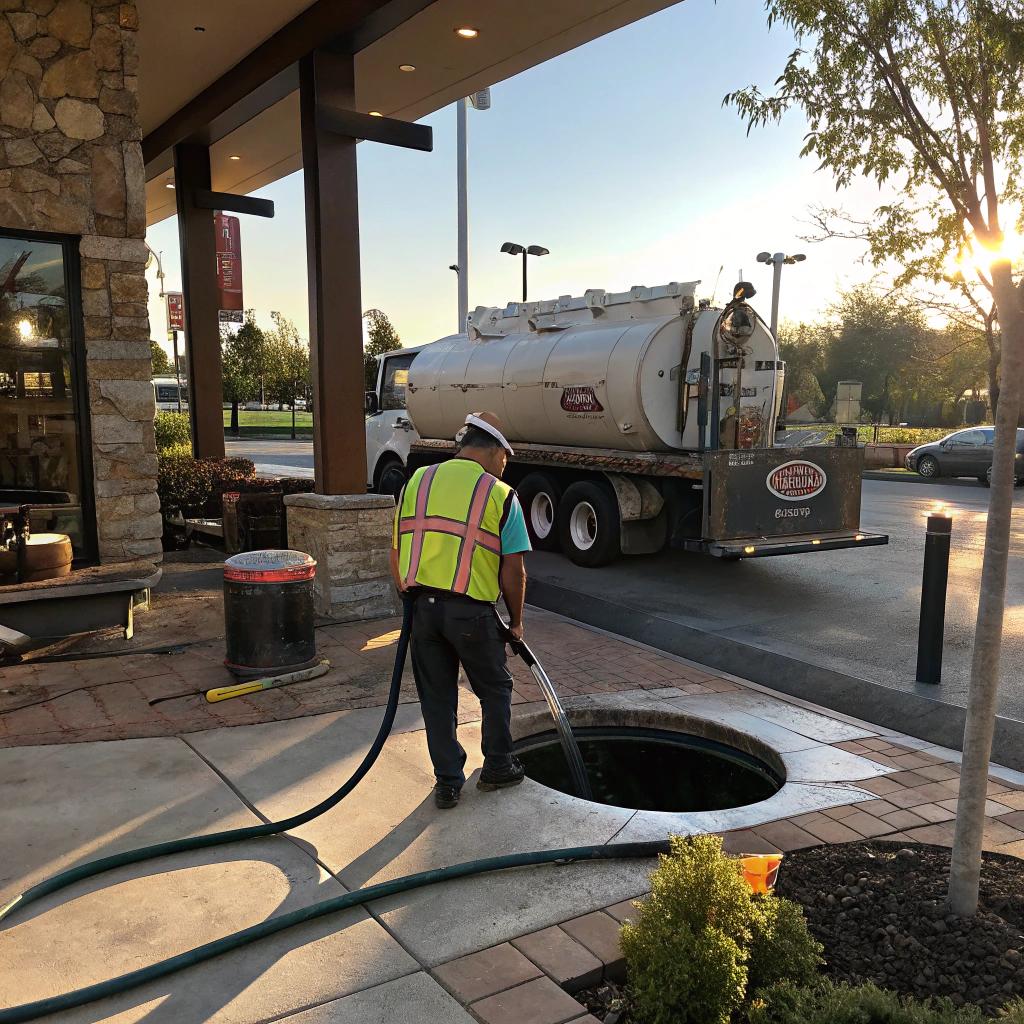
One worry restaurant owners have is downtime. No one wants a vacuum truck parked outside during Friday dinner.
You can avoid most disruption with some planning.
Choose your timing
These time slots usually work best:
– Early morning, before prep starts
– Mid afternoon, between lunch and dinner
– A scheduled closed day, if you have one
Talk openly with the service company and say when your peak times are. Some will be happy to work early or slightly later to avoid clashes.
What your team should do before the truck arrives
It helps to:
- Know exactly where the access lids are and make sure they are not buried under supplies or furniture
- Clear a path for the hose so it does not cross busy service areas
- Tell your chef or kitchen lead about the visit so they can plan prep around it
One small detail that gets overlooked is smell. Pump outs can release odors for a short time. Ventilation helps. Choosing a quieter time of day does too.
Working with professionals without feeling lost
Many owners feel at a disadvantage when they talk to septic contractors. The jargon can be heavy, and you might worry about being over serviced.
You do not need to become a technician. You just need a few clear questions.
Questions that actually help
When the company finishes a pump out, ask:
- “How full were the sludge and scum layers before pumping?”
- “Based on what you saw, would you suggest a shorter or longer interval next time?”
- “Did you notice any damage to baffles, lids, or pipes?”
You can write their answers right on the invoice or in a small logbook. Over a few years, you will see if things are getting better or worse.
You might not agree with every suggestion they make. That is fine. If someone pushes for much more frequent pumping without clear reasons, ask them to explain in plain language. If the explanation feels vague, you can always ask for another opinion later.
Keeping a simple septic logbook
Many restaurants track food cost, labor, and sales in great detail, but have almost no records for plumbing or septic work. That seems a bit backwards, given how much damage a single major backup can cause.
You do not need fancy software. A basic notebook or simple spreadsheet is usually enough.
Here is what to record:
- Date of pump out or grease trap clean
- Company name and contact
- What they did (full tank pump out, grease trap service, both, etc.)
- Their comments on sludge/grease levels or any damage
- Their suggested next service date
Over time, you can adjust your schedule based on real patterns, not just guesses. You will also have proof for regulators or landlords that you have taken care of the system.
A two minute note after every service visit can save hours of stress when something finally goes wrong.
I used to think I would remember details like “we had that backup right after the long weekend”. I did not. Writing it down is easier than trusting your memory through busy seasons.
Training your team without overwhelming them
Your cooks and dish staff already have a long list of things to remember. Still, a few simple septic friendly habits can be built into normal training.
Short points to include in staff training
You can share things like:
- “Grease goes in the bin or oil drums, not down the sink.”
- “Scrape plates before rinsing. Food in the bin, not the drain.”
- “If you see water draining slowly, tell the manager before it gets worse.”
- “Do not pour full buckets of chemicals or mop water into small sinks.”
You do not need a long speech. Often, one or two clear lines in your onboarding chat, backed by example from senior staff, are enough.
If the team understands that keeping drains clear protects their own work area, they are more likely to care. No one enjoys scrubbing a floor drain at 10 pm because a pipe clogged during service.
Common septic myths in restaurants
There are a few ideas that keep coming up, and they are not always correct.
“If the toilets flush, the tank is fine.”
Toilets can keep flushing even when the tank is too full. Often the first signs are outside, in the drain field, where no one looks. By the time backing up reaches the bathroom, the problem has grown.
“Additives mean I can skip pump outs.”
Some products claim to “eat all the sludge” and remove the need for pumping. In real life, they might help bacteria, but they do not remove all solids. You still need occasional pump outs.
Relying only on additives is a bit like relying only on air freshener when the garbage is full. It might smell better for a while, but the bin is still full.
“More water will flush the lines clean.”
People sometimes run lots of water to “wash out” the system. While normal water use is fine, flooding the system can push solids into the drain field faster, which is the opposite of what you want.
Connecting septic care with food safety and guest experience
Septic maintenance does not feel like a food topic at first. But if you connect a few dots, it actually ties into the guest experience.
– A clean, well maintained system supports clean bathrooms
– Bathrooms affect how guests feel about your hygiene in general
– Strong smells, backups, or closed restrooms can turn guests away
Health inspectors also look at waste management. Frequent septic problems can raise questions about your overall systems, even if your food handling is fine.
You already invest time in fridge logs, temperature checks, and cleaning schedules. Adding septic and drain care into that bigger picture of “how the place runs” makes sense.
Small habits that reduce your pump out frequency
If you prefer practical steps over theory, you can focus on a few simple habits that often pay off.
Daily or weekly
- Scrape plates and pans into bins before washing
- Check sink strainers and clean them before they overflow
- Wipe heavy grease from grills and pans with paper before washing
- Empty mop buckets and cleaning buckets in floor drains that are meant for higher volume, not hand wash sinks
Monthly or every few months
- Lift the grease trap lid (if safe and allowed) and check if it looks more than one quarter full
- Walk around outside near the tank and drain field and look for soft ground or wet spots
- Ask staff if they have noticed any slow drains that you missed
Yearly
- Book a septic pump out based on your chosen schedule
- Review your logbook and adjust the interval if the technician suggests
- Check that access lids are still reachable and not buried under new paving or supplies
None of these steps are dramatic. They are more about paying quiet attention over time rather than waiting for one big crisis.
Sample Q&A to finish
Q: My restaurant has never had a backup. Why should I start pumping the tank now?
A: No backup yet usually means you have been lucky so far, not that the tank does not fill. Sludge and grease can build for years without obvious signs, then show up as a sudden, messy failure. A planned pump out helps you learn the real condition before it reaches that point.
Q: Does pumping the tank “reset” the whole system?
A: Pumping clears out most sludge and scum, which is a big help, but it does not fix clogged drain fields or pipes by itself. Think of it as clearing the main container so the rest of the system can work better. If your drain field is already damaged, you might need extra work.
Q: Can my staff handle septic care alone if I just train them well?
A: Staff habits are a big piece of the puzzle, especially around grease and food scraps. Still, some tasks, like inspecting and pumping the tank, need proper equipment and are better done by licensed companies. A mix of good staff habits and regular professional service gives you the best chance of avoiding surprises.