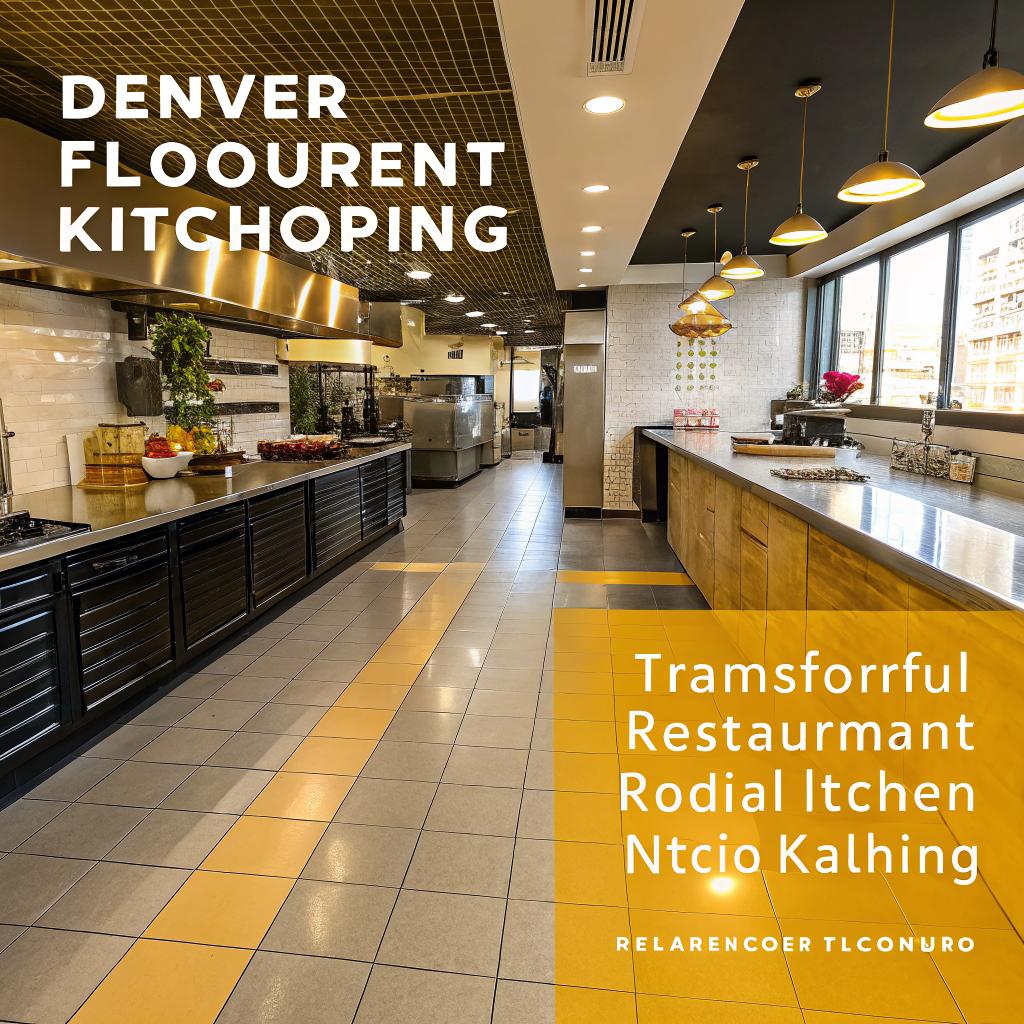
Kitchens in busy restaurants do not stay kind to floors for very long. Hot oil, dropped pans, constant foot traffic, steam, and cleaning chemicals all attack the surface every single day. A good Denver flooring company changes that by putting in floors that handle all of this abuse, keep staff safer, are easier to clean, and still look good when a health inspector or investor walks through the door.
That is the short answer.
The longer answer is a bit more interesting, especially if you care about how a kitchen actually works during service, not just how it looks in a photo. Flooring sounds boring at first, I know. But when you talk with cooks or owners who have dealt with one too many slippery tiles or cracked grout lines, the floor suddenly feels like a big part of the kitchen, not just a surface under your feet.
Let me walk through what is really going on when a flooring crew comes into a Denver restaurant kitchen and changes that whole environment, step by step.
Why restaurant kitchen floors fail so quickly
Before you can talk about what a good flooring team does, you have to be honest about why so many kitchen floors fail.
Here is what a typical restaurant kitchen floor faces every day:
- Oil, butter, and sauces splashing or dripping
- Boiling water and constant steam
- Harsh degreasers, bleach, and sanitizer
- Daily mopping and sometimes power washing
- Heavy equipment being rolled or dragged
- Staff running during rushes, with wet shoes
- Thermal shock from hot liquids hitting a cold surface
All of that on top of Denver’s climate. Hot and dry in summer, cold in winter, and a lot of freeze and thaw cycles for any parts of the floor close to exterior doors or walk-ins.
Some common problems:
- Ceramic or quarry tile gets slick when greasy or wet.
- Grout lines break down and start holding bacteria.
- Concrete chips, dusts, or soaks up stains.
- Peeling coatings trap grime and smell bad.
If you stand in a line kitchen for a day, you can feel it. A server nearly slips in front of the expo. A dishwasher drags a rack and takes a chunk out of a tile edge. Someone pours a pot of hot stock into a trash bag, it tears, and the floor gets a sudden bath.
When you see a cracked, stained, or uneven kitchen floor, you are usually looking at years of small daily problems that never got fixed properly.
So when a flooring crew comes in and says they can “transform” a kitchen, they are not just selling looks. They are trying to fix all of those daily issues at once, in a way that survives real life, not just health inspections.
How a Denver flooring company reads a kitchen before touching a tool
A good installer does not just show up with buckets of epoxy or boxes of tile. They start by studying the kitchen like a cook studies a menu.
Watching the flow of the kitchen
When they walk the space, they look at:
- Where the line cooks actually stand and pivot
- How dish racks move from dish pit to storage
- Where water tends to sit or pool near drains
- How food travels from prep to cook line to pass
- Which doors are used most, especially by staff with wet shoes
This matters. The highest traffic paths need the toughest surface and texture. Corners that trap water might need extra slope. Some areas can use a slightly smoother surface for easier mopping, others need more aggressive texture for grip.
The best restaurant floors are not uniform; they are planned in zones based on how the kitchen actually runs during a busy night.
Asking the annoying questions
A serious crew will ask the owner or chef things like:
- How often do you mop, and with what chemicals?
- Do you use a deck brush or just a mop?
- Have you had slip accidents in the past year?
- Have you had issues with smells coming from the floor?
- Do you plan to move or add equipment soon?
It might feel a bit nosy, but answers change the plan. If a kitchen runs a lot of vinegar based or acidic cleaning, for example, that can affect the choice of coating or grout. If the dish pit is legendary for flooding, they may need to fix slopes and drains, not just replace tile.
I have seen places that spent money on nice kitchen equipment, but then skipped these basic questions on flooring. Six months later, they were already complaining about puddles and chipped edges near the range.
The main flooring options for Denver restaurant kitchens
There is no one perfect floor for every kitchen. That idea sounds nice, but it usually comes from sales, not from cooks.
Here are the most common options you see in Denver kitchens, along with what they are good for and where they tend to fail.
| Floor type | Strengths | Weak spots | Where it fits best |
|---|---|---|---|
| Epoxy or urethane coating over concrete | No grout lines, can be textured, good chemical resistance | Needs careful surface prep, can peel if done poorly | High traffic lines, dish areas, prep rooms |
| Commercial tile with epoxy grout | Durable tiles, familiar look, heat tolerance | Grout still needs care, can be slick when greasy | Kitchens that prefer tile feel, some front-of-house transitions |
| Polished or sealed concrete | Low joints, simple look, easy to repair in spots | Can be slippery, may stain, thermal shock issues | Light prep areas, storage, back corridors |
| Resilient sheet or safety vinyl (commercial grade) | Some cushion, fewer seams, good slip resistance | Can be punctured, edges must be well sealed | Light-duty kitchens, bakery areas, staff rooms |
Some owners try to use luxury vinyl plank in the kitchen because it works nicely in the dining room. That is usually a mistake. LVP is great in front-of-house areas, restrooms, or host stations, but in a line kitchen with oil and standing water, it tends to struggle, especially at seams.
A local flooring company that works on both front and back of house can plan that transition properly. LVP or other attractive options for the customer areas, then a much more aggressive, functional surface once you pass the swing doors.
How they fix the subfloor before anything pretty happens
Most of the real “transformation” happens under the part you see.
If you have ever tried to set a cutting board on a warped counter, you know that everything on top starts to wobble. Floors are similar. If the slab underneath is cracked, uneven, or contaminated, any new floor on top is fighting a losing battle.
Checking and fixing moisture in concrete
Restaurant floors see a lot of water, but that is only half the story. Moisture can also come up from below through the concrete, especially in older buildings or ground level units.
So a good crew tests for moisture. They might tape plastic down overnight, or use more advanced meters. If they find high readings, they cannot just “hope for the best”. Some coatings will bubble or peel if moisture pushes from below.
They might:
- Use a moisture mitigation system over the slab
- Switch to a floor type that tolerates more moisture
- Fix drainage issues outside that are feeding the slab
Skipping this step is tempting, because it takes time. But when a floor starts to blister a few months later, the whole job looks bad, even if the topcoat was fine.
Dealing with cracks, pits, and slopes
Restaurant owners sometimes think of these issues as “just cosmetic”. They are not.
- Cracks can let grease and water seep into the slab.
- Pits hold grime that never really washes out.
- Poor slope keeps water standing around drains.
A serious Denver installer will:
- Open and fill structural cracks with repair materials that bond to the concrete
- Patch broken areas around floor drains and cleanouts
- Re-slope sections so water flows, not just sits
This part can feel slow. Dust, grinders, noise. But it is where future problems are prevented.
If prep looks “too fast”, it usually means something got skipped that you will see again later, in the form of peeling, puddles, or trip hazards.
Slip resistance: where safety and cleaning fight each other
Restaurant floors have to solve a basic problem. You want grip so staff do not slip, but you also want a surface that you can actually clean at the end of the night.
Too rough, and grease sticks. Too smooth, and people go down.
Texturing the floor on purpose
With coatings and some vinyl products, installers can tune the texture. They do this by:
- Broadcasting sand or other additives into wet coatings
- Choosing tiles with a certain surface profile
- Picking vinyl with a specific safety rating
Different zones often get different levels of texture:
| Kitchen area | Preferred texture level | Reason |
|---|---|---|
| Dish pit | High | Constant water and soap, very slippery risk |
| Main cook line | Medium-high | Grease and speed, but frequent cleaning |
| Dry storage | Medium | Less moisture, easier sweeping and mopping |
| Hallway to dining room | Medium-low | Staff comfort, smoother transition to guest areas |
When you walk on a new kitchen floor that has been textured well, it often feels slightly gritty under a wet shoe, but not like sandpaper. The goal is controlled friction.
Matching the floor to your cleaning habits
This part is where a lot of restaurants get stuck.
If your crew uses strong degreasers and scrubs hard every night, they can handle a more aggressive texture. If cleaning is lighter, or sometimes skipped during very late closings, a super rough floor will build up grime and start to look bad.
So the installer has to guess a little, based on what you tell them and on the type of operation you run. A high volume fry kitchen has different needs from a small wine bar that mostly plates cold dishes.
From what I have seen, the kitchens that stay in good shape are the ones where flooring choices and cleaning routines match each other fairly well. When there is a mismatch, either the staff suffer, or the floor fails early.
How the right floor changes the health inspection story
For people who love cooking, talking about inspections is not the fun part. But they matter. And the floor is one of the first things an inspector notices, often without saying much.
Where inspectors look on the floor
They usually focus on:
- Grout lines: Are they broken, missing, or stained?
- Standing water: Are there puddles, especially near drains and dish areas?
- Debris: Are there scraps or residue trapped in cracks or pits?
- Grease: Is there a visible film that suggests poor cleaning?
A modern coating, or a good tile job with sound epoxy grout, reduces these weak points.
No fissures for old food particles. Fewer tiny corners that never quite get dry. Better slope to drains, so you are not always chasing that one stubborn puddle with a squeegee.
Staff habits and training get easier
There is also the psychological part. When the floor looks solid and clear, staff tend to respect it more. I know that sounds a bit vague, but I have heard line cooks say this directly.
It is like getting a new set of knives. When tools feel taken care of, people are more likely to keep them that way.
It becomes easier to train new staff:
- “We scrub to the drain along this path”
- “This section always gets a second rinse”
- “We check these corners before we clock out”
You can see how a well designed floor supports those habits, instead of fighting them with odd dips, broken edges, or wide grout joints.
Comfort and fatigue: not just a nice extra
If you have stood on hard tile or raw concrete for a double shift, you know what your knees and lower back feel like afterwards. Flooring cannot fix bad shoes or long hours, but it can help more than people think.
Surface hardness and a bit of give
Concrete and tile are very hard. Coatings add some texture and protect the slab, but not much softness. That is why some Denver restaurants choose:
- Safety vinyl with some resilience
- Coatings that include rubber or flexible additives
- Anti-fatigue mats in certain spots over the main floor
There is a tradeoff. Softer floors can dent under heavy point loads, like a single wheel on a loaded cart. Harder floors resist that, but are tougher on joints.
This is another reason it helps to zone the kitchen:
- More cushioning where cooks stand for long periods
- More rigid surfaces where heavy carts are pushed
When a flooring team understands where staff stand the most, they can nudge the choice toward comfort without giving up durability in the wrong spots.
Heat, cold, and Denver’s climate in the kitchen
Commercial kitchens already deal with plenty of temperature swings. Combine that with Denver winters and you have a rough environment for floors.
Thermal shock from kitchen work
Flooring products expand and contract when exposed to heat and cold. In a line kitchen, you see:
- Hot stock or pasta water spilling on a cool floor
- Steam from dish machines and kettles
- Cold water used during cleaning
Poorly chosen or installed coatings can crack or delaminate under this kind of stress. Some urethane or cement based coatings are made for thermal shock and hold up better.
Tile, when installed well with the right setting materials, usually handles heat, but the grout can be the weak link if it is not designed for high temperature and chemical use.
Freeze and thaw at doorways and delivery areas
At back doors and loading areas, Denver’s winter introduces more stress:
- Snow and ice tracked in
- Salt and deicing chemicals on shoes and dollies
- Cold air blasts onto warm interior floors
Those zones often need:
- Heavier texture to prevent slips from snow melt
- Materials that handle deicing chemicals
- Careful attention to slopes so water does not enter dry storage
These details might not excite guests, who never see them, but owners and managers feel the difference in daily operations and fewer maintenance headaches.
A realistic look at cost, downtime, and planning
Now to the part many people quietly dread: shutting down parts of the kitchen and paying for all of this.
I think some installers sugarcoat this, which does not help anyone.
How long a project really takes
Time depends on:
- Size of the kitchen and number of zones
- How bad the existing floor is
- Type of new floor and curing time
Very rough example ranges:
| Scope | Rough time window | Main limiting factor |
|---|---|---|
| Small prep kitchen, coating over sound slab | 2 to 3 days | Coating cure time |
| Medium line kitchen, tile removal and new system | 4 to 7 days | Demo plus install plus grout cure |
| Large kitchen with drainage and slope fixes | 1 to 2 weeks | Concrete work and phased areas |
Some restaurants close totally and schedule work between seasons. Others phase the job, doing half the kitchen at a time. That can work, but it often adds complexity and cost, and staff have to work around it.
If an installer promises a big job in one day with perfect results, I would be careful. Fast curing products exist, but prep and detail still take time.
Balancing upfront cost with long-term headaches
Floors that hold up in tough kitchens are not cheap. Materials, labor, and lost sales during downtime all count.
Still, replacing a floor every few years because it was too weak, too slippery, or installed poorly is more expensive. This might sound like sales talk, but I have seen owners pay twice for the same basic square footage because the first job was rushed and under-built.
The more honest way to look at it:
A good kitchen floor is not just a cost. It is a tool that reduces accidents, cleaning time, and surprise repairs over many years.
That does not mean you always pick the most expensive option. It means you choose based on how hard you run the kitchen, how long you plan to stay in that location, and what kind of maintenance your staff can realistically handle.
How flooring affects the cooking and service experience
If you love cooking, you probably care more about burners, ovens, knives, and ingredients. Flooring sounds secondary. Yet, when you work in a kitchen with a floor that “just works”, you notice the difference.
Movement during service
During a busy service:
- Cooks pivot quickly between stations.
- Servers step into the pass and back out with plates.
- Bussers move heavy bins and racks through tight spaces.
On a well designed floor:
- Your feet plant without slipping, even on a small bit of oil.
- There are fewer surprise dips or ridges to trip over.
- Drains are where water actually goes, not where it happens to pool.
Work feels smoother, even though you may not consciously notice why. Stress is a little lower, which is worth more than it sounds by the end of a long week.
Noise, smell, and overall feel
Floors have some subtle effects too:
- Softer or textured floors can slightly reduce sharp noise from dropped pans.
- Continuous, well sealed floors can cut down on old grease smells that hide in grout and cracks.
- Clean, solid-looking floors tend to raise the sense of pride staff feel in their kitchen.
None of this will fix a broken menu or slow ticket times. But it shapes the space where that work happens, every hour the restaurant is open.
Questions to ask a flooring company before you say yes
If you are thinking about changing your kitchen floor, treating the installer like a true partner helps more than just asking for a price per square foot.
Some useful questions:
- “What kitchen floors have you done in Denver that are still in good shape after three or more years?”
- “How will you test and handle moisture in my concrete?”
- “How do you plan slip resistance in different areas of my kitchen?”
- “What cleaners do you recommend for this floor, and which ones should I avoid?”
- “How will you handle drains, thresholds, and transitions to the dining room?”
- “What is the realistic downtime for this job, including cure time, not just installation?”
- “If a section fails early, what does your warranty actually cover and not cover?”
Pay close attention to how clear and concrete the answers are. If they stay vague, or avoid talking about prep and moisture, that is a warning sign.
I personally think it is better to have a slightly slower or more expensive project that is explained well, than a very cheap, very fast project that glosses over details.
What this all means if you care about cooking, not construction
If you are a chef, manager, or even a serious home cook who loves restaurant life, you might still feel that flooring is a background topic. That is fair.
But imagine two kitchens:
- In one, puddles form around drains, shoes slide on greasy tile, and cleaning never quite feels complete.
- In the other, water actually moves to drains, the surface grips without feeling sticky, and the smell after a deep clean is neutral, not sour.
Which one would you rather cook in for ten years?
Floors set the tone for everything else. They do not need to be fancy. They just need to support the reality of service: heat, speed, spills, and long hours on your feet.
Common questions about restaurant kitchen flooring
Question: Is there a “best” floor for all restaurant kitchens?
Answer: No. That idea sounds nice, but kitchens differ too much. Fry-heavy concepts, bakeries, ramen shops, and wine bars all stress a floor in different ways. The “best” floor is the one that matches your cooking style, cleaning habits, moisture conditions, and budget, planned by someone who actually studies your space.
Question: Can I just coat my existing tile instead of tearing it out?
Answer: Sometimes, but not always. Coating over tile saves demo time, but only if the tile is solid, bonded well, and the height change will not create trip risks at thresholds or equipment bases. Grout lines can also move slightly, which may telegraph through coatings. A careful installer will test bond strength and explain the tradeoffs, instead of promising an easy shortcut every time.
Question: Do I really need a professional flooring company, or can a general contractor handle it?
Answer: Some general contractors handle kitchen flooring well, especially if they use the same dedicated flooring crews every time. But restaurant floors are harsh environments. Slip resistance, thermal shock, chemicals, and moisture are all big factors. A team that works with these conditions regularly is more likely to plan and install a system that lasts, rather than treating it like a simple residential floor.
If you had to pick one change to your kitchen that is not a new piece of equipment, would you put flooring near the top of the list, or still see it as background?