If you ask most working chefs why they like a zellige tile floor in the kitchen, the answer is simple: it is hard wearing, easy to clean, and it does not look cold or clinical. It brings character to a space that is usually all steel, timers, and heat, while still handling spills, heavy foot traffic, and the kind of mess that would destroy softer flooring.
What makes zellige different from regular kitchen tile
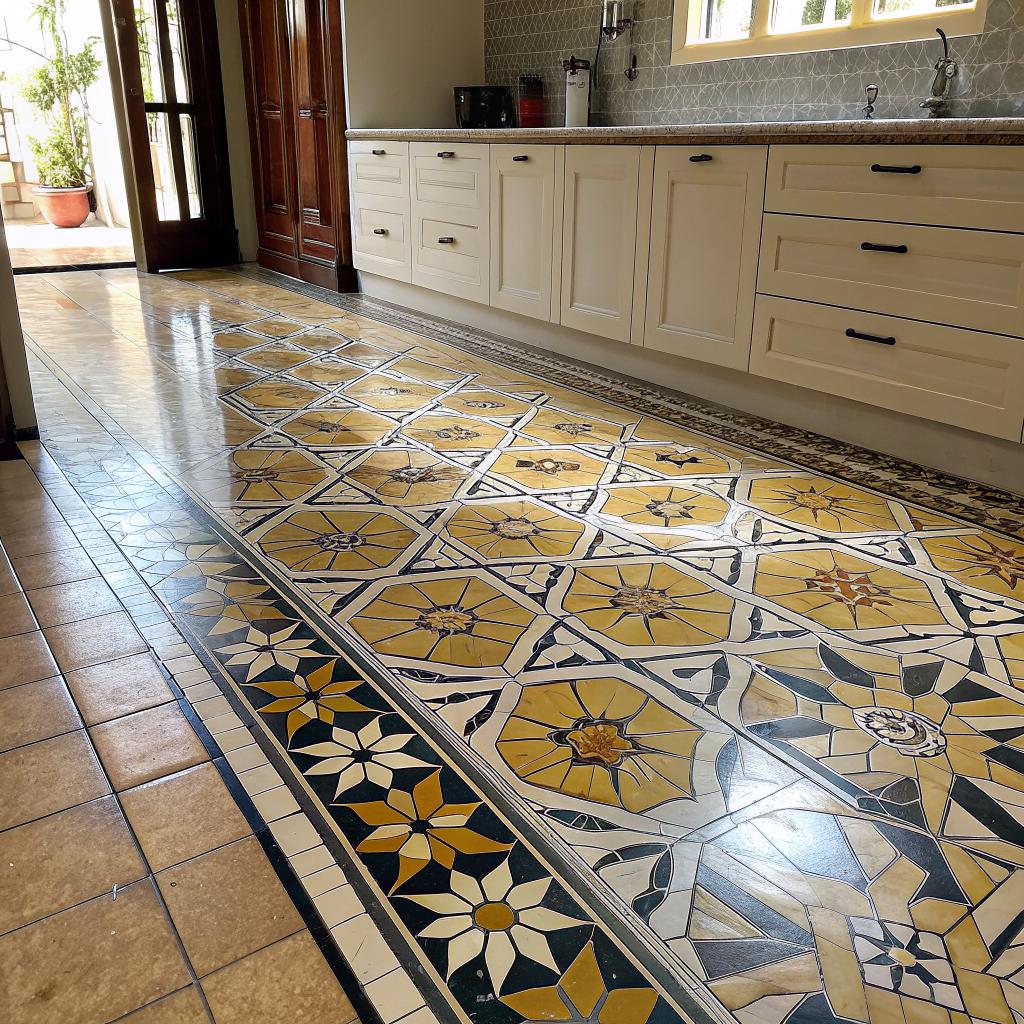
Zellige is not just any tile. It is a hand made, fired clay tile with a glossy, slightly uneven surface. The size is often not perfectly exact. The glaze can pool or thin out at the edges. Some pieces are a bit warped. In a normal factory tile, those things would be called flaws.
With zellige, those small changes are the point.
Zellige floors look alive because no two tiles are exactly the same.
If you cook a lot, you know how this feels. A perfect row of stainless pans looks good, but the one with the seasoned handle, the small scratch near the edge, is the pan you reach for without thinking. Zellige has that same familiar, slightly used quality even when it is brand new.
In a professional kitchen, where everything is judged on function first, it might seem strange that a chef would care about a visually rich floor. But they do, more than they sometimes admit. You stand in that room for 10, 12, sometimes 14 hours. The floor is part of your work environment as much as your knives.
Why chefs like working over zellige
1. It cleans up without a fight
Grease hits the floor. Sauces splash. Sugar hardens into a sticky crust. If a floor cannot handle that, it does not belong in a kitchen.
Glazed zellige has a pretty forgiving surface for this kind of work. Once it is sealed and grouted properly, you can mop it daily, scrape off dried food, and wipe up oil without much drama. It behaves in a similar way to many glazed ceramic tiles, but the glaze is usually thicker and more varied in color, so light stains are less visible between deep cleans.
A busy line cook cares less about perfect color and more about whether tonight’s bolognese stain will still show tomorrow. Zellige helps hide that in a good way.
There is a small catch, though, and this matters. The small size and edges mean more grout lines than large format tile. Grout can pick up dirt faster. So if someone tells you zellige floors are “maintenance free”, that is not quite honest. They clean well, but they still need regular care.
2. The surface is smooth but not slippery
This part is a bit tricky, because it depends on finish, glaze, and even the type of shoe. But in many kitchens, chefs report that zellige feels more secure underfoot than polished porcelain or vinyl.
The tiles have tiny irregularities and micro bumps in the glaze. When you walk in clogs or non slip shoes, you get small points of grip. It is not rough like textured concrete, but it is not mirror slick either.
Is it perfect when an entire pot of oil hits the floor? No. Nothing is. Any surface will be a hazard in that moment. But on a normal night with occasional splashes, zellige holds up well.
3. It handles heat and heavy use
Kitchen floors go through a lot. Hot trays land hard. Heavy stockpots slide. Racks roll full of plates. Some floors dent or melt or stain from that kind of abuse.
Zellige is fired at high temperatures as part of its production, so it does not mind heat from the oven door or a dropped cast iron pan. It is clay tile at its core, so it behaves predictably around high temperatures.
That said, chefs tend to be honest about trade offs. Many will say:
If you drop a heavy pan on any tile, including zellige, there is a chance of a chip.
That is true. The difference is that a small chip on a slightly irregular tile often blends in more naturally than on a perfectly flat, uniform tile. It can even add to the “worn in” look instead of reading as damage.
How zellige changes the feel of a kitchen
Warmth without fake rustic style
Commercial kitchens can feel harsh. Steel counters. White walls. Loud vents. When restaurants bring that style into the home, it sometimes becomes stiff or cold.
Zellige floors change that. The reflections are soft, not mirror bright. The colors shift tile to tile. Even if you choose a pale neutral, it does not look flat.
Some chefs who move from restaurant work to home cooking want that mix. They still want a space that feels like a place where real work happens, but they are tired of the hospital feel. A zellige floor gives them a work ready surface with a calmer visual mood.
I once spoke to a chef who had spent 20 years in kitchens with gray quarry tiles. He said his home kitchen felt “too clean” when he remodeled with plain white porcelain. When they switched to a soft, uneven tile, he felt more relaxed cooking, but still trusted the floor under him.
Light, reflection, and long shifts
If you cook for a living, you know that light matters. Too dark and you feel sleepy and unfocused. Too bright and your eyes hurt halfway through service.
The glossy surface of zellige interacts with light in a useful way. It catches highlights from overhead fixtures, but because the surface is a bit wavy, the reflections break into small flashes rather than clear mirror lines.
That might sound subtle, and maybe it is, but in a long shift, it helps. Instead of a glare band across the floor, you get gentle sparkle that makes the room feel more open. At home, where you might cook at night after work, that extra light bounce can make a compact kitchen feel larger.
Comparing zellige to other common kitchen floors
To keep this simple, here is a quick comparison based on what many chefs and home cooks care about most.
| Floor type | Cleaning | Comfort for long standing | Look and character | Durability under heavy use |
|---|---|---|---|---|
| Zellige tile | Good with regular mopping and sealed grout | Medium, can feel hard, often used with mats | High, unique and varied, warm visual feel | High, but edges can chip with hard impact |
| Porcelain tile | Very good, low stain risk | Medium, similar hardness | Low to medium, depends on design, often looks uniform | Very high, less chipping |
| Vinyl / LVT | Easy for daily cleaning | Higher comfort, slight give | Medium, print can mimic stone or wood | Medium, can scratch or dent |
| Sealed concrete | Good, simple to mop | Low, very hard on joints | Medium, industrial feel | Very high, but can crack |
This table does not give a right or wrong answer. Some chefs still prefer plain quarry tile or concrete in a pure commercial space. But when function and atmosphere both count, zellige starts to look like a good middle ground.
How color choices affect cooking spaces
Light colors vs dark colors
Choosing color is not just about taste. It affects how you see food, stains, and tools on the floor.
- Light colored zellige reflects more light and can make a small kitchen feel larger.
- Darker tones hide some dirt between cleanings but can make dropped ingredients harder to see.
Chefs often have mixed feelings about this. Many like darker floors because they do not show every footprint from the walk in. At the same time, when you drop a small screw from a pan handle or a shard of glass, you really want to see it fast.
There is also how color affects mood. A soft, warm neutral can calm you down. A vivid, deep green or blue might energize you, which can be helpful in a prep heavy kitchen where you need to stay alert.
Patterns and layout
Zellige is often sold in small formats, which opens many layout choices: straight lines, herringbone, basket weave, or more irregular mixes. Chefs who are used to working in tight spaces sometimes think about traffic lines when they choose layout.
Here are a few simple ideas that show up often:
- Use a straight grid where you stand most of the time to keep it visually calm.
- Use a more complex pattern near the dining area or kitchen island, where guests can see it.
- Change pattern slightly to mark a shift, like from prep space to pantry.
This might sound like overthinking, but layout affects how the room feels when you move through it. Chefs spend so much time walking small routes between stove, fridge, and sink that they notice small changes more than most people.
Practical points for real working kitchens
Comfort and fatigue
Zellige is a hard surface. If you stand on it for hours in thin shoes, your legs will complain. This is not unique to zellige. Porcelain, concrete, and stone have the same issue.
In restaurants, chefs usually pair hard floors with anti fatigue mats in the main work zones. At home, you might not like the look of big black mats, but a couple of discreet runners near the sink and stove can help a lot.
If someone tells you that zellige is “soft underfoot”, they are comparing it to stone or concrete. It can feel a bit warmer because the tiles are thinner and the glaze softer to the touch, but it is still a solid, non cushioned surface.
Noise levels
One thing some people forget is sound. Hard floors reflect noise. In a restaurant kitchen, sound is already part of the atmosphere, but at home, you may not want the clatter of pans echoed around the room.
Zellige does not absorb sound like cork or wood. So if you want a quieter kitchen, you can pair it with softer items:
- Rugs or runners in non work zones.
- Upholstered seating near the kitchen table.
- Textiles like curtains or fabric shades.
Chefs often accept noise as part of the job in a professional environment, but many are more sensitive to it at home. They want the charm and function without the echo of a full service line every night.
Slopes, drains, and real world mess
In some commercial kitchens, floors slope slightly toward a drain. This makes heavy mopping and large spills easier to manage. Zellige can work with that, but the installer needs to be careful. The small size helps, because you can follow that slope without large tile lippage.
For home cooks, a full drain system is rare. Still, it is smart to think about where water will go if you have a large spill. Near sinks and dishwashers, make sure the grout is well sealed and that low spots do not trap puddles.
The emotional side: why chefs notice the floor at all
Many people think chefs only care about the plate, the guest, and the ticket rail. That is not true. The room where you cook shapes how you work and how long you can keep working.
I have seen chefs walk into a bare, newly built kitchen and say almost nothing about the appliances, but comment on the floor right away. They look for grip, for how easy it will be to clean, and for how the floor color interacts with the walls and counters.
One chef I spoke to, who runs a small tasting menu restaurant, said something that stuck with me:
“We work so hard to make food that feels personal. It is strange to do that on a floor that feels like a hospital. Zellige makes the room feel like someone actually cooks there.”
That might sound a bit romantic, but it has a practical side. When the room supports the work, cooks tend to move with more ease. They feel grounded. A floor with subtle variation and warmth can make the repetition of prep feel less mechanical.
Things to watch for if you are thinking about zellige at home
Installation is not casual
This is where I will disagree with a lot of happy social media posts. Zellige is not a tile that forgives sloppy installation.
Because the tiles are slightly irregular, you need an installer who knows how to handle uneven edges, adjust spacing on the fly, and back butter tiles when needed. Corners and transitions need extra attention so that chips and high edges do not become trip points.
If someone says “tile is tile” and treats zellige like generic 12×24 porcelain, you will likely end up with uneven joints that annoy you every time you mop.
Grout choice matters more than you think
Grout is not just a color choice. It affects cleaning and how the floor looks over time.
- Dark grout can hide dirt but may visually break up the floor more.
- Light grout can make the space look larger but shows stains faster.
- Mid tone grout often works best in active kitchens, balancing both concerns.
Chefs who are used to heavy cleanup often lean toward slightly darker or mid tone grout, because they know spills happen and not every shift ends with a perfect scrub.
Slippery vs safe is about the whole system
Zellige on its own is one part of the safety story. The rest is:
- Your shoes.
- How fast you mop spills.
- Where you place mats near high splash zones.
- How often you clean grease build up near fryers or cooktops.
Some people blame the tile when the real problem is that the floor only gets a quick wipe, not a proper degrease. Others think any tile is unsafe, when in fact good shoes solve most issues for day to day cooking.
How zellige fits into restaurant design
Open kitchens and guest view
Open kitchens blur the line between dining room and work zone. Guests can see the cooks, the equipment, and the floor. In that setting, a zellige floor plays two roles at once.
On the guest side, it reads as crafted and intentional. The variations in color feel warm. On the kitchen side, it is still a wipeable, tile surface that can handle daily cleaning.
Chefs in these spaces often think about how the floor color interacts with food. If you are plating light, delicate dishes, a deep, moody floor in the background makes the plates pop. If your food is more rustic and hearty, a softer, paler floor can keep the space from feeling heavy.
Smaller restaurants and budget trade offs
There is a real question here: is zellige worth it compared to cheaper tile when budgets are tight?
Some chefs say no. They would rather put money into equipment or ventilation. Others say that the feel of the space has a direct effect on how staff and guests respond, so the floor is part of the experience.
I think the honest answer is that zellige is a choice, not a must. If you love the look and are ready for the extra care in installation, it can be a smart long term pick. If you only care about raw durability and lowest cost, classic quarry tile is hard to beat for a pure workhorse floor.
Using zellige floors at home when you cook like a pro
Many home cooks today cook in a way that used to be seen only in restaurants. They bake sourdough weekly, host multi course dinners, and run their ovens for hours. For them, a domestic kitchen is almost a small restaurant.
In that setting, zellige floors can make sense because they stand up to more than casual use. You can roll heavy carts, move portable islands, and deal with the occasional dropped Dutch oven without panic.
At the same time, you get a floor that does not look strictly “professional”. It feels like part of a lived in home. Children can sit on it, you can drink coffee barefoot on it, and it does not scream “back of house”.
Questions you might still have
Q: Is a zellige tile floor too delicate for a real working kitchen?
A: No, but it is not indestructible. It handles heat and daily cleaning well, and it hides many small scuffs better than flat tile. Strong impacts can still chip edges, so placement of heavy equipment and careful installation around legs and stands matter. For most serious home cooks and many restaurants, it holds up fine if treated as a quality tile floor, not a miracle material.
Q: Will a glossy zellige floor be slippery when I am cooking fast?
A: It can be slick when there is standing liquid or grease, like any hard glazed surface. In normal use with non slip shoes, many chefs find it has decent grip because of the small surface variations. If you are worried, focus on good cleaning habits, use mats in high risk zones, and avoid walking in socks or smooth leather soles while cooking.
Q: Is it hard to keep a zellige floor looking clean with daily cooking?
A: Regular sweeping and mopping with a mild cleaner is usually enough. The glaze hides many minor marks. The main thing to stay ahead of is grout. If you seal the grout well and refresh that seal over time, stains are less likely to sink in. Heavy, dark sauces or wine spills should be wiped fairly soon, but that is true for most kitchen floors that you actually care about.