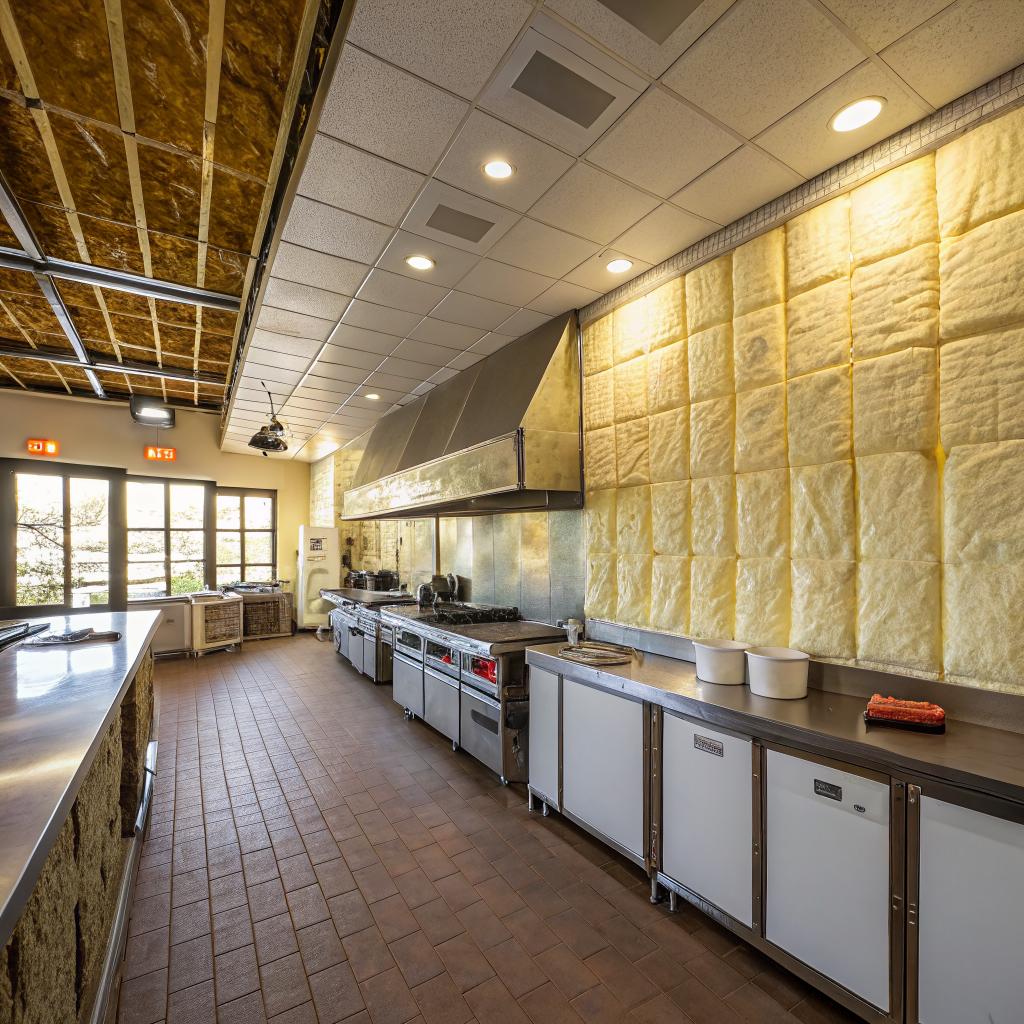
Foam insulation keeps Houston restaurant kitchens cooler by slowing heat from the sun and hot outdoor air, sealing gaps where outside air sneaks in, and creating a stable temperature around the kitchen space. When you hear people talk about foam insulation Houston TX, they are usually talking about spray foam in the roof, walls, or attic that helps control heat, moisture, and air all at once. In a hot, humid city like Houston, that combination is what keeps cooks from feeling like they are working in an oven before the line even gets busy.
I know that sounds a bit technical for a cooking and restaurant crowd, but it actually shows up in daily life in very simple ways. You turn on the fryer, the flat top, the salamander, and the dish machine. The kitchen heats up. With good foam insulation around the space, the heat has a harder time escaping out in some spots and rushing in from outside in other spots. The building envelope feels more steady. The AC system does not have to fight quite as hard. Staff can stand on the line without feeling wiped out by 3 pm. That all traces back, at least partly, to what is in the walls and above the ceiling, not only the size of the air conditioner.
Why kitchen heat in Houston feels so extreme
If you run or work in a restaurant, you already know this, but it helps to put the pieces together. A commercial kitchen has several strong heat sources working at the same time:
- Ranges and ovens
- Fryers
- Flat tops and grills
- Steam tables
- Dish machines
- People moving around constantly
Then you add Houston weather on top of that. Long hot seasons, lots of sun, and thick humidity. When the afternoon sun hits a poorly insulated roof or attic, the surface temperature can get very high. That heat will try to move into the cooler space below, which is usually your dining room and kitchen.
So you have heat from above, heat from the equipment, and in many buildings, hot outdoor air slipping in through little cracks and openings around ducts, penetrations, or older walls. No wonder cooks feel overheated even before service gets intense.
Restaurant owners often blame only the AC unit for a hot kitchen, but the insulation above and around that kitchen is usually part of the problem.
Air conditioning helps, of course, but AC has limits. If the building leaks a lot of air and the roof and walls do not resist heat very well, the system runs longer, uses more energy, and still might not keep up during the rush. Foam insulation changes that balance.
What foam insulation actually does in a restaurant building
Foam insulation is different from old style batts or loose fill. It is sprayed in place as a liquid and then expands. After it cures, it forms a solid layer that fills gaps, cracks, and odd shapes. For restaurants, that matters more than most people realize.
Three main jobs of foam insulation
When you look at comfort in a kitchen, foam usually does three things at once:
- Slows heat moving through the roof and walls
- Reduces air leaks in and out of the building
- Helps control moisture and condensation
Those sound like building science terms, but they tie directly into how your kitchen feels on a Friday night.
Slowing heat from the sun and hot air
Foam has a higher R value per inch than many other common materials. R value is just a way of rating how well something resists heat flow. The higher the number, the better it slows heat movement.
Here is a rough comparison that many insulation contractors use when talking to building owners:
| Material | Typical R value per inch | How it behaves in a kitchen roof or wall |
|---|---|---|
| Fiberglass batt | R-2.9 to R-3.8 | Works if installed perfectly, but gaps or compression lower real performance. |
| Blown cellulose | R-3.2 to R-3.8 | Fills cavities fairly well, but can settle and does not air seal by itself. |
| Open cell spray foam | R-3.5 to R-3.8 | Air seals cavities and helps with sound, common in rooflines and walls. |
| Closed cell spray foam | R-6.0 to R-7.0 | Very strong barrier per inch, adds stiffness to the structure, also a vapor retarder. |
In a hot climate, every bit of resistance to heat helps. If the roof deck above your kitchen has a layer of foam on the underside, the attic or plenum above the kitchen stays cooler. That means the ceiling below is cooler, the ducts in that space are cooler, and the AC air that reaches your kitchen is not warmed up as much along the way.
When the roof space above a kitchen drops from “scorching” to just “warm,” the line staff can feel the difference, even if they do not know why.
Stopping hot air leaks
Regular insulation like batts or blown in material does not really stop air movement. If there are gaps around penetrations, recessed lights, or along framing, hot humid air from outside can slip through. Your conditioned air can leak out the same way. In a kitchen that already has strong ventilation fans pulling air out, those leaks can be even worse.
Foam insulation sticks to surfaces and expands into cracks. Once cured, it acts as an air barrier. That means the boundary between hot outside air and cool indoor air is more defined. Your AC system no longer has to cool a constant stream of fresh, hot, sticky air leaking in around the edges.
On a busy night, that tight envelope can be the difference between an AC system that just manages to hold the temperature and one that loses the battle around 8 pm.
Helping with moisture and condensation
Houston kitchens deal with more than heat. They also deal with moisture. Steam from cooking, dishwashing, and cleaning is already high. Outdoor humidity adds another layer. When warm, moist air touches a cool surface, you get condensation. In a restaurant, that can show up as sweating ducts, wet ceiling tiles, or damp walls.
Certain types of foam, especially closed cell, act as both insulation and a vapor retarder. They slow the movement of moisture-laden air. This helps reduce the chances of water collecting inside walls or around the roofline, which in turn supports a safer, cleaner kitchen environment.
How a cooler kitchen affects daily restaurant life
Some owners see insulation as a building expense that is separate from kitchen operations. I do not really agree with that. It sits in the background, but it touches staff comfort, food safety, and even how long your equipment lasts.
Staff comfort and turnover
Most restaurant owners I have talked with say staffing is one of their biggest headaches. If cooks feel overheated and exhausted every shift, they are more likely to burn out, call in sick, or leave. The line can feel like a test of how much discomfort a person can take.
When the kitchen runs a few degrees cooler and the humidity is more stable, things shift a bit:
- Cooks can focus on timing and plating, not just on getting through the shift.
- People move slightly faster and make fewer small mistakes.
- End-of-night cleaning is less draining because the space is not as stifling.
A cooler, drier kitchen rarely fixes every staffing problem, but it does remove one more reason for people to quit.
I remember visiting a small restaurant where the owner had upgraded the attic insulation above the kitchen. It was not a fancy place. Simple menu, a few daily specials. The cooks told me that before the work, they tried to avoid double shifts in summer. After the foam went in, they still got hot during rushes, but they did not feel destroyed by the end of the night. That is not a scientific study, but it lines up with what many building experts say about envelope improvements.
Temperature control for food and equipment
A stable kitchen temperature helps keep food within target ranges. This is not just about health codes, though that matters. It can also affect quality. For example:
- Proofing dough in a space that swings from “too cold in the morning” to “too hot in the afternoon” can give inconsistent results.
- Chocolate work is harder near equipment that throws off a lot of radiant heat in a poorly insulated space.
- Cold prep stations and undercounter fridges work harder when the room temperature runs high.
If insulation improvements help the AC hold the kitchen near the setpoint, fridges and freezers do not cycle as hard. You may see fewer nuisance temperature alarms. Gaskets and compressors might last longer, though that part depends on maintenance too.
Energy bills and profit margin
Restaurant margins can be thin. Energy is a steady cost that owners watch carefully. Foam insulation is not free, and it is fair to be skeptical about claims of huge savings. Still, in a hot climate, better insulation and air sealing usually cut cooling loads at least somewhat.
Think about it this way. If your AC runs at full output for long stretches every summer afternoon, something in the building is making its job harder. That might be old equipment, but it might also be a very leaky shell. Foam cannot turn an undersized AC into a perfect system, yet it can reduce wasted cooling that escapes through the roof and walls.
Some owners see energy savings as the main goal. Others mainly want comfort and treat lower bills as a bonus. I tend to think of it as a mix. If the kitchen is cooler and your bills drop a bit, that combination is usually easier to justify than either benefit alone.
Where foam insulation usually goes in a Houston restaurant
Every building is different, so there is no single ideal layout. Still, for kitchens in this region, a few areas matter most.
Roof deck and attic space
In many cases, applying foam to the underside of the roof deck helps the most. Instead of leaving insulation on the ceiling plane and letting the attic get extremely hot, the insulation moves to the roofline. This can turn the attic into a semi-conditioned or at least much cooler space.
Here is why that matters for restaurants:
- Ducts, kitchen exhaust runs, and AC units in that space sit in a less hostile environment.
- Ceilings below see less direct heat gain.
- Maintenance staff have a less punishing environment when accessing equipment above the kitchen.
For some older buildings, this change can feel dramatic. For newer ones, it might just be one part of a wider insulation and HVAC plan. Either way, in Houston, reducing attic temperatures helps the whole building, including the kitchen.
Walls near the kitchen
Exterior walls that border the kitchen area also matter. If those walls face the afternoon sun, the heat load can be quite high. Foam in wall cavities or applied to the interior or exterior sheathing can slow that gain, helping keep the line area more stable.
This is often easier to address during new construction or major renovation. Retrofits can still work, but they may require more planning so they do not disturb restaurant operations too much.
Floors and crawl spaces
Some Houston restaurants sit over crawl spaces or on piers. Warm, humid air under the building can leak up through gaps in the floor framing. Foam applied to the underside of the floor can help seal those leaks and reduce humidity transfer. This has more impact on comfort in some layouts than others, but it is one piece that is sometimes overlooked.
Foam insulation types and what they mean for a kitchen
Not all foam is the same. If you are talking to an insulation contractor, you will hear open cell and closed cell mentioned often. For restaurant owners, the key differences are:
| Type | Main traits | Common restaurant uses |
|---|---|---|
| Open cell spray foam | Lower R per inch, softer, good sound absorption, air barrier | Rooflines, interior walls where sound control helps, thicker applications where space is available. |
| Closed cell spray foam | Higher R per inch, rigid, moisture resistant, adds structural strength | Exterior walls, roof decks in humid areas, spaces where moisture control is a concern. |
I will be honest here: choosing between them is not always simple. Cost, building code, fire ratings, and moisture conditions all matter. Some kitchens might benefit from a mix of both in different areas. This is where a detailed look at the actual structure helps more than broad advice.
How insulation, HVAC, and kitchen hood systems interact
One mistake I see in conversations about hot kitchens is that people treat each system like a separate island. You have the AC, the hood exhaust, the make up air, and the insulation layer. In reality, they all pull on the same air volume.
Kitchen hoods and make up air
Your kitchen hood pulls hot, greasy air off the cooking line to maintain air quality and safety. The more air it exhausts, the more make up air you need to bring in from outside. If the building is very leaky, some of that make up air will come in through random gaps. That air is usually hot and humid.
If foam insulation tightens the building envelope, the hood and make up air system can work more predictably. Air comes in where it is supposed to, and less of it sneaks through walls and ceilings. This can help your AC system regulate temperature and humidity more consistently throughout the kitchen and dining areas.
AC sizing and run time
There is a bit of a tradeoff that people do not always talk about. Once foam insulation reduces heat gain and air leakage, an AC system may run fewer hours or at lower capacity. That saves energy, but it can also change humidity control, because short cycles sometimes remove less moisture.
This is part of why I think it is not wise to treat insulation changes as a quick fix without looking at HVAC as well. A good contractor should think about both:
- How much heat are we blocking with foam?
- What airflow patterns exist between kitchen and dining room?
- How will the hood and make up air interact with tighter walls and roof?
If those pieces are considered together, foam insulation tends to support a better overall balance inside the restaurant. Ignore that balance and you could end up with new problems, like areas that feel too stuffy.
Common questions restaurant owners ask about foam insulation
Does foam insulation actually make a big difference, or is it just hype?
It can make a big difference, but the size of that difference depends on the starting point. If your building already has decent insulation and not many air leaks, the gain might be modest. If the roof and walls are poorly insulated and the attic above the kitchen gets extremely hot, foam can change the way the space feels.
I think it helps to be cautious with any claim of massive savings or instant comfort. Look for measured attic temperatures before and after upgrades, or compare AC run times. Numbers like that tell more of the story than marketing language.
Will foam insulation fix every hot spot in the kitchen?
No. There will still be times when the cook standing right in front of the grill feels very hot. Equipment still releases heat into the room, and hoods still need to pull air. Foam does not remove that. What it does is reduce background heat load from the building itself. The overall space can stay cooler, which makes those hot spots a bit less extreme.
Is foam safe in a commercial kitchen building?
Foam insulation has to meet fire and building codes. That usually means coverings such as gypsum board or specialized coatings in certain areas. When installed and covered as required, spray foam is widely used in commercial buildings, including restaurants.
There are fair questions about off gassing or chemicals during and right after installation. This is why many projects are done when the restaurant is closed, and why proper ventilation and curing time matter. Once cured and covered, the foam is stable. If you ever talk to a contractor who glosses over these steps, that is a red flag.
How does foam compare to other insulation types for a kitchen?
Each insulation type has strengths. Fiberglass and cellulose can be cost effective and work fine when installed carefully. In a kitchen-heavy building in a hot, humid region though, the added air sealing and moisture control from foam can be worth the higher initial price.
This is not a rigid rule, and sometimes a hybrid approach makes sense. For example, foam on the roof deck for air sealing and moisture control, then blown insulation over other parts of the building where the loads are smaller.
Signs your Houston restaurant might benefit from foam insulation
If you are not sure whether insulation is part of your heat problem, there are a few patterns to watch for.
- The kitchen is much hotter in the late afternoon than in the morning, even before service gets busy.
- Ceilings or attic areas above the kitchen feel extremely hot to the touch in summer.
- AC units run almost constantly during hot days, but the thermostat still creeps up.
- Ducts above the kitchen sweat heavily or drip onto tiles.
- Staff complain that some parts of the kitchen are much hotter than others, especially near exterior walls or under certain sections of ceiling.
Some of those issues could come from ventilation balance or HVAC design as well, so it is not always fair to blame insulation alone. Still, when several of these signs show up together, it is reasonable to ask someone to check what is in your roof and walls.
Practical steps for owners thinking about foam insulation
If you are curious but not ready to start tearing into the building, you can start small.
Walk the building with comfort in mind
Take a few minutes during a hot day and walk the space, including any accessible attic or roof areas. Pay attention to:
- Where the air feels hottest or stuffiest
- Where ceilings or walls feel very warm to the touch
- Any obvious gaps around pipes, duct penetrations, or vents
This does not replace proper testing, but it gives you a basic map of trouble spots.
Check energy use and AC behavior
Look at your electric bills across seasons, and watch how your AC runs during lunch and dinner service. Does it cycle normally or run nearly flat out all day? Do staff prop doors open to get relief, which then forces the system to work harder? These habits and patterns give clues about how stressed your cooling system is.
Ask targeted questions
If you bring in a contractor, ask clear, practical questions, such as:
- Where is my building losing the most cooled air?
- What temperature difference do you expect between attic and indoor space after work is done?
- How will this affect my kitchen hood, make up air, and existing AC setup?
- What fire and code requirements apply in kitchen-adjacent areas?
If the answers feel vague or rely mostly on buzzwords, it may be worth getting another opinion.
Frequently asked question and a plain answer
Will foam insulation in a Houston restaurant actually make my kitchen a comfortable place to cook, or will it just make things slightly less bad?
For most kitchens, it will make things better, but it will not turn a line full of grills and fryers into a cool, quiet lounge. Foam insulation changes the background conditions. The room starts cooler, holds that cooler air longer, and takes in less heat from the roof and outside air. During rushes, you will still feel heat from equipment and hoods, but it will stack on top of a lower base level instead of an already punishing one.
If you pair that with well balanced AC and make up air, the combined effect can be quite noticeable. Staff might not describe it in technical terms. They will just say something like, “It is still hot, but it is not killing me anymore.” In a Houston kitchen, that difference can be enough to change how a whole shift feels.