Running a restaurant in Colorado Springs means you need reliable heating and cooling. The short answer is: you should not wait for a full breakdown. Watch for early signs like uneven temperatures, strange noises, higher energy bills, or frequent short cycling, and call a trusted local pro for HVAC repair Colorado Springs before your kitchen, staff, and guests start to suffer.
That is the practical answer. Now let us slow down a bit and walk through why this matters so much, how it connects to your food and guests, and what you can realistically do as an owner or manager without turning into a technician yourself.
Why your HVAC matters more in a restaurant than in a house
In a home, HVAC is about comfort. In a restaurant, it also affects food safety, staff performance, and how long your guests stay at the table.
You already know how much heat your line produces. Ovens, fryers, dishwashers, even bodies in the dining room. If your HVAC is not keeping up, service feels harder for everyone.
Here are a few ways HVAC quietly affects your restaurant:
- Food safety and storage
- Guest comfort and table turnover
- Kitchen morale and staff retention
- Energy costs and profit margins
- Equipment life and emergency repair bills
I used to help in a small neighborhood place that turned into a sauna every summer around 6 p.m. The owner thought guests came less often “because of the menu” on warm days. Maybe the menu did not help, but once the rooftop unit was fixed and balanced, Friday nights got busy again. Not a scientific study, but hard to ignore.
A strong menu cannot make up for a dining room that feels too hot, too cold, or smells bad from poor ventilation.
If you care about the cooking, you probably care about the room people eat in. HVAC sits right at that line between back of house and front of house, even if we usually treat it as an annoying background issue.
Colorado Springs climate and what it does to your HVAC
Colorado Springs is not the easiest climate for HVAC systems. It is not extreme all the time, but the swings are rough.
You get:
- Cold, sometimes sharp winters with snow and ice
- Dry air that can be hard on seals and materials
- Hot, sunny summer afternoons with cooler nights
- High altitude, which affects gas combustion and heat output
Those swings matter. You might be running heat in the morning, then cooling in the afternoon, then heat again overnight. Restaurants already cycle systems hard because doors keep opening, ovens run, and people move around. Add the local climate, and the stress on your rooftop units and furnaces goes up.
In Colorado Springs, your HVAC system rarely gets a true “off season.” It needs care year round, not just when there is snow on the ground.
I think many owners underestimate how the altitude affects combustion. Gas systems need to be set up correctly for this region. If they are not, they can run poorly, waste fuel, and wear out early.
Common HVAC setups in restaurants
Not every restaurant has the same HVAC layout, but there are patterns. It helps to know roughly what you have before you call for help.
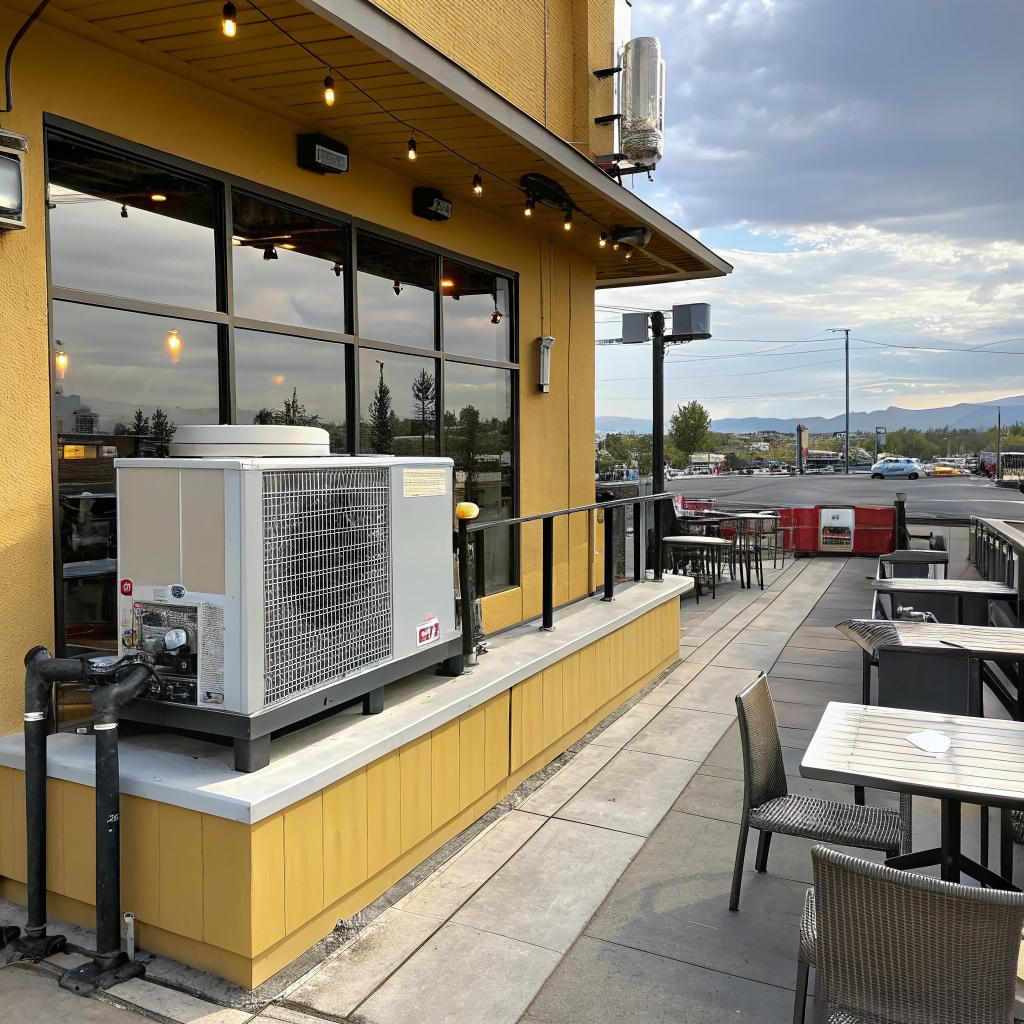
Typical equipment in a Colorado Springs restaurant
| Equipment | Where it usually is | What it mainly does |
|---|---|---|
| Rooftop units (RTUs) | Roof | Heat and cool dining room or whole space |
| Gas furnace | Mechanical room or back room | Heating, sometimes paired with AC coil |
| Condensing units | Ground or roof | Outdoor part of air conditioning system |
| Makeup air unit | Roof | Brings in fresh air to replace air exhausted by hoods |
| Exhaust hoods and fans | Over cooking line and on roof | Remove heat, smoke, and grease from kitchen |
| Mini splits or small units | Private rooms, offices, server rooms | Spot cooling where main system does not reach well |
If you are not sure what you have, take 15 minutes with a tech during a quiet time and ask them to walk you through the equipment. Ask which unit serves which area. It seems like a small thing, but during a breakdown, that knowledge helps you explain the problem faster and make better decisions.
Early warning signs your restaurant HVAC needs repair
Most breakdowns do not come out of nowhere. The system usually tells you something is wrong. It just does not speak English.
Here are common signs, from front of house to back of house.
Dining room signs
- Hot or cold spots, especially near windows or the bar
- Guests mention drafts, stuffiness, or “weird” smells
- Temperature swings during service as the room fills
- Thermostat set low, but the room still feels warm
If your staff keeps touching the thermostat every hour, that is a small red flag. The system should be able to maintain a set point without constant adjustment.
Kitchen and prep area signs
- Line cooks complain more than usual about the heat
- Steam hangs in the air instead of being pulled out
- Doors feel hard to open because of pressure imbalance
- Condensation on walls or ceiling tiles near the line
Poor ventilation can also push odors into the dining room. That is not great if you serve fish or have a heavy fry program. Or garlic. A little aroma is nice. A wall of smell is not.
System behavior and energy signs
- Short cycling: unit turns on, then off, over and over
- New rattling, banging, or squealing sounds
- Ice on refrigerant lines or coils in summer
- Energy or gas bills creeping up without more business
When your energy bill rises but your guest count stays the same, your HVAC might be working harder to do the same job.
You do not need to diagnose the root cause yourself. But you should write down what you notice and when. “Unit over bar short cycles around 7 p.m. when we are half full” helps a technician more than “AC is weird.”
What you can check yourself before calling a technician
You are not an HVAC tech, and you do not need to be. Still, there are a few simple checks many restaurant owners skip.
I want to be careful here. I do not think you should open panels or try to fix gas or electrical parts. That crosses into unsafe. But you can do some basic inspections.
Simple visual checks
- Look at filters: are they dusty, dark, or visibly clogged
- Check the area around indoor units: is anything blocking airflow
- Walk outside or onto the roof with permission and safe access and see if units are covered in leaves, trash, or snow
- Look for ice on lines or coils during cooling season
If filters are clearly dirty and you know how to replace them safely, you can do that. If not, at least mention it when you call for service.
Thermostat basics
I know it sounds almost too simple, but:
- Check that thermostats are set to the right mode: heat or cool
- Confirm the schedule is not changing temperatures mid service
- Make sure staff is not constantly changing settings
Sometimes a “broken” AC is just a thermostat set to a weird program. That is annoying, but easy to fix.
What you should not try to fix yourself
Just to be clear, you should not:
- Open electrical panels or remove covers from units
- Try to add refrigerant
- Adjust gas valves or burners
- Bypass safety switches or jump wires
If a tech finds out someone has been “tinkering,” it can slow things down and even increase the repair cost. And you do not want safety problems in a busy restaurant.
How to handle HVAC repairs during service hours
The worst time for a failure is the middle of a dinner rush. That tends to be when it happens.
You cannot control the timing, but you can control your response.
Set priorities before it breaks
Think about these questions when things are calm:
- Which areas are most critical: kitchen, walk in, bar, dining room
- Do you have portable fans or heaters as temporary backup
- Which tables get uncomfortable first if the AC fails
- Will you ever cut seating or close early if comfort or safety drops too much
I know the idea of closing early hurts. It hurts a lot. But in some cases, such as a cold dining room in winter or very hot kitchen, it might be safer to do that than push through.
Communicating with guests
You do not need a long speech. Something like:
“Just so you know, our AC is having a problem tonight. We have a technician on the way. If you get uncomfortable, please tell us and we will move you or see what we can do.”
Most people are understanding when you tell them early. It feels worse when they notice you are hiding it.
Working with the technician
When the technician arrives during service:
- Have one point person speak for the restaurant, not five people
- Give a clear, short description: what, where, when
- Explain if you have any “do not” zones: areas that cannot be shut down yet
- Ask for a quick safety check before they leave, even if it is a temporary fix
If you have a service history in a simple notebook, bring it. Write down dates, what was done, and which unit was involved. It sounds tedious, but it pays off over time.
Preventive maintenance for restaurants in Colorado Springs
Reactive repair is expensive and stressful. You probably already know that. The harder part is turning that knowledge into regular habits.
For restaurants in Colorado Springs, I think a realistic plan looks something like this.
Seasonal maintenance schedule
| Season | Main focus | Typical tasks |
|---|---|---|
| Early spring | Prep for cooling | Clean condenser coils, check refrigerant level, inspect belts and motors, test thermostats |
| Late fall | Prep for heating | Inspect burners, heat exchangers, and flues, test safety controls, check gas pressure, clean or replace filters |
| Year round | Air quality and airflow | Filter changes, kitchen exhaust and makeup air checks, verify airflow to dining and kitchen areas |
You do not have to follow this table perfectly, but skipping maintenance for years is usually more expensive in the end.
Filter strategy for a restaurant
Restaurants clog filters faster than offices or homes because of grease and particles from cooking.
A simple rule many places use:
- Check filters monthly
- Replace every 1 to 3 months, depending on how dirty they look
If your filters are almost black every time you change them, talk to your HVAC company about the filter type. Sometimes a small change in filter rating or size helps both air quality and equipment life.
Kitchen hood and makeup air balance
This part often gets ignored until the kitchen feels like it is pulling air from everywhere.
If your hood is taking more air out than the makeup air system brings in, the building turns into a kind of vacuum. Then you get:
- Cold or hot air rushing in when doors open
- Smells from kitchen pulled into dining room
- Hard to open doors and drafts
Ask your HVAC provider once a year to check pressure balance between exhaust and makeup air. This is not just a comfort question. It affects safety and cooking performance.
Choosing an HVAC company in Colorado Springs
I do not think you should just pick the cheapest option that appears in a search. Restaurants are different from houses. You want people who understand that.
Here are things to look for and to ask.
Key questions to ask before you sign anything
- Do you work with restaurants or commercial kitchens on a regular basis
- How fast can you respond to emergency calls, day and night
- Can you handle rooftop units, makeup air, and hood ventilation
- Do you offer maintenance plans that include spring and fall visits
- Will I get written reports after each service with what you checked and found
References help. Ask for contact info of at least one or two other restaurant clients. Then actually call them and ask if response times and communication are solid.
I am not a fan of locking into very long contracts unless you are sure about the service quality. A one year agreement with clear terms often makes more sense than a five year promise.
Repair costs, budgeting, and how not to get surprised
Money is the part most people worry about, and with reason. HVAC repairs can be a hit to cash flow.
You cannot predict every failure, but you can lower the shock.
Typical cost ranges
Costs vary by system and problem, but to set expectations, repairs often fall into rough bands like:
| Type of issue | Typical impact | Relative cost level |
|---|---|---|
| Filter and basic cleaning | Comfort, air quality | Low |
| Thermostat problems | Control issues | Low to medium |
| Blower motor or fan issues | No airflow, uneven temps | Medium |
| Refrigerant leaks or coil damage | Poor cooling, icing | Medium to high |
| Compressor failure | No cooling, often urgent | High |
| Heat exchanger or major gas component failure | No heat, safety concerns | High |
I am not listing numbers, because prices change with time and company. But the pattern is clear. Neglected issues that stress big parts like compressors and heat exchangers often end up in the high range.
Budgeting ideas for owners
If you want fewer shocks, you can:
- Set a small monthly HVAC reserve in your budget
- Plan for at least two maintenance visits per year and treat them as fixed costs
- Review service reports yearly and see if one unit causes repeated trouble
- Start a replacement plan for older units before they fail completely
A unit that is over 15 years old, with frequent repairs, might be costing more in energy and service than a newer system would cost to own over a few years. The tricky part is timing, especially if cash is tight. But ignoring age and repair history usually does not work out well.
How HVAC connects to cooking, food safety, and guest experience
This is a cooking focused audience, so I want to stay anchored to actual food service, not just equipment talk.
HVAC sits in the background, but it shapes the environment where you cook and where your guests taste that food.
Temperature and food safety
You already track fridge and freezer temperatures. Room temperature matters too.
If your prep area is too warm:
- Ingredients spend more time in the danger zone
- Proofing and fermentation can run faster than planned
- Chocolate work, pastry, and dough handling get harder
Certain dishes, like composed salads or raw fish plates, depend on tight temperature control on the line. When the room is several degrees warmer than usual, the margin shrinks.
Humidity and product quality
Colorado Springs air is often dry. That has a few small but real effects:
- Bread can stale faster in a dry dining room
- Herbs and greens wilt if the kitchen is hot and dry
- Some baked goods behave differently with low humidity
You may not want to install complex humidity controls. But you can at least be aware and talk to your HVAC provider about not over drying the air in winter.
Comfort and how long guests stay
People often claim they “do not mind” a room that is a little warm or cool, but their behavior says otherwise. They:
- Order fewer drinks in very hot rooms
- Leave sooner when they are chilly
- Complain more about small service mistakes when they are physically uncomfortable
Comfort is not the only factor, but it is part of the experience. You probably spend a lot of thought on plating and lighting. HVAC is similar, just less visible.
Preparing for seasonal swings in Colorado Springs
Instead of treating each weather event as a surprise, you can build a simple calendar.
Winter readiness
Before the cold months hit hard:
- Test all heat zones during off hours so you are not shocked during dinner service
- Have a tech check flues and combustion for safety
- Seal obvious drafts near doors to keep guests from freezing near the entrance
- Look at where staff stand long periods and see if vents blow directly on them
If your entry area is always cold, some places add an air curtain or small vestibule. Even a simple second inner door can reduce the constant blast of cold air.
Summer readiness
For summer:
- Clean coils and make sure condenser units have clear space around them
- Confirm that kitchen ventilation is moving hot air out efficiently
- Test cooling under a load by turning ovens on and simulating a busy shift
- Assign someone to watch for ice on lines during the first hot week
If your AC always fails on the first really hot weekend, that is a pattern, not bad luck. Spring maintenance can catch many of those issues.
Training your team to help protect the HVAC system
You cannot be everywhere. Your cooks, servers, and managers can be your early warning system if they know what to watch for.
Quick training topics for staff
You do not need a long meeting. Ten minutes can cover:
- Signs of trouble: weird noises, smells, hot or cold spots
- Who they should tell when they notice a problem
- Why they should not tape over vents or block returns with stacked boxes
- Basic thermostat rules: who is allowed to adjust them and how often
Make it clear that pointing out temperature problems is not complaining. It is helpful. Some owners react defensively when staff mention comfort, and that just makes people stay quiet until it is a crisis.
Simple rules that save headaches
You can set a few house rules:
- No storing supplies in front of vents or inside mechanical rooms
- No one turns off units to “save money” without manager approval
- No adjustments to hood settings without a manager involved
These may sound obvious, but in a busy place, people solve their immediate problem first. A server is cold, so they close a vent with cardboard. A cook is hot, so they prop open a door and upset building pressure. If you talk about these ahead of time, you avoid a lot of quick fixes that cause bigger issues.
When repair is not enough and replacement makes more sense
There comes a point where you are putting money into an old system that will never run well.
Here are signs you are near that point:
- Unit age is above 15 to 20 years
- Multiple repairs on the same major part within a few years
- Ongoing comfort problems even after several service calls
- Noise levels are high and getting worse
I do not think you should jump to replacement at the first sign of trouble. But once you hit repeated major repairs, ask your HVAC provider to quote both repair and replacement. Then compare the numbers over, say, 3 to 5 years, including energy use.
In some cases, a new system with better controls can pay for itself in lower utility costs and fewer lost tables from comfort complaints. Not overnight, but over time.
Frequently asked questions from restaurant owners
How often should I service my restaurant HVAC system in Colorado Springs
For most restaurants, twice a year is the minimum. Once before cooling season, once before heating season. If you have heavy use, older equipment, or constant kitchen load, you might benefit from quarterly checkups that are quicker but catch problems early.
Can I just use the same HVAC company that services my house
Sometimes, but not always. Residential techs are very capable, but commercial restaurant work involves different equipment and air balance issues. If your current provider has strong commercial experience and references from other restaurants, that is fine. If not, you may be better off with someone who focuses on commercial systems.
What temperature should I keep my dining room at
There is no perfect number. Many restaurants aim around 70 to 72 degrees for general comfort. You might adjust slightly based on dress code, lighting, and how dense your seating is. The key is stability. Big swings are worse than being a degree or two higher or lower.
Is it safe to keep running the system if it is making a strange noise
Not always. A brief, small noise that goes away is one thing. Ongoing banging, squealing, or grinding usually means a mechanical problem. Running it can make the damage worse. If you are unsure, call your HVAC provider, describe the sound, and ask if you should shut the unit down until they arrive.
What is the simplest thing I can start doing this week to protect my HVAC system
If you want one practical step, start with filters. Check when they were last changed, write the date down, and set a reminder to check again in a month. At the same time, walk the space and clear any boxes or shelves blocking vents or returns. It is not glamorous, but it helps.
What part of your restaurant gives you the most trouble with temperature right now, the kitchen or the dining room?