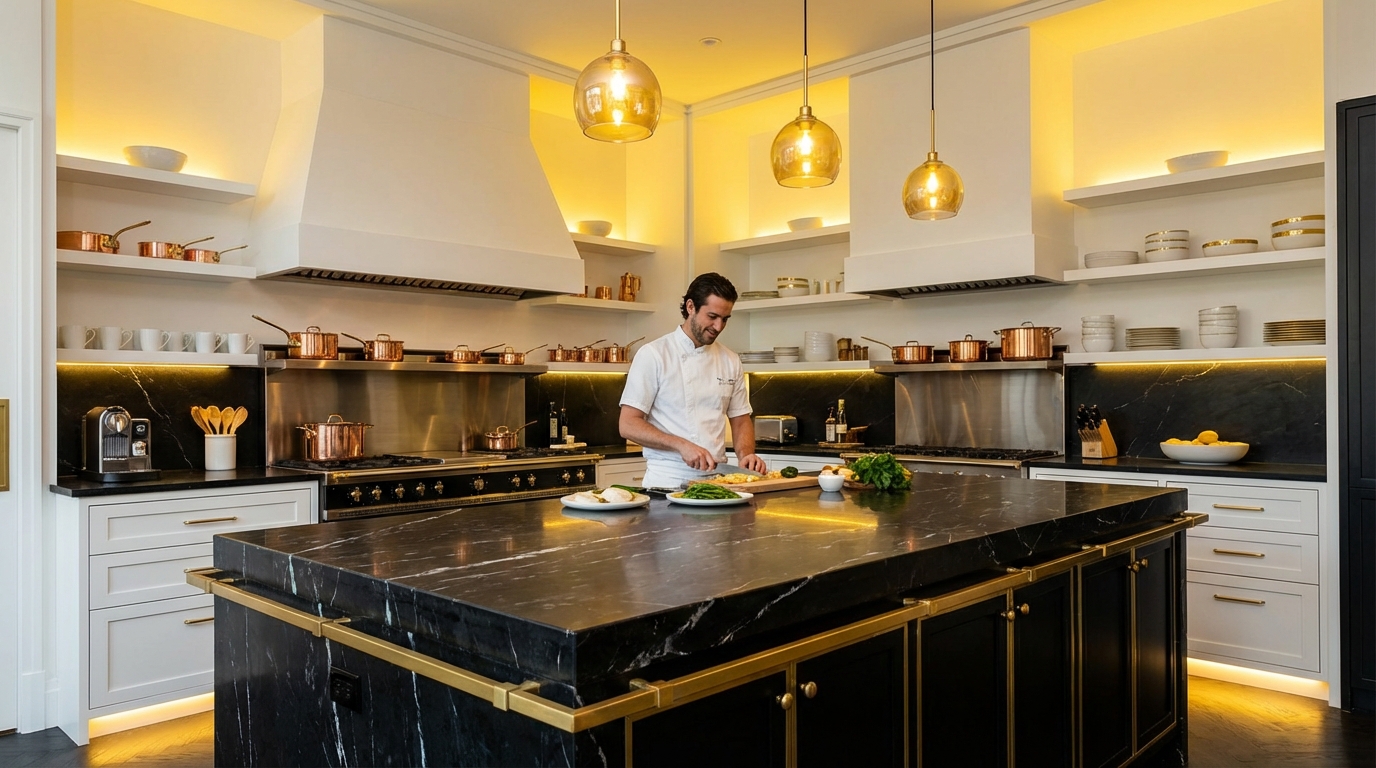
If you boil it down to one sentence, the way Noco Contracting creates chef worthy kitchens is simple: they talk to the person who actually cooks, design the space around how that person moves, and build the kitchen so it feels like a tool, not a showroom. Everything else is detail.
That might sound obvious. It is not. Most kitchen remodels tilt toward looks first, function second. Cabinets, finishes, backsplash patterns. The stuff that photographs well.
Chefs, whether they run a restaurant or cook at home every day, think in a different order. They care about reach, workflow, heat, cleanup, storage, and then looks. Not because they ignore style. They just know looks will not rescue a bad layout.
I have seen a few of the projects Noco has done where the first reaction from the homeowner was not “wow, the cabinets,” but “wow, I can grab everything without stepping around things.” That is the point. The space starts doing some of the work with you.
What “chef worthy” actually means
Before talking about how a contractor builds that kind of space, it helps to be clear on what the phrase means. Not hype. Just the basic idea.
Chef worthy kitchens let you cook faster, cleaner, and with less stress, even when things get chaotic.
That does not mean you need a giant island or professional range. Many restaurant kitchens are small and frankly kind of ugly. They work because they are planned around movement and tasks.
Key traits of a chef friendly kitchen
When Noco aims for chef level function, they keep circling back to a few questions.
- Can you reach what you need without crossing the whole room?
- Can two people work without colliding?
- Is cleanup fast enough that you do not dread it?
- Do hot zones feel safe, or do they feel like a hazard?
- Does the space stay calm when you have several pans going?
It does not matter if the homeowner cooks five nights a week or once on weekends. These questions still help. Food people care about these details, even if they do not phrase it in contractor language.
Starting where chefs start: layout, not hardware
I think many homeowners start with brands. Which range. Which fridge. Which faucet. Chefs do not start there. They start with flow.
Layout is the thing you cannot swap out later without tearing the room apart, so Noco treats it like the main ingredient.
The work triangle, and why it is not enough
You have probably heard of the work triangle: fridge, sink, stove. Three points, clear paths. It is fine as a rough guide, but it is also limited. Plenty of kitchens follow the triangle and still feel clumsy.
Noco tends to look past just three points and think in zones:
| Zone | Main tasks | What Noco pays attention to |
|---|---|---|
| Prep | Chopping, mixing, marinating | Counter depth, light, knife storage, trash access |
| Cooking | Stove, oven, pans, stirring | Ventilation, pan storage, heat safety, splatter control |
| Cleaning | Rinsing, loading dishwasher, drying | Sink size, faucet reach, dishwasher door clearance |
| Storage | Pantry, dry goods, small appliances | Pull out access, labeling, vertical space use |
| Serving | Plating, passing food, breakfast, snacks | Bar seating, landing zones, traffic patterns |
When you talk to cooks about their dream kitchen, they are often describing these zones without using the word. “I want a big prep area by the sink.” “I want guests away from the stove but close enough to talk.” That is zoning.
Real examples of layout choices
Here are a few layout shifts I have seen work well in Noco style projects:
- Moving the fridge closer to the entry so family members grab snacks without walking into the cook’s back.
- Dragging the main prep area to one side of the sink instead of splitting it in two small pieces.
- Sliding the range a bit off center on an island so there is a clear landing spot for hot pans.
- Adding a small secondary sink in the island for hand washing and quick rinses.
None of these are dramatic. They change how the room feels more than how it looks in a photo.
How Noco turns cooking habits into design choices
This is where things get personal. A chef worthy kitchen for a person who bakes twice a week will not look exactly like one for someone who grills year round and barely touches the oven.
Noco spends more time than many contractors asking how you cook before they tell you how your kitchen should look.
Questions that shape the plan
Here are the kinds of things they ask early on. If you cook a lot, you probably have answers right away.
- How many days a week do you cook at home?
- Are you usually cooking alone or with someone?
- Do kids help in the kitchen?
- Do you bake bread, pastries, or anything that needs space to rest and cool?
- Do you host dinners or parties often?
- Is there any tool or appliance you always fight with for space?
These are not small talk. They turn into physical features.
Examples of habit based design
Some real world patterns that show up:
- If you host often, they might widen walkways so guests can pass behind you safely.
- If you bake, they might plan a cooler counter area away from the oven for dough work.
- If you love coffee, they might carve a small “coffee zone” near water and outlets, so the machine and grinder do not eat up main prep space.
- If you meal prep, they might give you a long clear stretch of counter with trash and recycling right below.
None of this is about being fancy. It is about respecting that cooking is a daily pattern, not a special event.
Appliances that support real cooking, not just status
This part is tricky. Appliance choices can get emotional. People see a big range on social media and assume it will turn them into a chef. It will not. That said, good tools matter. Noco tends to push for fit over status.
Heat and control on the range
If you cook a lot, you know the difference between a burner that looks strong and a burner that actually sears without dropping heat. Noco will usually talk through questions like:
- Do you stir fry at high heat?
- Do you simmer sauces for hours?
- Do you use large stock pots?
Someone who makes big batches of stock might get one extra strong burner and one low simmer burner. Someone who mostly cooks simple weeknight meals may be fine with a more balanced setup and spend more of the budget on storage.
Ovens, warming drawers, and extras
I used to think double ovens were always better. After watching a few projects, I changed my mind. In some kitchens, a single larger oven with a good convection mode and a smart layout around it works better than stacking two smaller ones that push everything else away.
Warming drawers are similar. For people who host often or juggle kids’ schedules, they are useful. For others, they are a box that never gets used. Noco usually pushes clients to be honest about habits instead of picking features because they feel “chef like.”
Ventilation is not glamorous but it is key
Real cooking makes smoke, steam, and smell. If you cook steak indoors or do high heat searing, you already know this. A quiet, strong hood that actually captures steam is one of the most important parts of a chef worthy kitchen, but it does not get much attention online because it is not pretty.
Good contractors obsess over duct size, hood placement, and makeup air. Home cooks often just want something that matches the range. There is a gap there. Noco tends to sit in that gap and make sure the vent choice backs up your style of cooking.
Surfaces and finishes that survive real cooking
Now comes the part where design magazines usually take over. Countertops, cabinets, flooring, backsplashes. I am not saying looks do not matter. They do. You probably want to enjoy being in your kitchen. But if you cook often, you need to think like a line cook just a bit.
Countertops: how they behave under stress
Each material has tradeoffs. No perfect answer. Here is a rough comparison that often comes up in Noco projects.
| Material | Good for cooks who… | Watch out for |
|---|---|---|
| Quartz | Want low maintenance and clean looks | Can discolor with very high heat, seams show on long runs |
| Granite | Want high heat tolerance | Needs sealing, patterns hide mess but can hide crumbs too |
| Butcher block | Like a warm, soft surface for baking and prep | Needs oiling, can stain and scratch, not great by sinks |
| Stainless steel | Treat kitchen like a mini restaurant | Shows scratches, feels cold visually in some homes |
One thing I see Noco do fairly often is mix materials. Tougher, low maintenance surfaces around the sink and stove, maybe a warmer wood or butcher block on an island used more for serving and baking. That mix can feel a bit odd on paper, but in real life it follows how you use the room.
Cabinets built for real use
Cabinet choices affect your daily cooking more than you might think. Deep drawers under the cooktop can change your life if you currently dig in the back of dark bases for pots.
Some of the cabinet features that tend to show up in chef oriented projects:
- Full extension drawers for pots, pans, and lids so nothing hides.
- Pull out spice racks near the stove but not right over the heat.
- Tray dividers for sheet pans and cutting boards.
- Taller uppers that go closer to the ceiling for extra storage.
Fancy glass fronts and open shelves look nice, but cooks often regret them if they fry a lot. Grease travels. Good contractors tell you that early, even if it means scaling back some of the pretty ideas.
Floors that stay friendly long term
Chefs stand for hours. If you cook a lot, your feet and back will notice floor choice. Tile holds up well to heat and spills but feels hard. Wood or quality vinyl feels softer but can take a beating with heavy pots.
Noco tends to talk through three questions with flooring:
- Do you often drop heavy items?
- Do you want a floor that hides crumbs or shows them?
- Are you willing to maintain natural wood or do you want something easier?
There is no right answer, but pretending all floors behave the same is not honest. A real cook will find the weak spots faster than anyone.
Lighting that works like a line cook’s best friend
Bad lighting can ruin a great kitchen. If you have ever tried to check steak doneness under yellow, dim light, you know how annoying it feels. Noco treats lighting more like a tool than a decoration.
Layers of light for different tasks
Three main layers matter in a serious cooking space:
- General light: fills the room so you do not feel like you are in a cave.
- Task light: hits counters, stove, and sink directly.
- Accent / mood light: for late night snack runs or quiet mornings.
Task lighting is where most kitchens fall short. Under cabinet lights, good pendants over an island, and strong light at the sink make cutting and cleanup safer and less tiring.
Light color and brightness
Many people do not think about light temperature. Warm light feels cozy, cool light feels clean. For cooking, something in the neutral to slightly cooler range often works better because food color looks more true.
Dimmer switches give flexibility. You can keep things bright while chopping and then dial it down when eating. It sounds small, but it changes how you feel in the room.
Storage that matches how cooks actually reach for things
This is one of the most practical parts of a chef worthy kitchen. Where things live matters. If you cook often, you know your own bad habits. Maybe you leave the same three knives out all the time. Or your spices live in three different spots.
Good kitchen storage is not about fitting more stuff into the room, it is about putting the right things in the right place for how you cook.
Thinking in reach zones
Noco often organizes storage into “reach zones” around each task area.
| Zone | Best items to store there |
|---|---|
| At your fingertips | Knives, salt, oil, stirring tools, cutting boards |
| One step away | Pans, lids, mixing bowls, colanders |
| Farther storage | Rarely used gadgets, holiday platters, extra pantry stock |
This may sound obvious, but many standard builder kitchens ignore it and just scatter cabinets where they fit.
Pulldowns, pullouts, and corners
Some hardware pieces really help cooks:
- Pull out pantry units for clear view of ingredients.
- Lazy susans or corner pullouts in corner bases, so no one crawls on the floor for a stock pot.
- Vertical dividers for baking trays near the oven.
- Pull out trash and recycling directly beside main prep area.
These are the parts of the job that do not show up much in finish photos but make the kitchen feel chef like day to day.
Safety that respects real heat and sharp tools
Professional kitchens think about safety constantly. Hot oil, open flames, sharp knives, heavy stock pots. At home, it is easy to forget this and focus only on how the kitchen looks. If you cook with kids around or move fast, safety matters a lot.
Clear paths around hot zones
Noco tends to keep walkways behind the stove a bit wider, so people can pass without bumping the cook. They also try to give you landing spots on both sides of the range. A pan full of hot oil with nowhere safe to land is an accident waiting to happen.
Appliance doors also need space. An oven that opens into a main walkway creates daily tension. A fridge that blocks the room when open can start fights in a family kitchen. These are simple layout calls, but they show respect for safety.
Kids, pets, and sharp edges
If you have kids or pets, Noco might:
- Avoid very sharp projecting corners on islands.
- Keep knife storage higher or in locking drawers.
- Plan a spot for pet bowls that does not trip the cook.
None of this screams “chef,” but most restaurant cooks would nod at these ideas. Safe movement leaves more attention free for cooking.
From restaurant kitchens to home: what translates, what does not
Since this article is for people who care about food and restaurants, it is worth asking: how much of a pro kitchen should you copy at home? I think the honest answer is “some, but not all.”
Things from restaurants that work well at home
- Stainless prep areas near stoves for hot pans.
- Magnetic knife strips for fast access, if you do not have small kids.
- Open shelves for plates and bowls used daily.
- Hooks or rails for hanging frequently used tools.
Noco has used some of these ideas in home kitchens where the owner really cooks. They look simple, but they support speed.
Things that rarely translate well
Not everything from a pro kitchen makes sense at home.
- Fully open storage everywhere usually looks messy under normal home use.
- Very harsh overhead lighting feels tiring.
- All stainless everything can feel cold and loud in a small space.
Good contractors pull the parts that help cooking and soften the parts that feel too commercial.
How Noco keeps the build process from wrecking your life
This part is not as fun as talking about food, but if you have ever lived through a remodel, you know timing and planning matter. A kitchen is not optional space. When it is down, your daily life turns upside down.
Planning around real life
From what I have seen, Noco tends to:
- Plan a temporary cooking zone, sometimes with a microwave, hot plate, and small sink.
- Stage demolition and install steps so you are not without a sink longer than needed.
- Schedule loud or dusty work at times that fit the household as much as possible.
Does it still feel disruptive? Yes. But a contractor that recognizes the kitchen as the center of the home will usually try to shorten the worst parts of the process.
Cost, tradeoffs, and being honest about what you need
This is where I will push back slightly on the whole “chef worthy” phrase. Not every home cook needs a high end, restaurant inspired kitchen. You might be better off with a simpler, smart layout and a few key upgrades than with a big, showy project that strains your budget.
Noco, or any contractor, cannot decide that part for you. They can suggest ways to put money where you feel it every day. Often that means:
- Spending more on counters you touch and less on decorative tile.
- Investing in storage hardware and good lighting before luxury appliances.
- Choosing a solid midrange range and a strong hood instead of a giant pro style stove with a weak vent.
If a contractor just nods at everything you want without asking about tradeoffs, that is a bit of a red flag. Good ones push back gently when something looks nice on paper but makes little sense for how you cook.
A quick example: how a basic kitchen becomes chef friendly
Let me sketch a simple before and after, not as a fantasy, but as the kind of change that happens often.
Before
- 30 inch electric range on a wall, with a short counter on each side.
- Microwave over the range as the hood.
- Single small sink under a window, with the dishwasher squeezed right next to it.
- Fridge far from the prep zone.
- No under cabinet lights, one overhead light in the middle of the room.
- Pots stacked deep in a corner cabinet.
After, with chef worthy thinking
- Range shifted a bit to allow a long prep stretch between sink and stove.
- Real hood over the range, microwave moved to a separate cabinet area.
- Dishwasher moved slightly to make room for a wider sink and better landing zones.
- Pull out trash right by the main prep area.
- Under cabinet lighting on a dimmer, plus a stronger main light.
- Deep drawers for pots under the cooktop so you grab pans without crouching.
The room might look similar at first glance. Same square footage, same basic footprint. But for the person who cooks there, it feels like someone removed friction from every step.
Common mistakes Noco tries to steer cooks away from
If you care about cooking and are thinking about a remodel, here are a few traps many people fall into.
- Choosing appliances first and forcing the layout to fit around them.
- Copying a design from a magazine without checking if it fits your habits.
- Ignoring ventilation because it is not glamorous.
- Underestimating storage for spices, oils, and dry goods.
- Skipping good lighting to save cost, then regretting it every night.
A contractor tuned into chef style kitchens will push your attention back to these basics before you finalize pretty finishes.
Questions cooks often ask, with honest answers
Do I need a professional range for a chef worthy kitchen?
No. A good quality home range with strong burners and a reliable oven is enough for most serious home cooks. Ventilation, layout, and prep space matter more. If you have extra budget and truly love heavy searing and big stock pots, a pro style range can be nice, but it should not be the first thing you lock in.
Is an island always better than a peninsula?
How big should my sink be if I cook a lot?
Larger single bowls are often better for serious cooking because you can fit big pans and stock pots. Some people like a second small prep sink if two people cook together often. The key is not just size but also where the sink sits in relation to prep space and dishwasher.
Is open shelving practical for real cooking?
A small amount can be helpful for plates, bowls, or ingredients you use daily. Too much open shelving near the stove can collect grease and dust, which will annoy you if you cook with oil often. A mix of closed cabinets and a few open sections usually works best.
How do I know if my contractor understands chef style kitchens?
Listen to what they focus on during early talks. Do they ask about how you cook, or do they jump right to cabinet colors? Do they talk about ventilation, lighting, and storage, or only finishes? Someone who builds kitchens for people who really cook will be genuinely interested in your habits, not just your Pinterest board.
Is it worth remodeling if I only cook a few times a week?
Maybe. A better layout can still make those few meals more pleasant, and a good kitchen can support you if you end up cooking more in the future. But you do not need to chase every high end feature. If you are more of a restaurant person who cooks occasionally, you might focus on comfort, a nice eating area, and enough function to handle simple meals without stress.
What is the one change that usually helps cooks the most?
If I had to pick one that shows up again and again, I would say: create a clear, generous prep zone with good light, close to the sink, with trash and knives within reach. When that zone works, the rest of the kitchen tends to feel better. Noco seems to build a lot of kitchens around that simple idea, and for most people who love food, it pays off every single day.