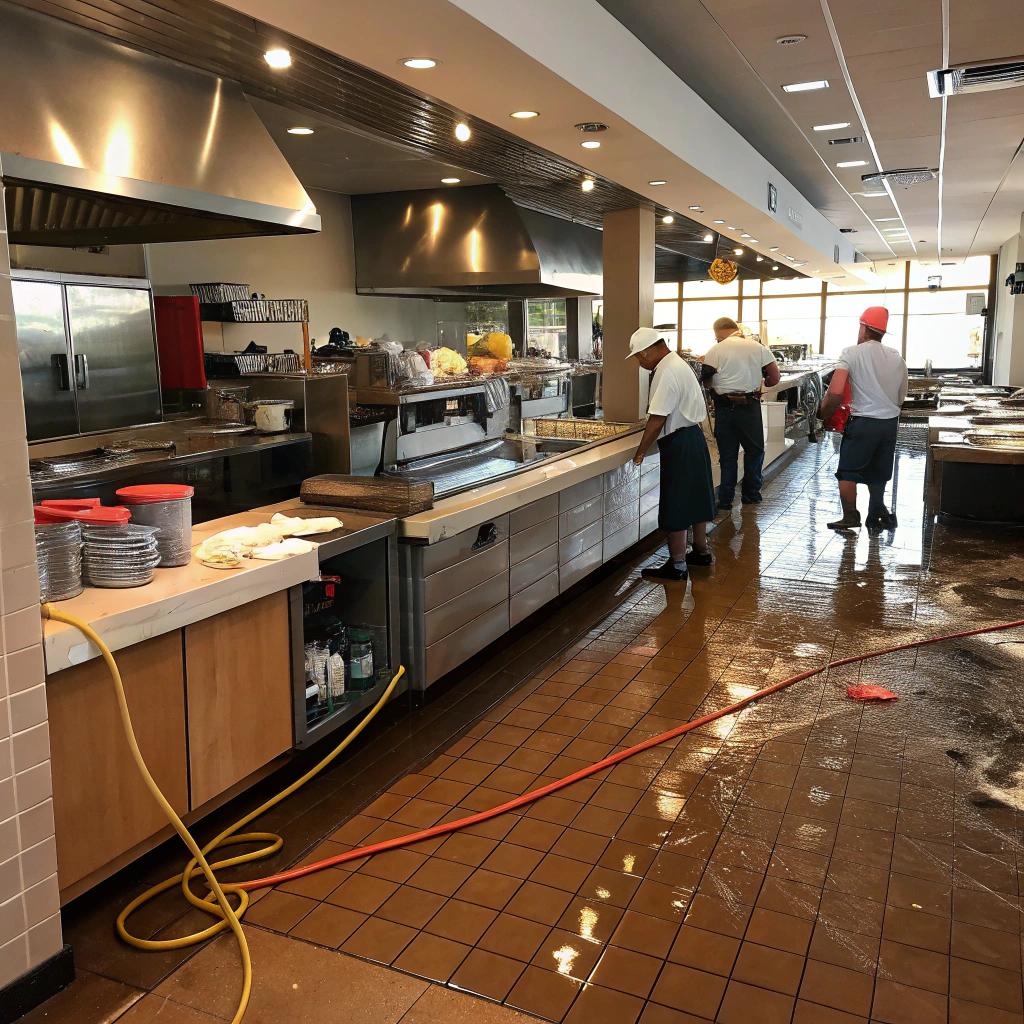
Water damage cleanup in a Salt Lake City restaurant kitchen usually starts with one thing: stopping the water and getting the standing water out as fast as you can. After that, you move into drying, cleaning, disinfecting, and checking the structure so the kitchen can reopen safely and pass health inspections again. That is the short version. The longer version is where it gets a bit more stressful, a bit more technical, and honestly, more interesting if you care about how kitchens really work behind the scenes.
If you run a restaurant, manage one, or you just like the idea of how a line keeps moving through a small disaster, it is worth understanding how this cleanup actually happens in a real kitchen, not just in a generic building.
And since people sometimes ask whether machines or people do a better job, there is a useful comparison of power washing and manual work here:
Water Damage Cleanup Salt Lake City
Why water damage in restaurant kitchens is different
A flooded office is annoying. A flooded kitchen can shut down your income the same day.
Food, open surfaces, hot equipment, dense plumbing lines, and strict health rules all sit in one tight space. So when water gets into that space, you do not just think about drywall and flooring. You have to think about:
- Food safety
- Slip hazards
- Grease and protein residues that hold moisture
- Steam, heat, and ventilation patterns
- Inspection records and insurance documentation
I once watched a small local kitchen close for almost a week from what started as a slow leak under a dish machine. It did not look dramatic at first. A few damp baseboards, a darker patch on the floor, that kind of thing. But under the quarry tile, the subfloor was soaked. By the time they took a proper look, mold was on the back side of the wall behind the dish pit.
You can probably guess what the health inspector thought about that.
Water in a restaurant kitchen is not just a maintenance problem, it is a food safety problem tied directly to your ability to operate.
Common sources of water damage in Salt Lake City kitchens
Plumbing issues in older and newer buildings
Salt Lake City has a mix of older brick buildings and newer buildouts. Both can have trouble.
Some common sources:
- Failed hose lines on dishwashers or combi ovens
- Clogged floor drains and grease traps backing up
- Loose or failing P-traps under prep sinks
- Broken ice machine lines
- Rooftop unit condensate draining into the kitchen
Small leaks can run along pipes or behind walls for days. The kitchen might just smell “damp” or “a bit musty” during a busy service, and nobody has the time to chase it.
Sprinklers and fire suppression discharge
Sometimes the system works as designed during a small fire on the line, and suddenly the kitchen is wet from above as well as below. Water mixes with grease, soot, and food debris. This mix is heavier and harder to clean than plain water.
Snow, rain, and drainage quirks
Salt Lake City winters can add melting snow to the trouble list. Roofs, outside stairwells, or rear delivery doors can let water in. It might not flood the kitchen, but it can seep under thresholds and along walls, slowly softening materials.
Where the water comes from changes what is in it: clean water, gray water, or grease and food slurry. That mix changes how you clean and how fast you need to move.
First steps when your restaurant kitchen floods
The first minutes matter more than most people like to admit. You cannot control the whole situation, but you can control the first moves.
1. Protect people and power
I know turning off power in a kitchen during service sounds painful, but if there is standing water, you do not have much of a choice.
Key steps:
- Keep staff and guests away from the flooded area.
- If water is near outlets, extension cords, or low equipment, cut the power to that zone.
- Mark wet floor areas so nobody falls.
It feels dramatic when you are in the middle of tickets, but a slip or shock is worse than a slow night.
2. Stop the water at the source
Try to track the origin fast:
- Shut off local valves under sinks or behind equipment.
- If that does not work, shut off main water to the unit or the building if you know where it is.
- Turn off dishwashers or ice machines feeding the leak.
This sounds obvious. Yet in real kitchens, people often start mopping before they have fully stopped the leak.
3. Get the bulk water out
Once the flow is under control, remove standing water:
- Use wet vacs rather than just mops if you have them.
- Push water toward floor drains where safe.
- Collect solids or food waste first, so drains do not clog.
At this point, many restaurant teams think they are nearly done. They are not. They have only handled the visible problem.
How professional cleanup usually handles a kitchen
You can mop, sanitize, and open windows, and sometimes that works for tiny leaks. For bigger events, most restaurants bring in restoration or cleaning pros, especially in Salt Lake City where a lot of commercial spaces share walls and utilities.
Here is how a typical process looks, from what I have seen and from what restoration companies usually describe.
Step 1: Assessment and moisture mapping
Someone will walk the space with moisture meters and thermal cameras. The goal is not just “what looks wet” but “what is actually wet.” Water can travel sideways under tile or inside walls.
Areas checked usually include:
- Behind stainless panels and equipment stands
- Under quarry tile or vinyl flooring
- Inside wall cavities behind cook lines, dish pits, and walk-ins
- Base of bar areas or server stations if they connect to the kitchen
A surface can feel dry to the touch and still hold enough moisture inside to grow mold and swell over the next few weeks.
This part is where pros often catch things the kitchen team missed during the rush.
Step 2: Containment and protection
To keep the rest of the restaurant from getting cross contaminated, they may:
- Install plastic sheeting or temporary barriers around the damaged area
- Seal vents or use negative air machines to keep mold spores or odors from spreading
- Protect equipment with covers if removal is not practical
Again, this can feel like overkill when you just want to get back on the line. But if mold or bacteria spread into front-of-house or storage, the recovery can actually take longer.
Step 3: Extraction and initial cleaning
High capacity extraction tools pull water from floors and sometimes from inside materials like carpet in office areas attached to the kitchen. While restaurants rarely carpet their kitchens, you might have adjoining offices or break rooms.
Then comes cleaning:
- Removing grease and debris mixed with water
- Scrubbing floor grout where water has settled
- Cleaning under mats, racks, and under equipment legs
Meals worth of food scraps can end up in corners and under lines. Once water hits, those spots quickly become bacteria heavy if not fully cleaned.
Step 4: Drying and dehumidification
High moisture air in a hot kitchen is not just uncomfortable, it pushes water deeper into materials.
You will usually see:
- Air movers directed across floors and walls
- Dehumidifiers pulling moisture out of the air
- Periodic moisture readings to decide when to adjust placement
Drying can take 2 to 5 days, sometimes more, depending on the amount of water and the construction of the building.
Step 5: Disinfection and odor control
Healthcare level sanitizers or food safe disinfectants are used on:
- Floors and baseboards
- Lower walls and splash zones
- Non food contact surfaces that might have been splashed
Odor control is more than comfort. A musty smell can signal trapped moisture. If it lingers, it is usually a sign something deeper is still wet or contaminated.
Special challenges in restaurant kitchens
1. Grease and residue that trap water
Grease on floors and walls can act like a thin film that holds water in place. In a dish pit, for example, a mix of detergent, grease, and proteins can make standing water more sticky and harder to remove.
That has a few effects:
- Drying is slower because water is not just free, it is bound in residues.
- Cleaning needs stronger degreasers before disinfectants can work.
- Mold and bacteria can feed on the organic film.
If a cleanup only disinfects without truly degreasing, problems come back.
2. Food safety and inventory loss
Water that reaches food storage can be painful on the budget. You may need to throw away:
- Cardboard packaged dry goods on wet floors
- Produce boxes soaked from below
- Any food in direct contact with contaminated water
There is often a quiet argument in the back about whether some items can “probably” be saved. I understand the urge, but from a food safety and inspection view, conservative choices are safer.
3. Tight layouts and heavy equipment
Line coolers, fryers, ovens, and dish machines are heavy and often built into tight spots. Water can easily get under them where brooms never reach.
Cleaning pros may:
- Lift or roll out equipment where code and hookups allow
- Use low profile tools to get under stands
- Dry under equipment feet, where corrosion and rot often start
If water is trapped under a cook line, heat from the equipment can keep it warm and humid, which is perfect for mold and rust.
4. Compliance pressure
Salt Lake County and nearby health departments track inspection histories. Repeated moisture and cleanliness problems in a kitchen tend to show up in reports. That can hurt reputation and even licensing.
So you are not only cleaning for your own standards. You are cleaning for the next inspector, the landlord, insurance, and your staff and guests.
How water affects common kitchen materials
It helps to know which surfaces are more at risk. Some materials bounce back fine. Others, not so much.
| Material | Short-term effect of water | Long-term risk | Typical response |
|---|---|---|---|
| Stainless steel | Water spots, grease streaks | Corrosion at seams, rust where coating is damaged | Dry, degrease, sanitize, check seams and legs |
| Quarry tile floor | Slippery surface, wet grout | Cracked grout, loose tiles, moisture below | Extract water, deep clean grout, monitor for hollow tiles |
| Vinyl baseboards | Peeling, gaps at seams | Mold behind baseboards, wall swelling | Remove if water got behind, dry wall, replace as needed |
| Drywall in back areas | Staining, soft spots | Mold growth, crumbling, odor | Cut out wet sections above water line, dry structure |
| Wood framing or trim | Slight swelling | Warping, rot, mold | Dry slowly, monitor moisture, replace if decay appears |
| Insulation in walls | Holds water, heavy | Mold and odor if not dried fast | Often removed and replaced if soaked |
Knowing what you are standing on helps you judge how serious a water event really is.
Cleaning methods: manual vs equipment in a kitchen setting
Manual scrubbing and mopping have their place. So do power washers and specialized tools. In a commercial kitchen, you usually need both, not one or the other.
When manual cleaning makes more sense
Manual methods are often better for:
- Detail cleaning around gas lines and electrical connections
- Wiping down food contact surfaces after the main cleanup
- Careful work around sensitive equipment like control panels
- Small leaks that never reached walls or subfloors
Hands and eyes close to the surface catch details that machines miss. You can see a hairline crack, a bubble in paint, or a soft patch.
When equipment is more useful
Larger floods or heavy contamination often call for:
- Wet vacs for standing water
- High pressure or controlled power washing on suitable surfaces
- Scrubbers for big floor areas
- Dehumidifiers and air movers for drying
In a Salt Lake City restaurant, where humidity levels can shift with the season, drying gear matters a lot. Hand mopping alone cannot pull moisture from inside grout or subfloor layers.
I think the best approach uses both. Machines for speed and depth, people for judgement and detail.
Working with health inspectors and insurance
Many restaurant owners worry more about paperwork after water damage than the water itself. That might be reasonable. Or at least understandable.
Documenting the damage
Simple habits help:
- Take photos from multiple angles as soon as it is safe.
- Note dates and times of the leak, shutoff, and cleanup steps.
- Keep a list of damaged food, materials, and equipment with rough values.
Insurers and inspectors like having a clear record. It also helps you remember what happened when you are already tired from dealing with the emergency.
Talking with the health department
You are usually better off being proactive:
- Let them know there has been water intrusion in the kitchen.
- Explain what was damaged and what cleanup plan is in place.
- Share contact details for any restoration company involved.
Their job is not to make your life harder, although it can feel that way. They want to see that you treated the event as a food safety risk, not just a cleaning chore.
When you show the steps you took without waiting to be forced, inspectors tend to respond more fairly and work with you on reopening.
Practical steps to prepare before anything floods
This is the part that often gets ignored until after the first incident. But it does not need to be complicated.
Know your shutoff points
If you handle one thing this week, it could be this.
- Find the main water shutoff and label it clearly.
- Label local valves under sinks and behind equipment.
- Make sure at least a few key staff know how to use them.
A 10 minute delay finding a valve can turn a small leak into a floor wide event.
Train staff on a simple flood routine
You do not need a thick binder. A one page guide can help.
For example:
- Step 1: Protect people and power.
- Step 2: Stop the water.
- Step 3: Call manager and any cleanup contact.
- Step 4: Start basic extraction and protect food.
Tape it in the dish area or manager office where it will actually be seen.
Check vulnerable spots regularly
Once a month, or even every couple of months, someone can:
- Look under sinks and dish machines for dampness.
- Check around floor drains for slow emptying or smells.
- Listen for hissing or dripping behind walls or in ceilings.
It sounds like overthinking, but catching a slow leak early is much cheaper than a surprise flood on a Friday night.
How fast can a kitchen realistically reopen?
This is the question owners tend to ask before anything else. The honest answer: it varies more than most people like.
Still, you can think of it in rough bands.
| Type of incident | Example | Typical impact | Possible downtime |
|---|---|---|---|
| Minor, clean water leak | Loose sink connection, small area | Limited floor drying, no wall damage | Same day or next day |
| Moderate leak with wall contact | Dishwasher hose failure, multiple stations affected | Some wall drying, baseboard removal, more cleaning | 2 to 4 days |
| Major flood or backup | Drain backup, sprinkler discharge, sewer involvement | Structural drying, material removal, inspection follow up | 5 days to multiple weeks |
Salt Lake City building layouts, shared walls, and mixed use spaces can stretch those numbers. If you share plumbing stacks or mechanical spaces with other tenants, coordination slows things down a bit.
Preventing mold after water damage in a hot kitchen
Kitchens already have steam, heat, and organic material. Add water and you have conditions where mold can grow faster than in many other rooms.
Some practical habits:
- Run ventilation properly once it is safe, so moisture can escape.
- Remove baseboards where water clearly passed through.
- Dry inside wall cavities if they were affected, not just the surface.
- Check hidden corners and behind equipment a week or two later.
If any area smells musty after cleanup, assume there is still a moisture problem rather than masking it with deodorizers.
What restaurant owners can reasonably do themselves
Not everything needs a full restoration crew. For small incidents, your team can handle quite a lot, especially if you keep some basic tools around.
You can usually manage:
- Immediate shutoff and basic water removal
- Surface degreasing and sanitizing on floors and prep areas
- Discarding exposed food and damaged packaging
- Initial documentation for insurance
Where it gets risky to do it all yourself:
- Water in walls, ceilings, or under floors
- Any sign of sewage or drain backup
- Mold visible within days of the event
- Repeated leaks from the same area
If you are in doubt, moisture testing can be a reasonable middle ground. It tells you whether you are dealing with a surface level problem or something deeper that needs outside help.
Q & A: Common questions from restaurant owners
Can I stay open if only part of the kitchen is wet?
Sometimes, but not always. If the affected area is clearly separated, no food storage is touched, and you can keep staff safe, some restaurants continue limited service. Still, health rules may require full closure until cleanup and drying are confirmed. It is usually best to check with your local health department before deciding.
Is it enough to just disinfect the floors after a leak?
Not really. Disinfectants work on surfaces they can reach. If water has entered grout, walls, or subfloor materials, surface disinfection will not fix the deeper issue. You need proper drying and sometimes partial removal of damaged materials.
Do I need to replace all my equipment after a flood?
Most stainless and commercial equipment can be cleaned, dried, and tested rather than replaced, as long as control panels and motors were not submerged. The decision usually depends on how high the water reached, how dirty it was, and whether electronics or insulation were affected.
How can I tell if cleanup was good enough?
Some signs of a solid cleanup:
- Moisture readings back to normal ranges in walls and floors
- No lingering musty or sour odors after a week or two
- No new staining, bubbling paint, or soft spots on surfaces
- Health inspector sign off and consistent staff comfort with the space
If you are still wondering whether your own kitchen would hold up to a surprise inspection after a water event, what would be the first thing you would look at: the drains, the walls, or the walk-in door frame?