If you cook a lot at home in Denver, vinyl flooring is one of the most practical and stylish choices for your kitchen. It handles spills, cleans easily, feels softer under your feet than tile, and can copy the look of wood or stone without the same upkeep. If you want to explore local options, you can look at vinyl flooring Denver choices that match both your cooking habits and your kitchen style.
That is the short answer. Vinyl works well in a busy kitchen. It is not perfect, but it usually hits a good balance between comfort, price, and looks. Let me go through the details a bit more slowly, because kitchen life is not just about pretty pictures. You have knives, spills, hot pans, long cooking sessions, guests standing around the island, and sometimes kids or pets racing through the room. The floor takes a lot of that impact every single day.
Why vinyl works so well for Denver home kitchens
I want to start with the practical side, because style ideas mean very little if the floor cannot handle real cooking. Think about what your average week in the kitchen looks like. Are you cooking once a day, or almost every meal? Do you bake a lot? Do you fry food and deal with grease splatters?
Vinyl flooring tends to work well in most of these cases because it is:
- Water resistant, often fully waterproof
- Softer and warmer than tile underfoot
- Relatively quiet when people walk
- Easier to clean than many natural materials
- Less expensive than most hardwood and stone options
I have stood on ceramic tile for hours while prepping for a dinner party, and my back complained for days after. On a good vinyl floor, you still get tired if you cook for three or four hours straight, but it is a bit kinder to your joints. Some people will say they do not notice, but most home cooks do.
Vinyl works best in kitchens where spills, splashes, and busy foot traffic are part of normal life, not the exception.
Living in Denver adds a few extra details. Indoor heating can dry the air, and winters can bring snow and slush into the entry and sometimes into the kitchen. Dragging in grit can scratch certain floors. Vinyl tends to be more forgiving than softer woods and some laminates when that happens, especially if you pick a textured or matte finish that hides minor wear.
Types of vinyl flooring that suit kitchen use
There are many terms for vinyl flooring, and the mix can feel confusing. In a home kitchen, you run into a few main categories.
Luxury vinyl plank for a wood kitchen look
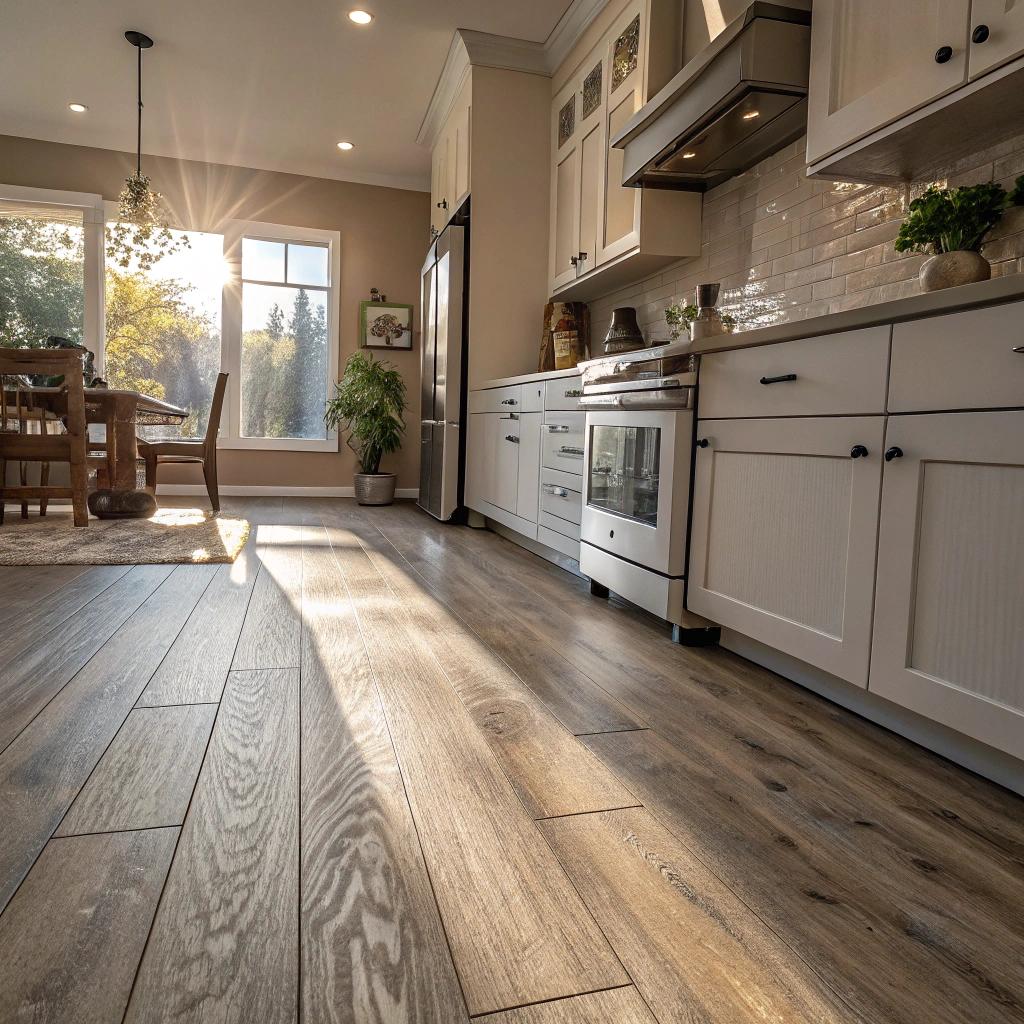
Luxury vinyl plank, or LVP, is popular in Denver kitchens that aim for a warm, homey style. It tries to copy the look of hardwood, but it is more resistant to water and usually easier to maintain.
Common wood looks you see in kitchens include:
- Oak patterns in light, medium, or dark tones
- Maple or birch style, which tends to be smoother and lighter
- Rustic or reclaimed looks with knots and varied board shades
- Very wide planks for a modern, open feeling
A lot of home cooks like LVP because it blends well with cabinets, especially if you like shaker or simple flat panel doors. You can run it from the kitchen into the dining room and living room so the whole space feels connected. If you host dinner parties or Sunday brunch, that smooth flow matters more than many people admit.
If you want a classic wood feel in your kitchen but worry about spills, luxury vinyl plank gives you most of the look without the same fear of water damage.
Luxury vinyl tile for stone and patterned looks
Luxury vinyl tile, or LVT, is often designed to copy stone, tile, or more creative patterns. Some Denver kitchens that lean more modern or restaurant inspired use this style. You can find vinyl that looks like:
- Concrete, for a more industrial cooking space
- Marble or other stone for a cleaner, almost hotel kitchen style
- Terrazzo prints for a playful, speckled surface
- Simple square tiles in solid colors or soft patterns
One thing I like about LVT in a kitchen is that it can handle darker grout line looks without real grout cleaning. You can have the visual lines of tile patterns, which can frame an island nicely, but still wipe everything down with a mop in a few minutes.
Sheet vinyl for simple, budget friendly kitchen updates
Sheet vinyl is one large piece rolled out across the floor. It is less trendy than LVP, and some people think of older kitchens when they hear “sheet vinyl”. I think that view is a bit unfair. Newer sheet vinyl often has better patterns and can be very practical, especially in smaller kitchens or rentals.
It has fewer seams, which helps with moisture and crumbs. If you are not trying to impress anyone and just want a clean, easy to maintain surface while you cook, sheet vinyl can be enough. The style range is smaller than LVP and LVT, though, so if you are picky about the exact look, you might feel a bit limited.
How vinyl flooring behaves in a real cooking space
Let me connect this to actual cooking behavior, not just material features. Every time you chop vegetables, stir sauces, or handle raw meat, something is hitting the floor. Some of it is obvious, like a dropped carrot slice. Some of it is invisible, like fine oil mist near the stove.
Vinyl handles all of that in a fairly low stress way, as long as you clean up within a reasonable time. You do not have to panic if water sits for a short while. If a pot of pasta water spills, you mop it up and move on with your dinner. That is the appeal.
| Kitchen activity | Impact on floor | How vinyl responds |
|---|---|---|
| Boiling and draining pasta | Water drips and splashes near stove and sink | Water stays on surface, wipes up easily |
| Pan frying | Oil spots and small grease splatters | Needs quick wiping, does not stain as fast as some porous surfaces |
| Baking with flour | Fine dust, sticky dough bits on floor | Dust sweeps up, sticky bits scrape off without much damage |
| Hosting family dinners | Heavy foot traffic, crowded space | Resists scuffs fairly well, especially with textured finishes |
| Kids and pets | Dropped snacks, water bowls, minor scratches | Stands up to spills, minor marks blend in if pattern hides them |
That said, vinyl is not magic. Dragging a rough cast iron pan across it can scratch it. Dropping a sharp knife point first can nick it. You still need to be somewhat careful, but the margin for error is wider than with many other floors.
Design ideas for stylish Denver kitchens with vinyl flooring
This is where it gets more fun. You can choose a floor that not only survives cooking but also sets the tone of the space. The same recipe feels a bit different if you cook it in a bright Scandinavian kitchen than in a darker, almost steakhouse style kitchen.
Warm wood vinyl for homey, cook friendly spaces
If you love slow cooking, big pots of soup, and baking bread, you might lean toward warmer tones. Light to medium oak style vinyl often fits this mood. It pairs well with white or cream cabinets and simple open shelving.
Ideas you can try:
- Light oak LVP with white cabinets and black hardware for a fresh, calm space
- Medium oak with deep green or navy cabinets for a richer, slightly classic feel
- Rustic wood look vinyl with visible knots, combined with butcher block counters
I cooked in a kitchen with medium oak style vinyl and white shaker cabinets, and it felt very relaxed. You could spill tomato sauce, clean it up, and the floor would look exactly the same. The warm tone also hid crumbs a bit, which is a blessing and a curse. You need to remember to sweep anyway.
Cool toned wood look for modern home chefs
Some people in Denver like a more modern, almost restaurant inspired look. Think of stainless appliances, clean lines, and maybe a slab backsplash. In that case, a cooler toned wood vinyl can work better.
These floors often have gray or greige (gray plus beige) tones. The look can feel more intentional, almost like a designed cooking studio. If you film cooking content or share your recipes on social media, this type of floor can frame your work nicely without stealing the show.
Pairing ideas:
- Gray oak style vinyl with white or pale gray cabinets and simple bar pulls
- Greige planks with wood accents and matte black fixtures
- Light cool wood with open shelves and hidden appliance storage
Cool toned vinyl can give your kitchen a calm, modern base, which lets your cookware, cutting boards, and ingredients stand out more in photos and in real life.
Stone and concrete looks for a restaurant style kitchen
If you like the feel of a professional kitchen, but you still want something that feels comfortable at home, vinyl that copies concrete or stone might suit you better. Think of a matte gray concrete pattern under a long island, with pendant lights and maybe metal stools.
This style can look very clean and direct. Some people find it too cold, though. If you cook a lot of comfort food, you might want to warm it up with wood accents, warm lighting, or colorful rugs.
You can mix stone look vinyl with:
- Wood cabinets to soften the industrial feeling
- Open metal shelving for a more commercial kitchen vibe
- Sleek handleless cabinets for a minimalist layout
Patterned vinyl floors for bold cooking spaces
Patterned vinyl can take a plain kitchen and give it more personality. It works well if the rest of your kitchen is simple. For example, white cabinets with a patterned floor can feel playful without looking chaotic.
Patterns to think about:
- Subtle geometric shapes in two close colors
- Soft terrazzo style with fine speckles
- Classic checkerboard in low contrast shades
The risk here is that you might get tired of a bold pattern faster than a plain floor. I think it helps to choose lower contrast patterns, where the design is visible but not shouting at you while you make coffee at 6am.
Matching vinyl flooring to your cooking habits
A lot of design talk focuses on cabinets, countertops, and backsplash choices. The floor often comes last, almost as an afterthought. For a serious home cook, that is a mistake.
Ask yourself a few direct questions:
- How many hours do you stand in the kitchen on a typical day?
- Do you often cook big meals for family or friends?
- Do you drop things a lot, or are you fairly careful?
- Do you like to clean as you go, or do you sometimes leave spills for later?
If you cook all the time and do not love cleaning, you might want:
- A mid tone color that hides crumbs between sweeps
- A matte or lightly textured surface that does not show streaks
- A pattern with some variation, so small marks blend in
If you cook less often but care more about a crisp, bright look, you can get away with lighter floors that show more. You just have to accept that one piece of parsley on the floor will stare at you until you pick it up.
Considering Denver climate and lifestyle
Denver kitchens have a few quirks that other cities may not worry about as much. Snow, for one. Dry air is another. And a lot of people move between outdoor grilling and indoor cooking quite often.
Handling snow, slush, and grit
If your kitchen connects directly to the backyard or a garage, you probably know the drill. People come in with wet shoes, maybe dragging a little grit. On some floors, this turns into a mess or leaves obvious scratches over time.
Vinyl handles moisture well, but grit is still an issue for any surface. A few realistic habits that help:
- Keep a good mat just outside and just inside the door
- Ask guests to take off shoes more often, at least in winter
- Sweep or vacuum the high traffic path through the kitchen more frequently
This might sound obvious, but if you are honest, most people skip the inner mat and then wonder why the floor next to the door wears out faster.
Sunlight and window exposure
Denver has a lot of sunny days. This is nice for cooking, but it can fade some flooring over years. Many modern vinyl products handle UV better than older ones, but it is still something to ask about when you choose a specific line.
If your kitchen has big south or west facing windows, you might want:
- Vinyl with good UV resistance, which you can check in the product details
- Simple shades or blinds to filter harsh light during peak hours
- Rugs in spots that get the most sun, if you like how they look
Balancing vinyl flooring with the rest of the kitchen
The floor never exists by itself. It needs to work with cabinets, counters, appliances, and even your cookware on open shelves. If everything fights for attention, the space can feel busy, and cooking becomes less calm.
Coordinating color and tone
A simple way to think about this is to pick one main surface to be the “star”. For some people, that might be a bold countertop. For others, a colorful backsplash. If one thing is strong, let the floor stay quieter.
Some quick pairings that usually work:
| Cabinet style | Counter style | Vinyl floor idea |
|---|---|---|
| White shaker | Light quartz | Medium oak LVP to add warmth and depth |
| Dark navy or forest green | Marble look | Light, natural wood vinyl for contrast |
| Flat panel light wood | Concrete look | Gray concrete vinyl or subtle stone pattern |
| White cabinets with bold tile backsplash | Simple solid counter | Soft, low contrast patterned vinyl |
I am not claiming these are rules. You can break any of them. But if you feel stuck, this type of checklist can keep you from pairing three loud elements at once and then feeling tired of the room after a year.
Thinking about light vs dark floors
The light vs dark debate comes up in almost every kitchen project. Each side has tradeoffs.
- Light vinyl floors can make a small kitchen feel bigger and brighter, but show dirt faster.
- Dark vinyl floors can feel rich and grounded, but dust and pet hair may stand out.
- Mid tone floors often strike a realistic middle ground for busy cooks.
If you cook a lot and do not love constant cleaning, a mid tone vinyl with some pattern or grain is usually the easiest to live with day after day.
Installation choices that affect daily kitchen life
Installation details might sound boring, but they affect how your kitchen feels and how the floor lasts. You do not have to know every technical detail, but a few points matter.
Underlayment and comfort
Some vinyl products have attached underlayment. Others need a separate layer underneath. This can change how soft or quiet the floor feels.
If you stand a lot while chopping, searing, and doing dishes, a slightly cushioned floor can really help. It will not feel like an anti fatigue mat, but the difference from a hard tile surface is noticeable.
Water prone areas
Think about spots that see the most water.
- Directly in front of the sink
- Near the dishwasher
- Close to a water dispenser on the fridge
It is still smart to:
- Use small rugs or mats in those areas
- Wipe up bigger spills quickly
- Check appliance connections sometimes to catch slow leaks early
Vinyl can deal with water, but constant standing moisture from a slow leak under a dishwasher can damage almost any floor if it goes on long enough.
Cleaning and maintenance for a busy cook
If you enjoy cooking, you probably do not want to spend your nights scrubbing the floor. Vinyl works well for people who prefer simpler routines.
Daily or weekly habits
- Sweep or vacuum crumbs and grit to prevent scratching
- Spot clean spills with a damp cloth
- Use a gentle cleaner that is made for vinyl when needed
Many Denver home cooks find a rhythm where they do a quick sweep every day or two, and a more careful mop once a week. If you cook heavy meals every day, you might push that to twice a week.
What to avoid on vinyl
Vinyl is tough in some ways but can be sensitive to certain products and habits.
- Avoid very harsh chemical cleaners or strong solvents
- Skip abrasive scrub pads on the floor
- Try not to drag very heavy furniture without pads
None of this is shocking, but it is easy to forget in a rush. I once saw someone scrub a vinyl floor with a rough metal pad to remove a bit of sticky candy. It worked, but it also dulled the surface in that one spot forever.
Common mistakes people make with vinyl in kitchens
It might help to look at a few missteps before you decide on your own floor. Not to scare you, just to give you a more realistic view.
Choosing style only from photos
Online images are helpful, but they flatten the real experience. A floor can look perfect on a screen and feel strange in person.
Try to:
- Get physical samples and place them in your kitchen at different times of day
- Test how the texture feels under bare feet and shoes
- See how crumbs or a bit of flour show up on the sample
This last step might sound odd, but scatter a tiny bit of flour, then wipe it off. You will see how forgiving the color and texture are. Someone who cooks a lot of bread or pastry will notice this daily.
Picking a floor that clashes with the rest of the house
Your kitchen is part of your home, not a separate restaurant. If the adjacent rooms have very different floors, moving from one to another can feel jarring.
Many Denver homes now use the same or similar vinyl across open plan spaces. That can make the main level feel calmer. If you already have wood look vinyl in the living area, a stone look vinyl in the kitchen might break the flow. Sometimes that is fine, but it should be a choice, not an accident.
Ignoring lighting conditions
The same vinyl can look different under warm vs cool lighting. If your fixtures cast a yellow tone and you choose a floor that skews very warm, the whole room may look more orange than you expect.
Bring a sample under your actual kitchen lights in the evening, not just in daytime sunlight. Cooking often happens at night, so that is the light you will see most.
A quick Q&A to wrap things up
Is vinyl flooring good enough for someone who cooks almost every day?
Yes, in most cases. For home cooks who prepare daily meals, vinyl usually balances comfort, durability, and maintenance better than many other options. You can stand for long cooking sessions with less strain, and spills are easier to manage. It is not perfect, but for the price, it is hard to beat.
Will vinyl flooring look cheap in a nice Denver kitchen?
It can, if you pick very flat, low detail patterns or the wrong color for your space. Higher quality LVP and LVT have better printing and texture, and in many kitchens, people do not notice it is vinyl at first glance. If you care about style, take time with samples and focus on mid to higher quality lines instead of the lowest cost option.
Can I use the same vinyl floor in the kitchen and dining room?
Yes, and many people do. Running one vinyl floor across kitchen, dining, and living areas makes open spaces feel connected. It also avoids transitions that can trap crumbs. Just make sure the design works with both cooking and more formal or relaxed eating areas.
Does vinyl flooring affect how safe the kitchen feels while cooking?
Some vinyl finishes are more slip resistant than others. Many kitchen friendly products have a bit of texture, which helps when the floor is slightly wet. If you worry about slipping, avoid very glossy surfaces and ask for textures that give more grip. Also, simple mats near the sink and stove add an extra layer of safety.
What is one detail people often regret skipping?
Many people wish they had tested how the vinyl looks with their actual cabinets and counters before ordering. They choose the floor, then later pick cabinets, and the tones do not quite match. Laying samples together on the floor is a small extra step, but it makes a big difference for how the kitchen feels while you prep, cook, and share meals.