If you run a restaurant in Salt Lake City and you are dealing with water on the floor, stains on the ceiling, or a strange damp smell in the dining room, you probably need to treat it as a serious fire damage restoration Utah problem, not just a housekeeping issue. Water in a restaurant is more than an inconvenience. It affects food safety, customer comfort, staff safety, and your ability to stay open and keep revenue coming in.
That sounds a bit dramatic, but anyone who has watched a Friday dinner shift grind to a halt because a pipe burst above the line knows it is not just about a few wet tiles. Water travels. It hides in walls, under walk-in floors, around bar bases, and you often see the damage late, when there is already swelling, mold, or corrosion.
I think most owners and chefs know that, at least in theory. The hard part is turning that vague worry into a clear plan. So let us walk through what you can do before, during, and after a water incident, with a focus on restaurant realities like food storage, health inspections, and keeping service going when you can.
Strong food and safety habits only work if your building is healthy. Managing water is part of food safety, not a separate problem.
How water damage shows up in a restaurant
You do not always see water gushing from a pipe. Often the hints are small and easy to ignore because you are focused on tickets, staffing, and food costs.
Common signs you should not ignore
Some of these sound minor, but they matter:
- Brown or yellow spots on ceiling tiles above the kitchen, dish area, or bar
- Warped or soft baseboards near soda lines or hand sinks
- Floor tiles that sound hollow or move slightly when you step on them
- Peeling paint in restrooms or by mop sinks
- Condensation on windows that hangs around longer than usual
- Musty odor in a dry storage room, office, or around the walk-in
- Ice machine area that never seems to dry, even with regular mopping
- Metal surfaces near leaks starting to rust
It is easy to tell yourself that it is just humidity from the dish pit or the hood. Sometimes it is. Sometimes it is a slow leak in the wall behind the dish machine or a small roof issue over the walk-in. The trouble is, slow leaks can be worse than big ones because they run longer before you notice.
If the same spot stays damp for more than 48 hours, you should think of it as a water damage risk, not just a cleaning problem.
Why Salt Lake City adds its own twist
Salt Lake City is a bit strange for water. You get dry air for much of the year, then snowmelt, summer storms, and some heavy rainfall events that hit hard and fast. That mix can do odd things in a restaurant building:
- Ice and snow on roofs and overhangs turning into leaks when things thaw
- Gutters clogged by spring debris pushing water toward walls and entrances
- Basements and lower levels taking in water during sudden cloudbursts
- Older plumbing that reacts badly to quick swings in temperature
If your restaurant is in an older building or in a strip center with shared walls and roofs, you probably have more risk than a new, stand-alone building. You might not love to hear that, but it is usually true.
Areas in your restaurant that face the highest risk
Water almost never hits all parts of a restaurant equally. Some zones take more abuse because of how you use them and how they are built.
| Area | Common water source | Main risks | Quick daily check |
|---|---|---|---|
| Kitchen line | Prep sinks, nearby floor drains, overhead lines | Slippery floors, damaged subfloor, mold behind equipment | Look for pooling water, loose tiles, soft spots |
| Dish pit | Dish machine, hoses, drain backups | Constant moisture, wall damage, mold, staff injuries | Check behind machine, under mats, along baseboards |
| Walk-in coolers/freezers | Condensation, defrost drain, door gaskets | Water under floors, mold, spoiled product | Look for ice buildup, puddles, swollen flooring |
| Bar area | Soda lines, ice wells, glass washers | Rotting bar base, warped flooring, odors | Check under bar, behind panels, under mats |
| Restrooms | Toilets, sinks, supply lines | Leaks into walls, odors, guest complaints | Look for loose tiles, damp walls, water stains |
| Basements / storage | Groundwater, sump failure, burst pipes | Wet inventory, mold on packaging, structural issues | Check corners, under shelving, around foundation |
If you are reading that table and thinking that you do not have time to check all of this every day, that is fair. But you can fold most of it into work you already do, like opening and closing side work.
Add water checks to the checklists you already use, instead of trying to remember them in your head during a busy shift.
How water affects food safety and the guest experience
Let us connect this to what most restaurant readers really care about: food, guests, and service.
Food safety risks from hidden moisture
Moisture does not just damage walls. It helps bacteria and mold grow, and that can land you in trouble with the health department or, worse, with a sick guest. Some common links between water and food safety are:
- Water under or inside walk-ins nudging temperatures upward without you seeing it right away
- Mold on walls in dry storage that spreads to packaging and, sometimes, into product
- Standing water around floor drains in prep areas that attracts pests
- Leaks above food prep tables that drip near, or on, ready-to-eat items
Health inspectors in Salt Lake City usually pay attention to moisture, especially in areas that should be dry. They know that where there is water, there is a higher chance of bacteria and structural problems.
Guest comfort and perception
From a guest point of view, water issues show up in simple ways:
- A stain on the dining room ceiling they stare at while waiting for their entree
- A musty smell near the restroom corridor
- A sticky, damp spot on the floor by the bar or host stand
- A restroom with warped baseboards or bubbling paint
People notice more than we sometimes admit. You might be proud of your handmade pasta or house-smoked meats, but if the dining room smells off or looks damp, guests can lose trust in the kitchen without saying a word.
What to do in the first hour of a water incident
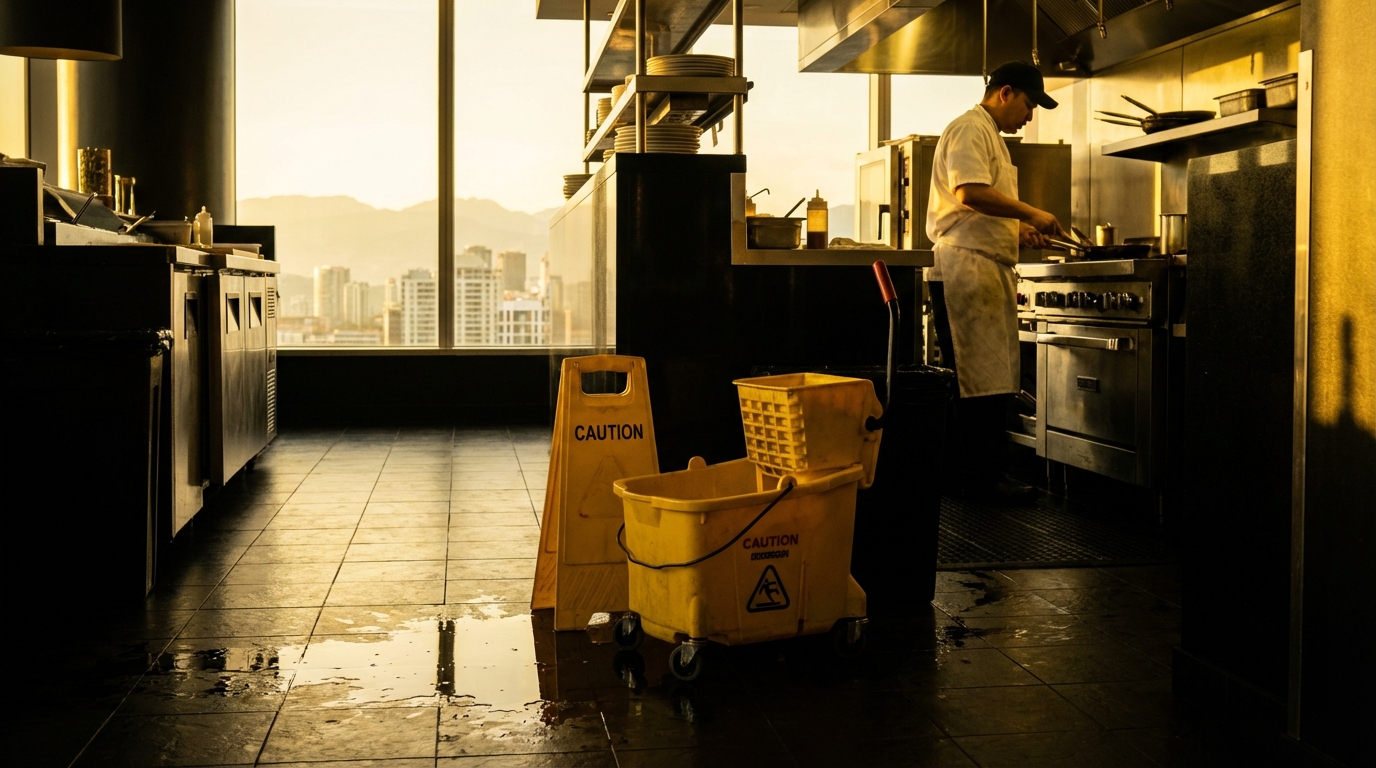
Let us say a pipe bursts near the dish area, or a roof leak starts dripping into the dining room during a storm. The first hour matters, and it is often chaotic.
Step 1: Safety and power
Before anything else, keep people safe.
- Keep guests and staff away from standing water, especially if it is near outlets or equipment.
- If water is near electrical panels or appliances, shut off breakers if you can do it safely.
- Do not let staff wade into deep or unknown water in rubber clogs or regular shoes.
This is where having a simple emergency plan pays off. If you do not know where panels and main shutoffs are, you spend time guessing while water spreads.
Step 2: Find the source if possible
You do not have to fix the plumbing yourself, but you should try to find roughly where the water is coming from:
- A visible broken pipe or hose
- Overflow from a drain or toilet
- Water coming from the ceiling near HVAC or roofing
If there is an obvious valve you can close without putting anyone at risk, close it. If it is an overhead leak from rain, mark off the affected area, protect food, and think about where water might be traveling beyond what you can see.
Step 3: Protect food and equipment
Once immediate safety is handled, move fast on food and gear.
- Cover exposed prep areas with food-safe covers or clean sheet pans turned upside down.
- Relocate food that is anywhere near the leak, even if it looks dry. That includes dry goods on low shelves and open product in the path of dripping water.
- Elevate boxes and small appliances on racks or speed racks to keep them off the floor.
Some owners get hesitant here because throwing away food is painful. I understand that instinct. But a few hundred dollars in tossed product is cheaper than a guest illness or a health violation tied to contaminated food.
Step 4: Call for help and document
While someone manages the floor, someone else should:
- Call a licensed plumber or building maintenance if the source is plumbing.
- Contact your insurance agent or carrier to ask what they need for a claim.
- Take clear photos and short videos of the water, affected areas, and damaged items.
Photos feel like a distraction in the moment, but they really help later when you are tired and trying to remember what was damaged and what was not.
Short-term steps to reduce damage
Once the active leak is under control or at least slowing down, you can shift from panic mode to reducing the damage. This is where many restaurants either do well or lose ground.
Control moisture and airflow
Drying is not just mopping. Water gets into walls, under flooring, and into trim. If you handle only what you can see, hidden damage keeps growing.
- Use wet vacs for standing water rather than only mops, especially on porous surfaces.
- Set up fans to move air across damp areas, not just stand them in random corners.
- If humidity is high, run dehumidifiers to pull moisture out of the air.
- Open doors and windows when outdoor air is dry and clean enough to help.
Some owners assume that the dry Salt Lake City climate will dry everything on its own. Sometimes it helps. Other times, moisture trapped in enclosed spaces lingers for days.
Decide what can stay open
This part is not fun, but it is where your judgment matters. You need to be honest with yourself.
- If the leak is near food prep or the dish area, you may need to pause service or run with a reduced menu.
- If restrooms are affected, you might have to limit seating or close temporarily until at least one restroom is safe.
- If the main dining area is involved, consider focusing on takeout and delivery while you fix the damage.
Some owners try to run full service through everything, and I understand why. But forcing it can backfire if guests see or smell water damage, or if staff have to work around unsafe conditions.
Preventative maintenance that actually fits restaurant life
Most advice about prevention sounds nice on paper and then gets ignored because it is too time consuming. Let us keep this grounded.
Build water checks into opening and closing routines
Instead of a giant monthly inspection that you never quite do, fold quick checks into routines that already exist.
For example:
- During opening, the line cook or supervisor:
- Walks the kitchen and dish area looking for new stains or damp spots.
- Glances at the ceiling above the line and dish pit.
- Checks around walk-in doors and inside for unusual puddles or ice buildup.
- During closing, the closer:
- Looks behind the bar for moisture under mats and behind panels.
- Checks restrooms for wet walls or floor around toilets and sinks.
- Walks any basement or storage space and checks corners and low shelves.
You can add two or three simple checkboxes to your existing side work sheets. That works better than a separate inspection sheet that gets lost or ignored.
Schedule deeper checks a few times a year
There are some things you cannot see without moving equipment or getting above ceilings. You do not need to do this every week, but two or three times a year is reasonable:
- Have maintenance or a contractor look at roof conditions, especially before and after winter.
- Inspect drain lines, grease traps, and floor drains for regular cleaning and clogs.
- Check under and behind stationary equipment for moisture and corrosion.
- Test sump pumps or other basement drainage systems if you have them.
This is one of those areas where a small spend now usually saves you a lot later. A quick camera inspection of a problem drain, for example, is cheaper than a full floor replacement after a backup.
How to work with insurance and restoration help
Many owners feel lost once insurance gets involved. The language is often confusing, and it is hard to know what is covered and what is not.
Know your policy before you need it
You do not have to memorize every clause, but you should know a few basics:
- Does your policy include coverage for burst pipes and sudden leaks, or only some types of water events?
- Is sewer backup covered, or is that a separate rider you need to add?
- Is there coverage for lost income if you have to close temporarily?
- What deductible applies to water incidents?
If you feel unsure, that is normal. Ask your agent clear, direct questions and write down the answers. Policies change over time, and a quick review once a year is not a bad idea.
Why timing matters after a water incident
From the moment water hits your building, the clock is sort of ticking.
- Within hours, porous materials start soaking up water.
- Within a couple of days, mold can start in damp, unaddressed areas.
- After that, drying gets harder, and more materials need to be replaced instead of dried.
This is one of those rare times when acting quickly is not just about stress, it is about limiting damage and keeping the claim size smaller, which can also help your long-term rates.
Connecting water management to your kitchen culture
At first glance, water damage might feel like a landlord problem or a construction problem. But there is a cultural piece here that good kitchens already understand.
Teach staff to speak up about water issues
Your staff are your eyes and ears. They notice that one spot that never dries under the bar, or the drip in the corner of the walk-in, or the dish machine that leaks a little more each week.
The catch is, they will often ignore it or work around it if they think you do not want to hear about problems.
- Tell your team clearly that wet spots, stains, and damp smells are worth mentioning.
- Thank them when they bring you these problems, even if the timing is bad.
- Follow up so they see that you took action, or at least checked on it.
If you already preach “clean as you go” and “respect the product,” you can add “respect the building” to that list. It sounds a bit corny, but it keeps people from treating leaks as normal.
Use checklists, not memory
Chefs and managers often try to keep everything in their heads. That works for recipes and ordering to a point. For building maintenance, it usually fails.
A simple printed or digital checklist that includes water-related items makes life easier. Memory slips, especially after long shifts. Paper (or a solid digital tool) does not get tired.
Realistic scenarios and how to respond
To make this more concrete, here are a few everyday situations you might face and a practical response to each. None of them are dramatic, and that is the point.
Scenario 1: Slow drip in the dish area
Your closer mentions that there is a drip from a pipe behind the dish machine. It only drips when the machine runs, and there is just a small puddle.
- Do not ignore it or just put a towel there every night.
- Log it in a maintenance notebook or app the same day.
- Have maintenance or a plumber check it within a couple of days.
- Look at the wall behind that area for any swelling or discoloration.
A tiny drip can run for months. By the time you see damage on the outside, the inside can be in rough shape.
Scenario 2: Musty smell in dry storage
You open the dry storage room and notice a faint musty odor. You do not see puddles, but cardboard boxes on the bottom shelf look slightly wavy.
- Pull those bottom boxes and check the floor and wall behind them.
- Check the other side of that wall, if possible, for leaks or condensation.
- Look at ceiling corners for small stains or hairline cracks.
- If you find moisture, increase airflow, run a dehumidifier, and track the area daily.
Dry storage should stay dry. Any dampness there deserves attention, because it touches packaging, labels, and sometimes food directly.
Scenario 3: Storm leaks into dining area
During a heavy storm, water starts dripping from the ceiling into a corner of your dining room.
- Rope off the area and move tables so guests stay clear.
- Place clean buckets or containers to catch water, but keep them away from guests if possible.
- Check above that area if you can, or at least note the exact location for the roofer.
- Inspect nearby lights and fixtures for any signs of moisture.
Once the storm passes, resist the urge to forget it. Roof leaks rarely fix themselves, and each new event usually makes the damage a little worse.
Practical tips for kitchens with tight space and older buildings
Many Salt Lake City restaurants work out of older spaces with limited room. Water management in those settings takes a bit more thought.
Use shelving and storage that keeps product off the floor
Simple change, big impact:
- Keep dry storage and paper goods at least a few inches off the floor.
- Use metal or sturdy plastic shelving instead of stacking boxes directly on the ground.
- Leave a small gap between shelving and walls so you can see if water shows up behind them.
This helps with both pests and water, and it makes cleaning easier.
Plan your layout with water in mind
When you add new equipment or rearrange your line, think about water paths, not just gas and power.
- Keep equipment that is sensitive to moisture away from floor drains that can overflow.
- Make sure you can access valves, cleanouts, and connections without tearing apart the line.
- Avoid creating dead corners where water and debris collect under low equipment.
I know layout changes are rarely simple. But adding water to your planning checklist reduces headaches later, especially if you ever need repair work in a hurry.
Questions owners often ask about water damage
Question: Is a little water on the floor during service really that big a deal?
Answer: Some water on the floor in a busy kitchen is normal. What is not normal is water that keeps showing up in the same place, or large puddles that do not dry between shifts. Repeating patterns usually signal a leak or drain issue. Those deserve investigation, not just more mopping.
Question: Can I just use bleach to handle mold if I see it near a leak?
Answer: Bleach might remove surface staining and smell, but it does not reach mold inside porous surfaces like drywall or some types of grout. If mold shows up near an area that was wet, you should address the moisture problem first. For anything more than a small surface patch on a nonporous surface, it is safer to call someone who handles mold and water professionally.
Question: How do I balance staying open with doing repairs?
Answer: This is where you sometimes have to accept short-term pain for long-term gain. If your kitchen or restrooms are not safe or sanitary because of water damage, staying open at full capacity can put guests and staff at risk. Some restaurants reduce menu size, close certain sections, or shift to takeout for a few days while critical work happens. It is not ideal, but it preserves trust. Guests tend to forgive schedule changes more than they forgive unsafe or unpleasant conditions.