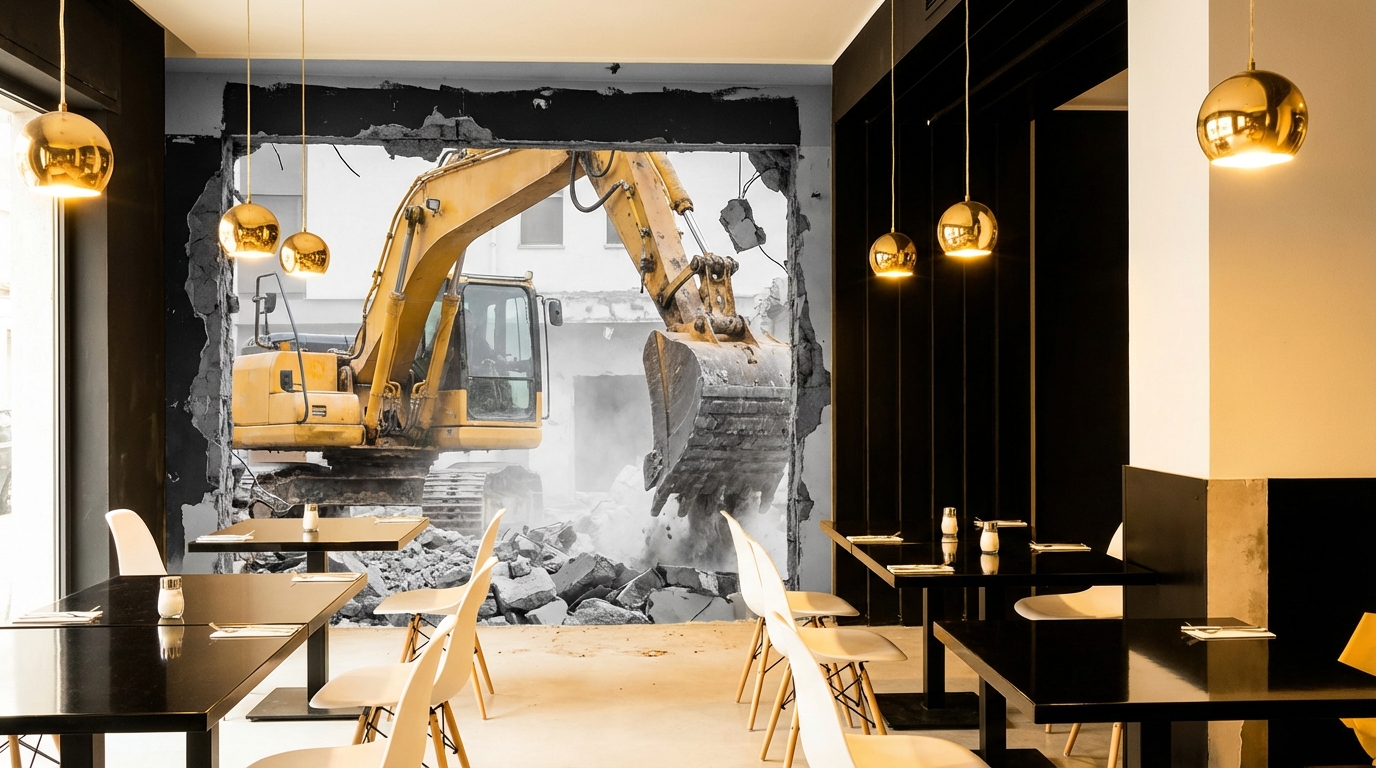
If you care about how a restaurant looks, feels, and even how the kitchen runs during a busy Saturday night, then the work starts long before the first pan hits the stove. It often begins with demolition. That is where Lazer Companies and their demolition services quietly shape the kind of restaurants you actually want to eat in.
Good food needs a good space. Not a fancy space by default, but one that works. A line that moves. A dining room that does not echo like a warehouse. A dish pit that does not flood during a storm. When demolition is careful and thought through, it sets up all of that. When it is rushed, everything that comes after feels like you are fighting the building.
I think a lot of people imagine demolition as just smashing walls and hauling trash. Loud, messy, and a bit random. In practice, it is closer to surgery. You keep what works, remove what does not, and clear the way for better bones. For a restaurant, those bones are things like utility lines, ceiling height, flow from prep to line, delivery access, and storage. If demolition teams handle those parts with care, the design and construction team can actually build the restaurant you planned, not the one you had to settle for.
Why demolition matters to restaurant people, not just builders
If you are a chef, an owner, or even just someone who loves to eat out, demolition probably feels like the far end of the process. Background noise. You show up when the paint is dry, not when the ceiling is falling in. Still, the choices made at that early stage follow the restaurant for years.
Good demolition does not just remove what is old; it protects what you need for the new restaurant to work better and feel better.
You can feel the difference between a space that was stripped and rebuilt with a plan and one that was thrown together around whatever walls happened to be left standing. Think about these moments:
- You sit down and your table is not crammed against a service station or bathroom door.
- The kitchen tickets flow in a straight line, not stuck between random doorways.
- The dining room feels open but not loud, because someone thought about ceilings and materials.
Those things often start with careful removal, not just clever decorating.
How Lazer Companies approaches restaurant demolition
I do not want to romanticize demolition too much. It is still dirty work. But when a team like Lazer Companies takes on a restaurant project, there are a few practical habits that matter more than the noise and dust.
1. Reading the building before anything comes down
Before anyone swings a hammer, a good demolition crew spends time listening to the building. That might sound strange, but it is pretty simple. They walk the space, look at old plans if they exist, and check where utilities run. They figure out what is load bearing, what is cosmetic, and what is quietly holding everything together behind the walls.
For a restaurant, this matters because you rarely start from a clean shell. You might be converting:
- An old retail shop into a fast casual space
- A bank into a fine dining room
- A former pizza place into a bakery with a different oven layout
Each of those changes comes with surprises. I once walked into a future cafe that had three layers of flooring stacked over each other. Tile on top of laminate on top of old linoleum. When the demolition crew peeled that back, we finally saw the concrete base, along with several cracks that would have destroyed new tile if they stayed hidden. It looked like a small thing at first. It was not.
The more a crew studies the building before demolition, the fewer ugly surprises show up during construction, when delays are much more expensive.
2. Protecting the parts that actually help a restaurant
Not every wall should disappear. Not every pipe has to be ripped out. Lazer Companies tends to look for what can be kept, reinforced, or reused. That matters for cost, but also for function.
Think about these elements that often survive a smart demolition phase:
- Existing grease traps that can be upgraded instead of replaced
- Concrete floors that only need resurfacing or sealing
- Structural columns that can be built into bar seating or banquettes
- Roof penetrations that already handle hood vents
Saving some of those pieces can shorten the timeline and free up budget for actual kitchen equipment or better finishes in the dining area. You likely care a lot more about a solid range or comfortable chairs than about paying to relocate a pipe that could have stayed where it is.
3. Keeping an eye on kitchen flow, not just what is cheap to remove
I think this is the part restaurant people notice the most, even if they never see the demolition drawings. A demolition crew that understands how a kitchen works is able to follow the logic of the future line while they strip out the old space.
If you have worked in a kitchen, you know the daily path:
- Deliveries come in.
- Goods move to dry storage, walk-ins, or freezers.
- Prep teams break things down, then hand them to the line.
- Dishes move out, then dirty plates come back through dish.
- Trash and compost go out.
Every wall that gets removed or kept affects that flow. I have seen restaurants where the garbage route crosses right through the main expo line because no one thought about it early enough. That type of mistake is hard to fix afterward, and it often traces back to demolition. Lazer Companies usually works with designers and owners to map where service paths will run before they decide which walls stay or go.
When demolition decisions follow kitchen flow, you end up with fewer bottlenecks, fewer collisions, and a calmer line during peak hours.
From shell to service: what demolition prepares for
To make this less abstract, it helps to break down what a restaurant space needs before you can even think about plating anything. Demolition is the preparation for all of that.
| Restaurant need | How demolition sets it up | What you feel as a guest or worker |
|---|---|---|
| Reliable power and gas | Exposes and clears access to old lines, removes unsafe runs, opens routes for new services | Kitchen equipment runs without random outages, fewer scary breaker trips |
| Ventilation and hood systems | Opens ceilings, removes obstructions, creates paths for ductwork and make up air | Dining room does not smell like fryer oil, cooks are less overheated |
| Floor drainage and plumbing | Breaks up slab where needed, exposes drains, clears old corroded pipes | No standing water around dish, fewer plumbing emergencies during service |
| Accessible bathrooms | Removes cramped layouts, reworks entry paths and partitions | Bathrooms that are easier to use and keep clean, no awkward narrow doors |
| Comfortable acoustics | Opens or preserves certain walls and ceilings to allow sound control solutions | You can talk at your table without shouting, even on a busy night |
When you see it like this, demolition feels less like destruction and more like preparation. The space is being cleared and tuned so everything that comes later can work without constant patching.
How demolition choices affect guests directly
If you just care about the food, you might think none of this matters. The chef is what matters. The recipes. The ingredients. I used to think that too. Then I watched service in a cramped place that had grown in a strange way, where demolition and layout had been an afterthought. The food was fantastic. The experience was not.
Here are a few ways demolition quietly shapes the customer side.
A real welcome instead of a traffic jam at the door
The entry area in many older conversions ends up being whatever is left over once the dining room is planned. That can leave you standing in a strange narrow corridor, clustering around a host stand that is squeezed against an old column or stairwell.
When demolition is part of the design from the start, the team can open the right walls and close the wrong ones to create a small but clear entry zone. Space for a couple of guests to wait, storage for menus, access to restrooms, and a logical route into the seating area.
Clean sightlines to the kitchen or bar
Open kitchens are common now, but they rely on careful deconstruction. Leaving a random half wall or awkward low bulkhead from the previous tenant can break up the view and make the bar feel stuck in a corner.
Lazer Companies often works with architects to remove just enough structure to open up the key views, then reinforce what is left so it still carries the load. The result is a space where you can see the line or bar team working, without feeling like you are sitting in the middle of a construction site.
Noise that feels alive, not harsh
Restaurants are rarely quiet, and I do not think they should be. But there is a gap between energy and noise fatigue. Some of that comes down to what demolition leaves behind. Hard concrete walls, bare ceilings, and exposed ductwork can bounce sound all over the place if nothing is added to absorb it.
By stripping back to a clean structure without unnecessary obstacles, designers get a clearer canvas for acoustic panels, soft surfaces, or baffles. If the demolition phase is rushed and leaves odd shapes, repairing that later is more complex and sometimes impossible without closing the place again.
How Lazer Companies supports better kitchens, not just better dining rooms
Kitchen workers feel demolition choices every second of their shift. They might not know which company handled the demolition, but they feel the layout in their backs, knees, and nerves.
Line layout and clear movement paths
Good demolition helps the contractor place key elements in the right locations:
- Prep sinks near prep tables, not across the room
- Walk-in doors close enough to the line to be fast, but not in the way
- Trash access that does not cross guest paths
- Emergency exits that are not blocked by storage or equipment
If a load bearing wall or misplaced column is discovered too late, you might end up compromising on this layout. Lazer Companies tends to identify those constraints early, while there is still time to adjust the kitchen plan instead of improvising around obstacles.
Mechanical, electrical, and plumbing access
One overlooked part of demolition is thinking about the person who will fix something three years later. If all the plumbing is buried behind sealed walls with no access, a simple leak can become a nightmare.
By stripping out old finishes carefully and planning chases and access panels, demolition crews help future maintenance stay simple. For a restaurant, that often means:
- Shorter downtimes when a line goes down
- Less cutting into finished walls to reach a broken pipe
- Fewer floor floods from hidden plumbing failures
No guest cares who made that easier. They just notice that the kitchen is not closing early because of a repair.
Ventilation that keeps cooks standing
Heat and smoke control is the type of thing that can sink a restaurant quietly. If the hoods and ducts do not work well, the line cooks spend the night sweating in a fog, and the smell follows you out to the parking lot. Good ventilation starts with demolition.
Lazer Companies typically opens ceilings and old chases so mechanical teams can route ducts in clean lines with as few sharp turns as possible. They remove old, restricted paths and clear roof access for fans. It feels minor while the building is a skeleton. During a dinner rush in July, it does not feel minor at all.
Practical benefits for owners and operators
If you own or plan to open a restaurant, you probably care about all of this, but you also have a calculator in your head. You are thinking about budget, schedule, inspections, and risk. Demolition affects all of those in very direct ways.
More predictable schedules
Hidden surprises behind walls are the enemy of opening dates. Asbestos, mold, strange repairs from decades ago, mystery wiring. The longer demolition is delayed or handled casually, the more of these problems show up late, when you already have equipment on order and staff in training.
By starting demolition early and treating it as a real planning stage, Lazer Companies helps projects reach a steady rhythm sooner. Once the old material is out and the structure is known, schedules for trades like plumbing, HVAC, and kitchen install can lock in with less guesswork.
Clearer budgets and fewer change orders
Every surprise hidden behind a wall tends to come with a cost. Sometimes a big one. When demolition is careful and thorough, your team can price the build out based on what is actually there, not just on drawings of what someone hopes is there.
That can mean:
- Fewer emergency changes mid build
- Less rework to fix issues found late
- More money left for things that guests notice, like lighting and furniture
Better relationship with inspectors and neighbors
Demolition in shared buildings or busy streets can cause friction. Dust, noise, blocked access. A crew that plans carefully can reduce those headaches a lot. Lazer Companies usually coordinates haul routes, debris timing, and safety practices in a way that keeps the project moving and the city happier.
That may sound like a detail, but small delays from complaints or failed inspections can push an opening date back by weeks. For a restaurant that lives on cash flow, those weeks are heavy.
Environmental and reuse choices that matter more than you expect
More guests care about how restaurants handle waste and resources. They check where food comes from. They like to know about recycling and compost. The building side is part of the same picture, even if it is less visible.
During demolition, a lot of material leaves the site. Concrete, metals, wood, fixtures, sometimes old kitchen gear. A thoughtful demolition contractor sorts and routes much of that for recycling or reuse instead of sending everything to a landfill.
I have seen projects where old brick wall sections were cleaned and reused as feature walls. Some stainless prep tables were kept, polished up, and folded into the new line. It is not about some grand statement. It just matches the same logic many kitchens already follow: use what you have, waste less, respect the material.
What makes Lazer Companies stand out in real restaurant projects
There are many commercial demolition companies out there. Some are fine. Some are careless. From what I have seen and heard, a few traits set Lazer Companies apart when it comes to restaurant work.
They listen to kitchen people, not only architects
Plans do not always match how a kitchen actually works under pressure. Good demolition crews that focus on restaurants pay attention when chefs or managers explain how they move, where they bump into things, and what annoyed them in previous spaces.
That feedback often leads to small demolition changes, like opening a pass through, removing a short section of wall for better sightlines, or clearing extra space for a backup reach-in. Tiny things on paper. Large things at 7:30 pm when ten tickets drop at once.
They stay flexible without losing control of the site
Demolition usually reveals surprises. You tear into a soffit and find a structural beam. You remove tile and find uneven slab. A crew that locks into one plan and refuses to adjust will cause problems. A crew that adjusts every five minutes without a plan will cause different problems.
From what I have gathered, Lazer Companies walks a middle path. They adjust when the building forces a change, but they do not let those changes snowball without communicating with the rest of the team. That sounds simple. It is not always normal.
They see demolition as the start of the restaurant, not just the end of the old tenant
This may be the biggest thing. Some demolition teams treat the job as finished when the space is empty. Trash gone, walls down, done. Lazer Companies tends to think one step further: Is the space truly ready for the next trades? Are the right things protected? Are access points clear? Is the layout set up for what the restaurant will become, not just what it stopped being?
That mindset carries though to the final result in subtle ways that guests feel but never name.
Questions you might still have about demolition and restaurants
Q: I just care about food. Why should I think about demolition at all?
A: Because the layout, comfort, and function of a restaurant are locked in long before the menu is final. Bad demolition choices create cramped tables, noisy rooms, and stressed kitchens. Good demolition gives the chef and team a space where their work can show without constant friction.
Q: Can careful demolition really change how a dish tastes?
A: Not in a direct, mystical way. But it can change how consistently that dish is prepared. If the line is less cramped, the ventilation works, the flow is clean, and the equipment has reliable utilities, cooks can focus on cooking instead of dodging each other and fighting the room. Consistency often raises quality.
Q: Is it worth paying more for a company that specializes in this kind of work?
A: I think you should at least weigh the cost of cheap demolition against the risk of hidden problems, layout compromises, and delays. A low bid might look good until a rushed crew breaks something that did not need to be touched or misses something that should have been removed. A careful company might cost more upfront but save real money and stress during build out and operation.
Q: As a guest, is there any way to tell if a restaurant space was prepared well?
A: You can look for small signs. Are tables oddly wedged into dead corners? Do you smell smoke or grease in the dining room? Is it impossible to hear the person across from you? Are staff constantly squeezing past each other near the kitchen entrance? None of this proves anything about the contractor, but they often trace back to decisions made during demolition and early construction.
Q: If I am planning a restaurant, when should I bring in a demolition contractor like Lazer Companies?
A: Earlier than you think. Once you have basic plans and a sense of your concept, talking with a demolition crew can clarify what is actually possible in your space. They can walk through, spot structural challenges, and help you avoid designs that fight the existing building too much. Waiting until the last minute tends to trap you in rushed choices that you will feel for years.