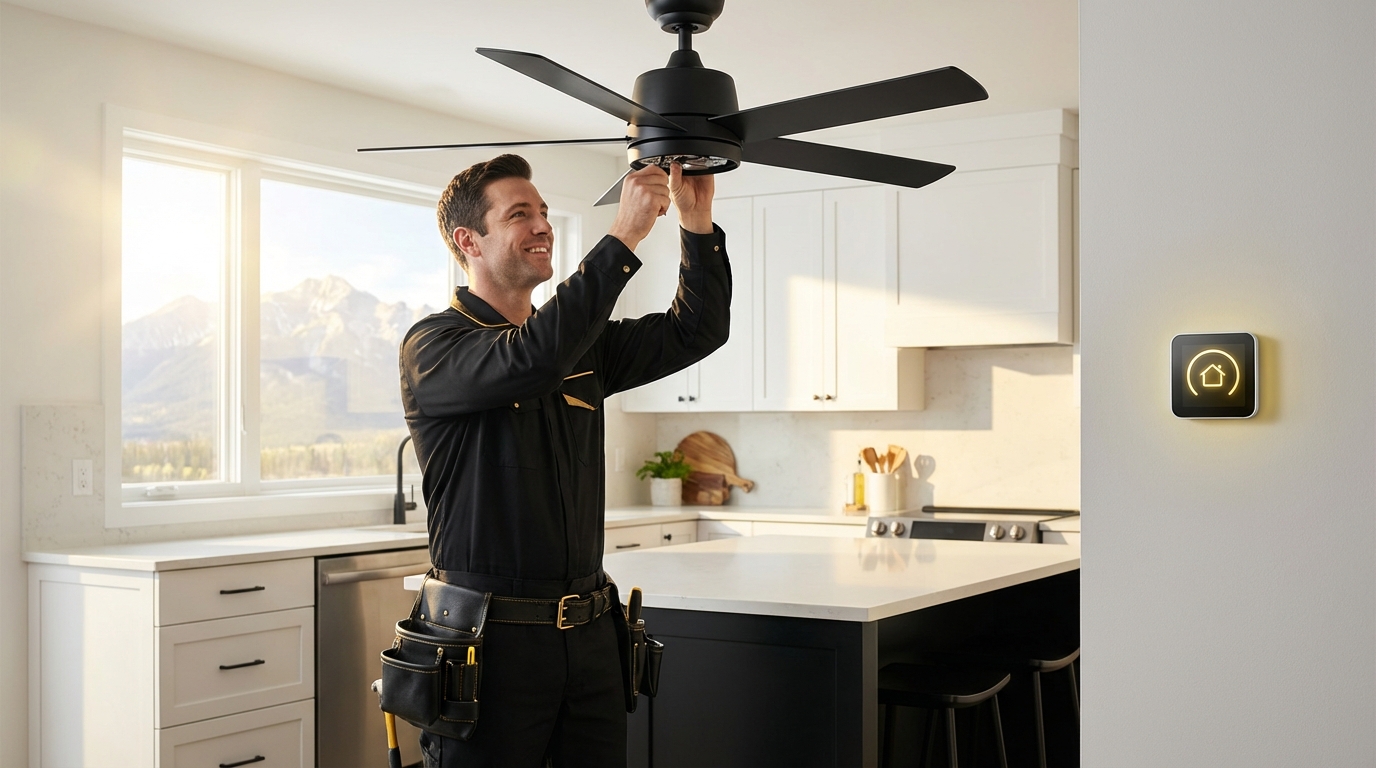
They keep Colorado kitchens cooler by moving hot air out of the house fast with whole house attic fans, so your stove or oven does not have to fight a wall of trapped heat. A company like Dr.Electric installs powerful, quiet fans in the attic that pull cooler air in through open windows and push warm air up and out. So the next time you are cooking a big dinner in July, the space feels closer to comfortable and your air conditioner does not run nonstop.
That is the short version. But if you like cooking, or work in a hot kitchen all day, you probably want the longer version too.
If you live in Colorado, you know how strange the weather can feel. Cool night, hot afternoon, then cool again after sunset. This swing is rough on kitchens. The oven, the cooktop, the people, even the fridge, are all sitting in the warmest room in the house.
So when you turn on the oven to bake bread or roast vegetables, the temperature in the room can jump quickly. In a small home kitchen, it can feel like a mild version of the back line in a restaurant. Not the same, of course, but still tiring. You start opening random windows, grabbing a fan from the bedroom, or just giving up and ordering takeout.
If your first thought on a hot day is “I do not want to cook,” that is not a food problem, it is often a heat problem.
This is where a whole house attic fan system becomes interesting, even if you usually think of electrical work as something you only deal with when the lights flicker.
Why kitchen heat feels so bad in Colorado homes
Restaurants at least plan around heat. They have strong hoods, high ceilings, bigger spaces, and staff who know how to work in that environment. Your home kitchen usually has none of that.
In Colorado, there are a few things that make kitchen heat feel worse than you might expect:
- Strong sun that heats roofs and attics quickly
- Thin, dry air that cools off at night but still bakes during the day
- Open-plan layouts where kitchen heat spreads into the living and dining areas
- Small or weak range hoods that mainly help with smoke, not overall room temperature
A lot of people think the range hood is there to cool the room. It helps a little, yes, but a hood is usually focused right above the cooktop. It pulls up steam, smoke, and odors. It does not clear the heat that builds up in the entire house.
Your air conditioner can help too, but it does not move hot air out. It cools the same air over and over. So when the kitchen keeps dumping heat into the house, the AC just runs longer and longer. That costs money. And honestly, it still often feels a bit stuffy.
Kitchens do not just make heat, they trap it. The trick is to get that heat out of the building instead of just cooling it where it sits.
How a whole house attic fan changes the way your kitchen feels
A whole house attic fan is not a small fan you put on the counter. It is a larger unit, usually mounted in the ceiling, that pulls cooler air from open windows and pushes hot air into the attic, then outside through vents.
If you want a simple mental picture, it works like this:
- You open a few windows, often on the cooler side of the house.
- You turn the fan on.
- Cooler outdoor air rushes in.
- Warm indoor air, including the heat from your kitchen, is pulled up and out.
That is it. No magic. Just air movement, but at a larger scale than a normal fan. Where this really helps people who cook a lot is the timing. In Colorado, evenings tend to cool down quickly. A whole house attic fan leans into that natural pattern.
You can cook a late dinner, let the kitchen heat up, then flip on the fan for 15 or 30 minutes and pull that heat right out. You do not need the AC running half the night just to undo one meal.
Why this matters for people who actually cook, not just reheat
If you love cooking, you probably use your kitchen harder than most:
- Long simmer times for stews, stocks, or sauces
- High-heat baking for bread, pizza, or roasting
- Multiple burners running at once when you entertain
I remember one friend in Colorado Springs who loved making homemade ramen. The broth simmered for hours. By hour three, the whole house felt like a steam room. He had a decent AC unit, but it could not keep up during a summer evening. He told me he actually started planning his cooking around the weather, which sounds a bit sad when you think about it.
Once he added a whole house attic fan, the routine changed. He would cook, enjoy dinner, then crack a couple of windows and run the fan. The house cooled down much faster, including the kitchen, and he did not feel like he had to choose between comfort and cooking projects.
You should not have to decide between the food you want to cook and the temperature you can stand.
How a cooler kitchen affects food, mood, and even safety
There is a direct link between heat and how people cook. It is not just about comfort.
Better focus and fewer mistakes
When the room is hot, people rush. You cut faster, you skip steps, you might ignore that small flare from the pan because you just want to finish. High heat adds stress. Your patience drops, your focus blurs.
This is one reason professional kitchens care so much about ventilation. It is not only about rules or code. It is about giving cooks enough comfort and fresh air so they can stay sharp during a long shift.
At home, you probably do not think in those terms, but the effect is similar. A slightly cooler kitchen means:
- More patience with slow recipes
- Less temptation to stand with the fridge open because you feel hot
- Better judgment when dealing with hot oil or heavy pans
How heat affects ingredients and equipment
Most people do not connect room temperature with how ingredients behave, but it is real.
| Kitchen element | What heat does | How a cooler kitchen helps |
|---|---|---|
| Butter and pastry dough | Softens too fast, dough gets sticky and hard to shape | Stay workable longer, better flaky layers |
| Chocolate | Melts, loses snap, can bloom on the surface | Holds structure for dipping, tempering is easier |
| Yeast doughs | Rise too fast, can overproof | More controlled rise, better texture |
| Fridges and freezers | Work harder, run more often | Shorter run times, more stable internal temps |
When you dump cooking heat into an already warm home, the fridge has to pull that extra warmth out of everything inside. That is wasted energy. It also means temperature swings, which are not great for food safety.
A strong whole house attic fan helps reduce that extra load. It pulls hot air out so your cold storage boxes are not working in an uphill battle after every baking session.
Why Colorado homes are a good match for whole house attic fans
This is the one part where geography really matters. Not every region suits whole house fans. Humid areas, for example, are tricky. You may not want to pull that much wet air into the house.
Colorado, though, is kind of ideal:
- Dry air that cools off quickly at night
- Cool mornings, even after hot afternoons
- Many homes with decent attic space and roof vents
That daily temperature swing is exactly what a whole house fan uses. Your AC tries to ignore the outside world, sealing everything up. A whole house fan wants to use it.
This does not mean you throw away your AC. That would be silly. But you can change when and how often you run it. You cool the house with outside air when that air is cooler than the inside, and only use the AC when the outside is hotter than you want.
Cooling pattern with and without a whole house attic fan
| Time of day | Without fan | With whole house attic fan |
|---|---|---|
| Early morning | House may still feel warm from yesterday | House cooled overnight by bringing in cold air |
| Midday cooking | Kitchen quickly heats up, AC runs harder | Kitchen heats up, but you plan a short fan run later |
| Evening | AC still working to remove stored heat | Run fan 20–30 minutes to clear hot air, then relax |
| Late night | May turn AC down more for sleeping comfort | Open windows, run fan on low for cool sleeping air |
From a cooking point of view, the biggest gain is that your kitchen is less likely to start the day slightly stuffy. You are not already annoyed before you crack the first egg.
Cooking, comfort, and the role of electrical work
People often see electrical services as distant from food or hospitality. You call an electrician when a breaker trips or you need a new outlet behind the fridge. That is it.
I think that view is a bit narrow.
When you look around a kitchen that actually works well day to day, a lot of that comfort comes from smart electrical planning:
- Safe, dedicated circuits for ovens and induction ranges
- Lighting that lets you see texture and color clearly
- Strong ventilation powered by correctly installed fans
- Reliable outlets so mixers and food processors do not trip breakers mid-recipe
Whole house attic fans sit in that same world. They are not glamorous. You do not show them off like a copper pot or a fancy chef knife. They just quietly shape how the space feels when you cook.
But is a whole house attic fan really “for the kitchen”?
Someone might argue that a whole house fan is more of a general home comfort upgrade than a kitchen feature. And that is fair. It serves all rooms, not only the kitchen.
Still, if you look at where heat collects and where you stand the longest, the kitchen benefits more than most rooms. Think about it:
- Bedrooms do not have open flames or 400 degree ovens.
- The living room has a TV and maybe a gaming console, but less direct heat.
- The kitchen has burners, ovens, dishwashers, and constant movement.
So while the whole house fan is not a kitchen appliance, it changes your cooking life quite a bit. Especially if you enjoy longer recipes or invite people over for big meals.
Practical questions home cooks ask about whole house attic fans
Will it blow my papers or recipes around?
If you run the fan on high with only one window open near the kitchen, yes, you can get a strong gust. But a good installer will usually suggest opening several windows a bit, not just one all the way up. This spreads the airflow through the house.
In my experience, once you figure out the right windows to crack, the air feels more like a steady breeze, not a storm in the kitchen.
What about noise while I am trying to talk or listen to a podcast?
Older attic fans could be loud. Many people remember that low drone from older homes. Modern units are quieter, especially when they are sized correctly and installed with care.
Most people use a higher speed for short, intense cooling, then switch to a lower speed if they want it on while cooking or watching something. On low, the sound is closer to a background hum. You still notice it, but it is not shouting over your music.
Do I still need my range hood?
Yes. The hood catches grease, smoke, and steam right where it starts. A whole house fan deals with overall air temperature and stale air in the building.
You could think of it this way: the hood protects your lungs and your walls; the whole house fan protects your comfort across the whole home.
Is it only useful in summer?
Mostly, but not only. The biggest gains are during hot or warm seasons. That said, some people use a low setting in spring or fall to clear lingering cooking smells faster without turning on AC or opening every window wide.
You just need to be sensible. You would not run a fan that pulls in 40 degree air on a freezing morning. Or at least, you probably would not do it twice.
How this fits into the life of people who love food
If you never cook and live on microwave meals and restaurants, a cooler home kitchen may not interest you much. For people reading a site about cooking and restaurants, though, the story is different.
Here is what often happens with passionate home cooks:
- You start buying better ingredients.
- You try more complex recipes.
- You notice your current kitchen limits you in strange ways.
Maybe your knife is dull. Maybe the counter is too small. Or maybe you just realize that you avoid baking in July, not because you dislike baking, but because the kitchen turns into a sauna.
At some point, comfort becomes part of your cooking setup, just like tools and ingredients. A whole house attic fan fits into that bigger picture of “how do I shape this space so I want to cook in it, not flee from it.”
Entertaining, dinner parties, and guests who like to hang in the kitchen
In many homes, people drift toward the kitchen during gatherings. It is where the food is, the drinks sit, and the conversation starts. That is great, until six people stand around a hot stove.
A strong attic fan pulling cooler evening air through the house makes those gatherings feel different. Instead of one or two people sweating near the oven while everyone else waits in a cooler room, everyone can stay where the action is.
Some hosts even build routines around this. They cook most of the heavy dishes earlier in the day, run the fan for a while, then reheat or finish dishes just before guests arrive. The house feels comfortable, the kitchen smells good, and nobody is sticky before appetizers are served.
Installation details home cooks actually care about
The technical side of a whole house attic fan can get pretty detailed. Motor types, CFM ratings, attic ventilation, and so on. That matters a lot to installers, but you might only care about a few key things.
Control and speed settings
Most modern systems come with a wall switch or control panel with multiple speeds. Some can be tied to timers, so you can set it for 30 minutes and forget it.
From a cooking point of view, variable speed is helpful. You might want high for quick cool-down after roasting at 450 degrees, and low when you just want a breeze while simmering soup.
Placement in the house
You typically want the fan somewhere central. Hallways or common areas often work best, where airflow can reach both kitchen and bedrooms.
Good placement paired with the right open windows creates a gentle path: cooler air in through windows, kitchen heat moving upward, then out. A skilled installer will usually walk the house, look at your cooking area, and suggest a location that gives you the best draw from the kitchen without odd drafts.
Energy use and bills
Whole house fans use electricity, but less than running an air conditioner for long stretches. The fan only runs when you ask it to. You can treat it more like a strong kitchen tool than a constant system.
Some people with well planned use of a fan end up running their AC later in the year or at higher temperature settings. That saves money over time. If you cook a lot and often feel forced to blast the AC just because of the kitchen, this shift can be noticeable.
Common worry: will it ruin my attic or roof?
This is a fair concern. A badly installed or badly sized system can cause problems. For example, if the attic does not have enough vents, the fan can force hot air to build pressure where it should not. You also want air sealing between living space and attic handled correctly.
That is where picking someone who actually understands both electrical and airflow comes in. A good installer checks:
- Attic vent area and type
- Existing insulation and gaps
- Roof structure and framing
- Access for service and cleaning
Some of this may feel far removed from your everyday cooking life. Still, it affects whether the system lasts and whether it keeps pulling kitchen heat into the attic and out of your home for years without issues.
Personal snapshot: cooking once the heat problem is fixed
Think about one of your favorite recipes that uses high, steady heat. Maybe cast iron pan pizza. Maybe a long, slow braise. Maybe a giant batch of tomato sauce.
Now picture doing it in two homes:
- One where the kitchen gets hot and stays hot until bedtime.
- One where you can cool the house back down in half an hour with fresh air moving through.
The recipe is the same. The difference is whether you are relaxed enough to enjoy it. I know someone who started baking sourdough more often after they added a whole house fan, simply because summer baking no longer felt like punishment.
They still complained about shaping wet dough on dry days. Colorado problems. But they did not complain about the room temperature anymore.
Questions people ask before they commit
Question: “If I already have AC, is a whole house attic fan worth it?”
Answer: It can be. Not for everyone, but for a lot of Colorado homes it makes sense. If you rarely cook, keep windows closed all day, and like a sealed, climate controlled box, you might not get much benefit.
If you like fresh air, cook real meals, and often feel your kitchen stays warm long after dinner, the fan gives you a type of control AC cannot. It can also help you use that cool evening air Colorado is known for instead of paying to cool everything with a compressor.
Question: “Does it make my house smell like dinner everywhere?”
Answer: For short runs, no more than usual. You already have smells spreading through your home when you cook, especially in open layouts. When the fan is on, you are actually pulling air up and out. If you open a couple of windows away from the kitchen, the new air coming in can even cut stronger smells faster.
If you run it with only kitchen windows open, you might feel more direct flow, but that is again something you can adjust with which windows you choose.
Question: “Will a whole house attic fan change how I cook?”
Answer: Maybe more than you expect. You might stop avoiding the oven in July. You might start baking in the afternoon instead of at night. You might host more dinners because you are not worried the house will feel stuffy by dessert.
It will not turn you into a better cook by itself. That still comes from practice, tasting, and paying attention. But it can remove one of the small barriers that make you think “not today” when you look at a recipe that needs a hot oven or a long simmer.
So the real question is this: if your kitchen felt cooler and fresher after every serious cooking session, what would you cook more often?