If you run a restaurant in Colorado Springs and you want a beautiful patio, you need steady watering, smart scheduling, and some basic protection for your plants and system. That is really what good Colorado Springs irrigation comes down to for a restaurant patio: give your plants enough water to stay healthy, avoid soaking guests or tables, and prepare for the dry air, sudden storms, and cold nights this city is known for.
That sounds simple, but in practice it can get tricky. Patios are shared spaces. You are not just growing plants. You are setting a stage where people sit, talk, and eat. Watering touches all of that, from the way the space looks in photos to the way it feels at 7 pm on a hot Friday.
I will walk through how to think about irrigation on a restaurant patio in Colorado Springs from a practical point of view. No fancy landscaping talk. Just what tends to work, what usually fails, and where I think small decisions can make a big difference for your guests.
Why patio irrigation matters more for restaurants than for homes
A home patio can get away with some dry spots or a yellow planter now and then. A restaurant cannot. People notice things when they wait for food. They stare at the floor, the railing, the plants, the water spots on the concrete. They notice dead leaves next to their cocktail. I do, at least.
On a patio where food is served, irrigation affects three things at once:
- How the space looks
- How comfortable guests feel
- How easy the staff can move and work
Good irrigation on a restaurant patio is not just about plants. It is about making guests comfortable without giving your staff extra headaches.
So you are not only trying to water beds and planters. You are trying to avoid spraying chair backs, soaking pathways, or building up mud near service routes. That is why restaurant patios need a slightly different approach than a typical yard.
Understanding the Colorado Springs climate for patios
If you have cooked outdoors in Colorado Springs, you already know how the weather behaves. Dry, sudden shifts, and sometimes a bit dramatic. That matters a lot when you plan watering.
The main climate challenges
Here is a simple view of the conditions that affect patios the most:
| Factor | What it means for your patio |
|---|---|
| Low humidity | Water evaporates quickly, soil dries out, plants wilt faster between cycles. |
| Strong sun at altitude | Leaf burn risk, especially in shallow planters and dark containers. |
| Frequent wind | Spray drifts, guests can get wet, water coverage gets uneven. |
| Cool nights | Plants get some relief but growth can slow, so overwatering is still possible. |
| Sudden cold snaps | Pipes, valves, and backflow devices are at risk if not blown out and protected. |
So you have that odd mix: your plants are thirsty during the day, but your irrigation hardware is at risk when the season shifts. That is why many restaurant patios here lean toward drip lines and targeted watering, not wide lawn-style sprays.
Start with the guest experience, not with sprinkler hardware
This part sometimes gets skipped. Someone installs a system that makes sense for plants, and only later realizes it sprays half the patio every windy afternoon.
A better way is to walk your patio as if you are a guest and ask some simple questions.
Where are people actually sitting?
Map out key patio zones in your mind:
- Main table area
- Waiting or bar area
- Walkways servers use all the time
- Decor-only zones, like corners with planters or railings with vines
Each of those zones can handle a different level of water risk. For example, the corner planter that guests never stand next to can use a small spray or bubbler. But the strip of soil right behind a row of chairs should probably use a drip line under mulch so there is zero overspray.
If water can touch plates, menus, or clothing, that zone should be on drip or a very controlled nozzle, or on a time when guests are not there.
Timing around service hours
For a home, watering at 3 pm might be fine. For a restaurant, that could hit your happy hour crowd. Early morning is usually safest, but in Colorado Springs the nights are cool, and sometimes staff is not around very early.
I think a simple rule works well for most patios:
- Finish main irrigation cycles at least 1.5 to 2 hours before guests arrive.
- Use short “refresh” cycles between services if plants really need it.
For example, if lunch starts at 11 am, schedule watering to end by 9 am. If you run a late dinner service, you might fit a quick 5 minute drip cycle between lunch and dinner, around 3 pm, since guests are fewer and staff can watch it.
Choosing the right irrigation methods for a restaurant patio
People sometimes think in extremes. Either everything must be drip or everything must be traditional sprinklers. For patios, mixing methods is usually better.
Drip irrigation for beds and planters
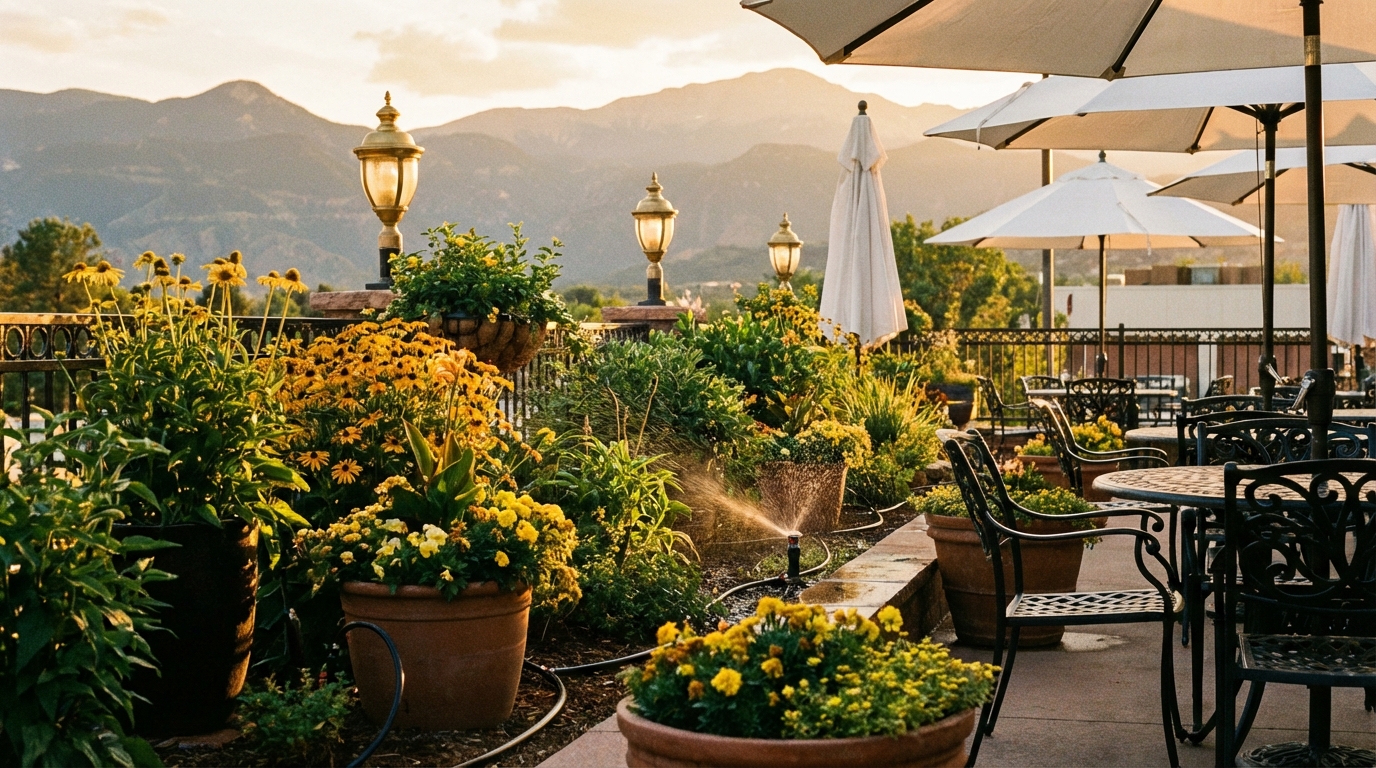
Drip lines and emitters fit patios well, especially in Colorado Springs. The water goes straight into the soil with very little evaporation. Wind has less effect, and you do not get wet chairs.
Drip works best for:
- Planter boxes along railings
- Large pots around the edge of the patio
- Narrow beds near walkways
- Areas under umbrellas or shade sails
A few things to keep in mind:
- Use pressure-compensating emitters so each plant gets about the same flow, even if the line runs uphill or downhill.
- Keep filters clean or you will end up with half-working lines and random dry pots.
- Hide drip tubing under mulch where possible so guests do not stare at plastic lines while they eat.
Sprays and rotors for surrounding green space
Some restaurant patios have a small lawn or a bigger planted area around them. Sprays or rotors still have a place there, but you need to watch the direction carefully.
On a windy day in Colorado Springs, a cheap spray head can blow a fine mist right into your seating. That is annoying for guests and wastes water.
If you use sprays near the patio:
- Choose nozzles with heavier droplets that are less likely to drift.
- Angle heads gently away from the patio, not straight up.
- Use variable arc nozzles to shape spray around walkways instead of across them.
- Keep run times short and repeat more often if the soil needs extra water.
On a restaurant patio, it is usually better to under-spray the edges of seating areas than to risk hitting plates and glasses a few times a week.
Hand watering as backup, not as a system
Almost every restaurant I have seen starts with good intentions and ends up with a staff member holding a hose at 4 pm on a Saturday. That is fine as a backup, but it is not a plan.
Hand watering can work well for:
- New plants that are still getting established
- Special pots with herbs, like basil, mint, or thyme
- Hot spots that dry out faster than the rest of the patio
But there are some problems if you rely on it:
- Staff changes shifts and the watering routine gets lost.
- People overwater because they are in a hurry.
- Hoses become trip hazards during prep time.
If you use hand watering, treat it as a supplement. Write a short, clear note for staff. Not a giant manual. Just something like: “Water the herb pots by the bar for 30 seconds each after lunch.” Simple instructions like that work better than long lists nobody reads.
Designing irrigation around furniture, lighting, and decor
One thing that often gets missed is how much patios change. Tables move. New heaters appear. String lights go up. A host stand gets added. All those changes can block water or redirect spray.
Leave some flexibility in your layout
When you put in irrigation, expect that you will move furniture signatures later. You might add more two-top tables or change where the bar cart sits. That is normal in restaurants.
A few small design habits help here:
- Keep main lines and valves where staff can reach them without moving furniture.
- Use quick-connect fittings or hose bibs in corners for seasonal pots.
- Group zones by function, not just by location. For example, one zone for “table-adjacent beds” and one zone for “remote planters” so you can adjust run times separately.
Watch out for lighting and electrical
Many patios in Colorado Springs have heaters, fans, and string lights. There are often small electrical boxes hidden in corners or behind bushes. You do not want aggressive irrigation near those.
Try to keep sprays or bubblers away from outlets and fixtures. Drip can run closer, but still avoid keeping junction boxes in damp soil. Besides safety, wet outlets tend to trip, and then your string lights flicker off on a busy night, which is a different kind of headache.
Plant choices that work with Colorado Springs irrigation, not against it
You can fight the climate, or you can pick plants that are comfortable with it. I think patios look better when you stop forcing water-hungry plants to survive in shallow containers under full sun.
Think in zones: sun, shade, and traffic
Before you pick any plants, look at three simple things:
- Which areas get harsh afternoon sun?
- Where does the building cast shade most of the day?
- Where do people and carts pass all the time?
Then match plants to those conditions, instead of trying to water your way out of a bad match.
| Patio zone | Plant type that tends to do better | Irrigation notes |
|---|---|---|
| Hot, sunny edge | Drought-tolerant perennials, ornamental grasses, hardy shrubs | Drip lines under mulch, deeper but less frequent watering |
| Partial shade | Flowering annuals, herbs, small shrubs | Drip or micro-sprays, more frequent light watering |
| High-traffic paths | Compact groundcovers, tough perennials | Drip only, avoid spray that can hit shoes or tile |
| Containers near tables | Herbs, small flowering plants, dwarf shrubs | Individual drip emitters or small adjustable bubblers |
Herbs are a special case. Many restaurant owners like fresh herbs on the patio, which makes sense for a food-focused space. Basil, for example, likes regular water but hates sitting in soggy soil. Good drainage in the pot, plus drip or careful hand watering, works better than flooding them every second day.
How much water is enough for a restaurant patio?
This is where people tend to overthink. Some use apps, some try to copy a schedule from a neighbor. In a dry, high-altitude place like Colorado Springs, the answer changes with the season, plant type, and soil. There is no single perfect schedule.
You do not need perfection, though. You just need a method that lets you adjust without guessing wildly.
Use soil moisture and plant behavior, not just minutes on the controller
Here is a simple step-by-step routine that most patios can follow:
- Pick initial run times based on plant type. For example, 20 to 30 minutes for drip on shrubs, 10 to 15 minutes for planters.
- Water early in the morning.
- That afternoon, check soil with your hand in a few spots: sunny bed, shady bed, planter near tables.
- If the top inch is bone dry and plants look stressed, add time. If the soil is soggy and leaves are yellowing, cut back.
- Adjust once or twice a week, not every single day, so the plants have time to respond.
The goal is not a perfect schedule. The goal is a schedule you understand well enough that you can tweak it when the weather shifts.
Beware of short, frequent watering on patios
It is tempting to run quick 5 minute cycles every day, thinking that will keep the patio looking fresh. Often it just keeps the surface damp while the roots stay shallow and weak. On hard surfaces, constant light moisture can also make concrete slippery, which you definitely do not want with servers carrying plates.
For beds and larger planters, deeper and less frequent watering is usually better. For small pots near the kitchen window, shorter and more frequent cycles may still make sense, especially for herbs.
Practical scheduling tips for Colorado Springs
Colorado Springs has clear seasons, but the shoulder months can be confusing. One week feels like summer, the next feels like early winter. If you run a patio, you already feel that in your reservations. Your irrigation should shift with those bumps, even if only a little.
Rough seasonal guide
This is not a strict calendar, but more of a pattern many patios follow:
| Season | General approach |
|---|---|
| Early spring | Start slowly, shorter run times, watch night temperatures, protect from late frost. |
| Late spring to mid-summer | Increase run times, maybe add one more watering day per week, watch wind and sun stress. |
| Late summer | Hold steady but check for salt buildup in pots, flush with a deeper watering if needed. |
| Early fall | Reduce run times again, start planning winterization, watch for early freezes. |
| Late fall | Blow out the system, shift to minimal hand watering for any remaining pots, or move them indoors. |
I know some patios push late into fall with heaters and blankets. That is fine, but the irrigation needs to step back as nights get colder, even if the seats are still full. Water and freezing lines do not mix, no matter how busy the schedule is.
Keeping walkways and seating safe and dry
For a restaurant, one wet, slippery tile can be worse than a brown plant. Safety comes first, then looks. Irrigation touches both.
Common problem spots
Look out for:
- Sprays that just barely hit a path during calm weather but coat it on windy days.
- Emitters or bubblers too close to the edge of raised beds, so water spills over tile.
- Planters without saucers that drain straight onto concrete in guest areas.
- Downspouts from roofs that run across walkways without channels.
None of these are hard to fix. Adjusting a nozzle, moving an emitter a few inches, or adding a saucer can stop water from pooling.
Coordination with cleaning routines
Most restaurants wash down patios. If you mix that with heavy irrigation, you can end up with puddles that never fully dry before service.
Simple coordination helps:
- Schedule irrigation several hours before cleaning, or keep it light on cleaning days.
- Train whoever does hose-downs not to soak beds or pots already on a drip zone.
- Point out known “slow drying” spots so staff are careful with both water and cleaning chemicals there.
Maintenance habits that keep patios beautiful all season
Irrigation systems age like anything else in a restaurant. Heads get kicked, lines get pinched under moving planters, emitters clog with minerals. Ignoring all that is one of the fastest ways to turn a clean patio into a patchy one.
Simple monthly checks
You do not need a big inspection every week, but a short monthly routine helps a lot:
- Walk each zone while it runs. Look for spray hitting chairs, walls, or pathways.
- Check for visibly clogged or broken emitters in planters and beds.
- Listen for leaks at valves or main lines.
- Make quick notes: which pots stay dry, which spots stay too wet.
If that feels like extra work, try tying it to something you already do, like the monthly deep clean or furniture reset. Habit matters more than perfection here.
Winterization is not optional in Colorado Springs
People sometimes push their luck at the end of the season. One hard freeze can crack fittings and backflow devices, and suddenly next spring you are repairing instead of opening smoothly.
For a patio, good winter prep usually includes:
- Blowing out irrigation lines so there is no water left to freeze.
- Draining and protecting backflow preventers.
- Disconnecting and storing any temporary hoses or drip lines you added for the summer.
- Moving the tenderest pots indoors if you plan to use them again.
It might feel like overkill some years when fall is mild, but Colorado weather has a habit of catching people unprepared. From a restaurant point of view, it is less painful to plan for winter a little early than to pay for rush repairs when you are trying to reopen the patio in spring.
Connecting irrigation to the cooking and guest experience
You might wonder if all this water talk really matters to guests beyond a nice view. I think it does, especially for people who care about food and restaurants.
First, there is the visual side. A patio with healthy, deep green plants sets a different mood than one with crispy pots in the corner. It affects how your dishes look in photos, how people describe the place to friends, and even how long they want to linger over dessert.
Second, there is the practical side. Comfortable shade from well-watered trees or vines can lower the perceived temperature on a hot day. Guests drink and eat differently when they are comfortable. They stay longer and tend to order one more drink or dessert, which matters for the bottom line.
Third, there is the food. If you grow any herbs or edible flowers on your patio, reliable irrigation is part of your ingredient quality. Wilted basil on a plate sends a message. So does a fresh sprig cut from a healthy plant near the kitchen door.
Common mistakes patio owners make with irrigation
Irrigation mistakes repeat from place to place. Seeing them laid out can help you avoid at least a few.
Overwatering containers
Pots and planter boxes often get too much water because they dry out faster on the surface. The soil below can stay wet for days. Roots sit in cold mud, and plants never look quite right.
Try this simple test: lift a pot gently from one side. If it feels very heavy, you probably do not need more water that day, even if the top looks dry. For big immovable planters, push a thin stick or screwdriver into the soil to feel how moist it is deeper down.
Serving while irrigation is still running
This one feels obvious, but it happens. A timer turns on a zone that hits a corner of the seating area during service. Staff scrambles to shut it off, guests shuffle their chairs, and some leave annoyed.
After you adjust any schedule, always check it against your opening and peak service times. A two minute test run at 5 pm on a weekday might not sound like a problem when you set it, but on a crowded Friday it can cause a small mess.
Ignoring the wind
Colorado Springs can go from calm to windy in an hour. A system that looks perfect on a still morning may behave differently later.
Try watching at least one full cycle on a day with average wind. Stand where guests sit. If you feel mist on your face, so will they. That is usually a sign to shorten run times, change nozzles, or convert that zone to drip near the patio edge.
Example: a small patio schedule that actually works
Let me paint a simple picture. Say you have a mid-sized patio with:
- Three long beds along the perimeter with shrubs and perennials
- Eight medium planters with flowers and herbs near tables
- A narrow strip of lawn just outside the railing
You could break irrigation up like this:
- Zone 1: Perimeter beds on drip under mulch
- Zone 2: Planters on individual drip emitters
- Zone 3: Lawn strip on low-angle sprays
A possible summer schedule might look like:
| Zone | Time of day | Run time | Frequency |
|---|---|---|---|
| Perimeter beds | 6:00 am | 25 minutes | 3 times per week |
| Planters | 6:30 am | 12 minutes | 4 times per week |
| Lawn strip | 7:00 am | 10 minutes | 3 times per week |
Then, if you see planters drying out near the kitchen wall, you might add a short 5 minute mid-afternoon drip cycle just for that zone on the hottest days. Small changes like that matter more than chasing some perfect universal number.
Questions restaurant owners often ask about patio irrigation
Q: Is drip irrigation always better for a restaurant patio?
A: Not always. Drip is usually better right next to seating because it avoids overspray, works well in wind, and saves water. But if you have a surrounding lawn or a larger decorative area, sprays or rotors still make sense there. The trick is to keep spray zones away from chairs and walkways, and lean on drip in tight, guest-facing spots.
Q: How early should I winterize patios in Colorado Springs?
A: I think many places wait too long. If nightly lows start dipping to near freezing on a regular basis, it is time to plan. Some owners pick a firm “target week” each year based on past seasons and go a bit early instead of risking sudden damage. You can still water key pots by hand after the system is blown out.
Q: Do guests really care about the plants, or is this just a nice extra?
A: Some guests may not notice each plant, but most feel the difference between a well kept patio and a tired one. Healthy, thoughtfully watered plants create a calm backdrop for food and conversation. They soften the space, dampen noise a bit, and signal that you pay attention to details. People rarely say, “I loved that restaurant because of the irrigation,” but they do say, “That patio felt good, we should go back.”