If you run a restaurant in Kalispell and you are wondering if foundation problems matter, the short answer is yes, they do. They can affect safety, food storage, plumbing, doors, and even the way guests feel about your place. Getting regular checks and, when needed, help from a professional like Kalispell foundation repair can save you money, time, and stress later.
Let me walk through how this connects to your kitchen, your dining room, and your daily service, not just to concrete and soil. It is less abstract than it sounds. You can think of it as one more part of running a reliable restaurant, like food safety or equipment maintenance, only most people ignore it until things go wrong.
Why restaurant owners should care about foundation problems
I will say this clearly. You can have a great menu, trained staff, and a clean kitchen, and still lose money if your building moves under you.
Here is why foundation trouble matters for a restaurant:
- It can lead to uneven floors that are dangerous for servers carrying hot plates.
- It can throw kitchen equipment out of level, which affects cooking and safety.
- It can cause leaks, mold, and smells that turn guests away.
- It can trigger health or building inspections that you do not want.
- It can make repair costs spike at the worst possible time, like right before summer or the holidays.
If your foundation is moving, it touches everything from your walk-in cooler to your front door.
For a home, a sticking door is annoying. For a restaurant, a sticking door on a walk-in cooler or a restroom is a risk. Guests notice odors and noise. Inspectors notice cracks and damp walls. Staff notice tripping hazards, because they are the ones who fall.
It is easy to think, “The building is old, cracks are normal.” Some are, some are not. The tricky part is telling the difference before a minor crack becomes a major job.
How Kalispell weather and soil affect your restaurant
Kalispell has real seasons. You know that from your produce orders and your patio seating schedule. That same swing in temperature and moisture hits your building.
Freeze and thaw cycles
When water gets into the soil and the tiny gaps in concrete, then freezes, it expands. When it thaws, it shrinks again. Over and over.
This cycle can:
- Lift parts of your slab or sidewalk.
- Create new cracks in concrete.
- Widen small cracks that were already there.
If your kitchen is on a slab and one corner lifts a bit, your ranges and prep tables start to lean. At first, you might just notice that oil pools on one side of a pan. After a while, a fryer basket does not sit straight or a rolling cart keeps drifting toward one wall.
Moisture and drainage around the building
Water that runs toward your foundation is a slow problem. It does not look urgent during lunch rush. Still, it matters.
Common restaurant-related causes in Kalispell:
- Gutters clogged with leaves from trees near your patio or parking lot.
- Downspouts dropping water near the building because someone moved an extension to make room for outdoor seating.
- Snow piled right against the exterior wall for the parking lot plow to pass.
- Condenser units or ice machine drains sending water into the same spot day after day.
Over time, water softens the soil close to the building. The foundation can then shift or settle unevenly, and that shows up inside your restaurant as cracks, gaps, or floors that do not feel right.
Early warning signs inside your restaurant
You already walk your space every day. With a small shift in what you notice, you can often catch trouble early.
If something in your building suddenly feels off and you cannot blame staff or equipment, look at the structure.
Here are signs that point toward foundation movement. Not proof, but clear clues.
In the dining room
Ask yourself a few questions during a quiet moment.
- Do tables wobble no matter how often you adjust the feet or shims?
- Do chairs slide on their own toward one side of the room?
- Are there long cracks that run from the corners of windows or doors up the wall?
- Does the front door stick, drag on the floor, or fail to latch cleanly?
- Do window frames look slightly warped, with daylight peeking through a corner?
One or two of these might be normal wear. Several together suggest that something deeper is shifting.
In the kitchen
The kitchen often shows the strongest signs, partly because of heavy equipment and frequent washing.
You might notice:
- Prep tables that no longer sit level even after you adjust the legs.
- Cooktops where oil pools on one side of the pan every time.
- Floor drains that suddenly clog more often or back up during peak dishwashing.
- Tile or vinyl flooring that cracks or separates along a line.
- Stainless counters that pull away from the wall, leaving a gap that keeps collecting debris.
If you run a bakery or pizza program, rising dough can be very sensitive to drafts and temperature shifts that come from new gaps or cracks. You might blame the recipe or the yeast when the real issue is air movement from a shifted door or window.
In storage and bathrooms
These areas are often quiet and less decorated, so structural signs are easier to see.
Look for:
- Cracks in the corners of the walk-in cooler box or around its door frame.
- Gaps at the baseboard where wall meets floor, especially in dry storage.
- Restroom doors that swing shut on their own or swing open instead of staying where they are put.
- Hairline cracks in bathroom tile that follow a pattern across the floor.
If you see doors changing behavior from season to season, that can be a hint. Some seasonal movement is normal, but big swings often point to a structure that is under stress.
How foundation issues affect kitchen operations
This is where foundation talk stops being abstract and starts touching daily service.
Food safety and storage
Foundation movement can disturb walls, floors, and drains. That can create:
- Hidden damp spots behind walk-ins or under dish areas.
- Cracked tile or seams that trap moisture and food debris.
- Gaps where pests can enter more easily.
Moisture plus food debris is a clear concern for inspections. You already think about HACCP plans and temperature control. Structural moisture is less obvious, but it connects.
Also, when a floor settles unevenly, the door to a walk-in can fall out of alignment. A door that does not seal fully can raise internal temperatures or create frost buildup. That wastes energy and affects food quality.
Cooking and equipment performance
Many pieces of restaurant equipment assume a level surface to work well.
For example:
- Griddles cook unevenly if they are not level, so pancakes or burgers brown faster on one side.
- Fryers can develop hot and cold spots if oil depth varies across the vat.
- Convection ovens may show hot corners if the unit is tilted.
You might think the equipment is failing, but the cause can be a floor that dropped a bit in one area. Of course, equipment can fail on its own, but ignoring the floor while only fixing the machine can become a cycle.
Staff safety and workflow
In service, you need staff to move quickly but safely.
Uneven floors or sudden dips can:
- Increase the risk of trips while carrying hot liquids or heavy trays.
- Make carts or racks roll in unexpected directions.
- Force people to work in slightly twisted positions all shift, which can cause pain over time.
If you have a line cook who complains about sore knees or ankles only at a specific station, it may not just be shoes or age. It can be a sloped floor.
A small tilt in the floor feels minor for one step, but it adds up over hundreds of steps in a shift.
Outside signs around your restaurant
Guests and delivery drivers also interact with the outside of your building. That area gives clues too.
Look around on a dry day after snow season if possible:
- Cracks in the parking lot that point toward the building.
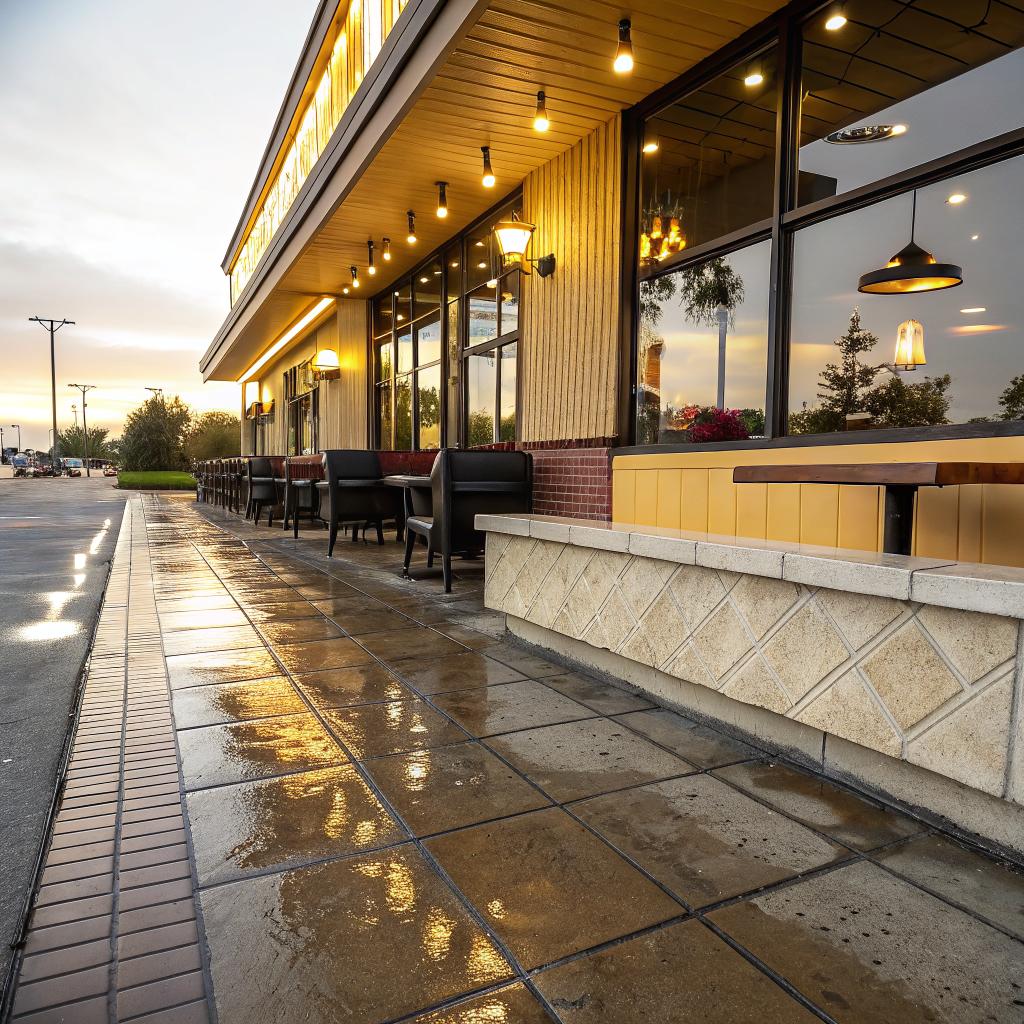
- Sidewalk slabs that rise or sink near the entrance.
- Gaps where the building wall meets the sidewalk or loading dock.
- Water pooling near the foundation after rain or melting snow.
Here is a simple table with outside signs and what they might mean.
| Outside sign | What it might suggest | Why a restaurant should care |
|---|---|---|
| Sunken sidewalk at main entrance | Soil settlement near foundation | Trip hazard for guests, liability concern, poor first impression |
| Cracks radiating from building corners | Differential movement of foundation | Wall stress, possible water intrusion into interior |
| Water pooling next to exterior wall | Drainage problems, poor grading | Risk of leaks, musty smells, and future wall damage |
| Gaps around service doors at loading area | Shifting of slab or foundation at that corner | Pest entry points, cold air leaks, higher utility bills |
Sometimes owners focus on interior design and let the concrete outside wait. That is a mistake. Guests often decide how they feel about a restaurant before they see the menu, just from the walk up to the door.
Simple checks you can do yourself
You do not need to become a contractor. Still, a few simple checks, repeated a couple of times a year, can help you spot problems early. Maybe when you change menus seasonally, you add this to your checklist.
Walk test
Walk slowly across the dining room and the kitchen. Try this when it is quiet, maybe before opening.
Pay attention to:
- Areas where you feel a dip or a rise.
- Places where plates on a tray rattle more as you walk.
- Floor tiles that move slightly underfoot.
If you feel a change, mark the spot mentally or use a small piece of tape in a corner. Check that spot again in a few months.
Marble or ball test
This feels almost silly, but it works.
Take a small round object, like a marble or a small ball, and place it in several spots:
- Middle of the dining room.
- Near the line in the kitchen.
- In dry storage.
If it rolls strongly in one direction, and you repeat the test later and it seems worse, there might be movement in that part of the floor.
Door and window test
Check 3 to 5 key doors regularly:
- Main entrance.
- Back door for deliveries.
- Walk-in cooler door.
- Dish area door if you have one.
- At least one restroom door.
Ask:
- Do they latch cleanly without having to pull hard?
- Do they rub the floor or frame?
- Did their behavior change compared to a few months ago?
Small shifts are normal with humidity. Large and repeated changes can hint at a structural issue.
Preventive steps that fit into normal restaurant routines
You already run cleaning and maintenance routines. Some foundation care tasks fit into what you are doing anyway.
Keep water away from the building
You cannot control snow or rain, but you can control how water leaves the roof and the site.
Consider these habits:
- Schedule regular cleaning of gutters, especially in the fall.
- Make sure downspouts send water several feet away from the building, not just straight down.
- Ask snow plow drivers not to pile snow right against the restaurant walls.
- Check that drains from roof units, cooler condensers, and ice machines do not dump water at the same spot every day.
This sounds minor. It is not. Over years, water at the base of a wall can weaken soil and create problems that are expensive to fix.
Watch tree roots and landscaping
Landscaping around a restaurant can look nice, but it can also hide risk.
If you have trees close to the building:
- Pay attention to roots lifting sidewalks or curbs.
- Keep large shrubs trimmed so you can inspect the base of the wall.
- Avoid heavy irrigation right next to the foundation.
Different soils react differently when moisture changes. In some places, drying soil can shrink and create gaps under the foundation. In other spots, too much water softens the ground. The goal is balance, not extremes.
Protect high moisture interior areas
Kitchens and dish areas are wet by nature. Water often finds cracks and expands them.
These habits can help:
- Seal floor to wall joints where appropriate using materials that can handle commercial cleaning.
- Fix plumbing leaks promptly instead of working around them with towels or pans.
- Do not ignore slow drains; they can be a sign of settled pipes under the slab.
One owner I spoke with put off a small leak under a triple sink for months because service was busy. By the time they opened the wall, there was mold, rotten framing, and a floor section that had shifted slightly. The repair cost touched both plumbing and structural work.
Working with foundation contractors without losing service days
You probably worry that any serious repair means closing for a long time. Sometimes that fear is valid, but not always. The real mistake is avoiding an inspection because you assume the worst.
How to talk to a foundation contractor
If you contact a contractor, try to prepare a bit first. Bring your practical mindset, the same way you would talk to a food supplier or an equipment tech.
Helpful points to cover:
- Explain clearly where staff notice changes, not just where cracks are visible.
- Mention any known plumbing issues, like frequent clogs or backups.
- Describe seasonal patterns, such as doors that stick in winter but not in summer.
- Share your typical operating hours and your slow days, so they can plan visits.
You do not have to accept the first proposal. Ask questions and expect clear answers. If a contractor cannot explain in plain language what they plan to do, that is a sign.
Questions to ask before approving work
Here are some direct questions that can keep the discussion grounded:
- Which areas of the building are affected, and how did you decide that?
- Will this repair stop further movement, or only patch cosmetic issues?
- How long will the crew need access to the kitchen or dining room?
- Can any parts of the work be done outside of service hours?
- What is the expected life of the repair, assuming normal restaurant operations?
You are used to reading ingredient labels and equipment specs. Approach the repair plan with the same habit of careful reading.
Planning work around service
Some repairs are noisy or shake the building. Others are less invasive. Ask clearly which tasks will affect service.
You can:
- Book inspections or small jobs on your slowest weekday.
- Close one part of the dining room while keeping the rest open.
- Schedule loud exterior work during mid-morning when the dining room is empty.
I know restaurant margins are thin. Shutting down feels like a nightmare. Still, one day of planned reduced service for real repairs can be cheaper than unplanned downtime caused by a water break or structural failure later.
Connecting foundation care with health and building inspections
Many owners think of health inspectors and building inspectors as separate worlds. In practice, they overlap.
What inspectors can notice
Health inspectors focus on food safety, but they still walk through the whole space. Cracks, damp spots, and broken finishes are visible.
Building inspectors, fire marshals, and insurance adjusters pay close attention to:
- Uneven exits and thresholds that can trip guests during an evacuation.
- Cracked walls or ceilings that could drop material.
- Doors that fail to latch or shut, especially on rated corridors.
If foundation issues contribute to any of these, they might trigger orders for repair or restrictions on use. That affects your operations directly.
How good records can help
It may sound tedious, but keep simple notes:
- Dates when you noticed new cracks or movement.
- Photos from your phone as things change.
- Invoices or reports from any contractor visits.
This record can help you explain to inspectors what you are doing about problems. It also helps you track whether a small crack is stable or spreading.
A photo from last year beside a photo from this year can tell you more than a contractor walking through once.
Budgeting for structural work without hurting your menu
Most restaurant owners I know would rather spend money on new equipment or a menu upgrade than on concrete. That is understandable. Still, ignoring structural issues does not make them cheaper.
Think in phases
Not everything has to be repaired at once. You can think in phases, similar to long term kitchen upgrades.
Examples of phases:
- Phase 1: Stop water from reaching the foundation (gutters, downspouts, grading).
- Phase 2: Stabilize the foundation where movement is worst.
- Phase 3: Repair floors, walls, and finish surfaces affected by earlier movement.
A good contractor should be able to flag which items are urgent and which can safely wait.
Compare to other risks
Try to compare foundation work to other costs you accept more easily:
- How much revenue would you lose from closing a weekend because of a major leak?
- What would a lawsuit from a guest trip and fall cost?
- How much food would you throw away if a cooler fails for structural reasons?
Sometimes we treat visible items like new decor or a patio heater as more “worth it” than unseen things in the ground. But the unseen things hold the rest up.
How this connects back to cooking and guest experience
At first glance, foundation care feels far away from recipes and plating. After looking closer, I do not think it is that separate.
You probably care about consistency:
- Bread that rises the same every time.
- Steaks that cook evenly.
- Guests who walk into a warm, solid, and calm space.
A building that moves in small but constant ways fights that consistency. Doors slam randomly. Floors squeak. Drains burp during service. None of that makes anyone relax and enjoy a meal.
I once ate at a small place where the entire table leaned just enough that my water glass always looked like it might slide. The food was good. The tilt still bothered me the whole time. I remembered the tilt more than the dessert, which feels unfair to the cook who worked on that dish.
If you care about the experience to that level, it makes sense to keep the structure under that experience steady.
Common questions restaurant owners have
Q: Are all cracks in my restaurant a sign of foundation trouble?
A: No. Small hairline cracks in drywall can come from normal settling or changes in humidity. Cracks that keep growing, open wider than a pencil, or appear together with sticking doors or uneven floors are more concerning. If you see patterns of cracks or changes over time, it is smart to ask a professional to look.
Q: Can I wait until the off-season to deal with foundation problems?
A: Sometimes you can, but not always. If you notice fast changes, like a door that suddenly will not close, new water leaking, or a sudden drop near a doorway, those deserve faster attention. Slower, stable issues may be fine to plan for the off-season. The risk is that problems do not always follow your business calendar.
Q: Does foundation work always mean shutting down the restaurant?
A: No. Some work happens outside the footprint, or under parts of the building that do not affect the entire operation. In many cases, contractors can schedule the most disruptive tasks during your closed hours, or you might only need to close part of the space for short periods. The key is to discuss your schedule clearly so the work plan respects your service times.
If you walk through your place today, what is one small structural detail you notice that you have been ignoring, and what is one practical step you can take this month to prevent it from getting worse?