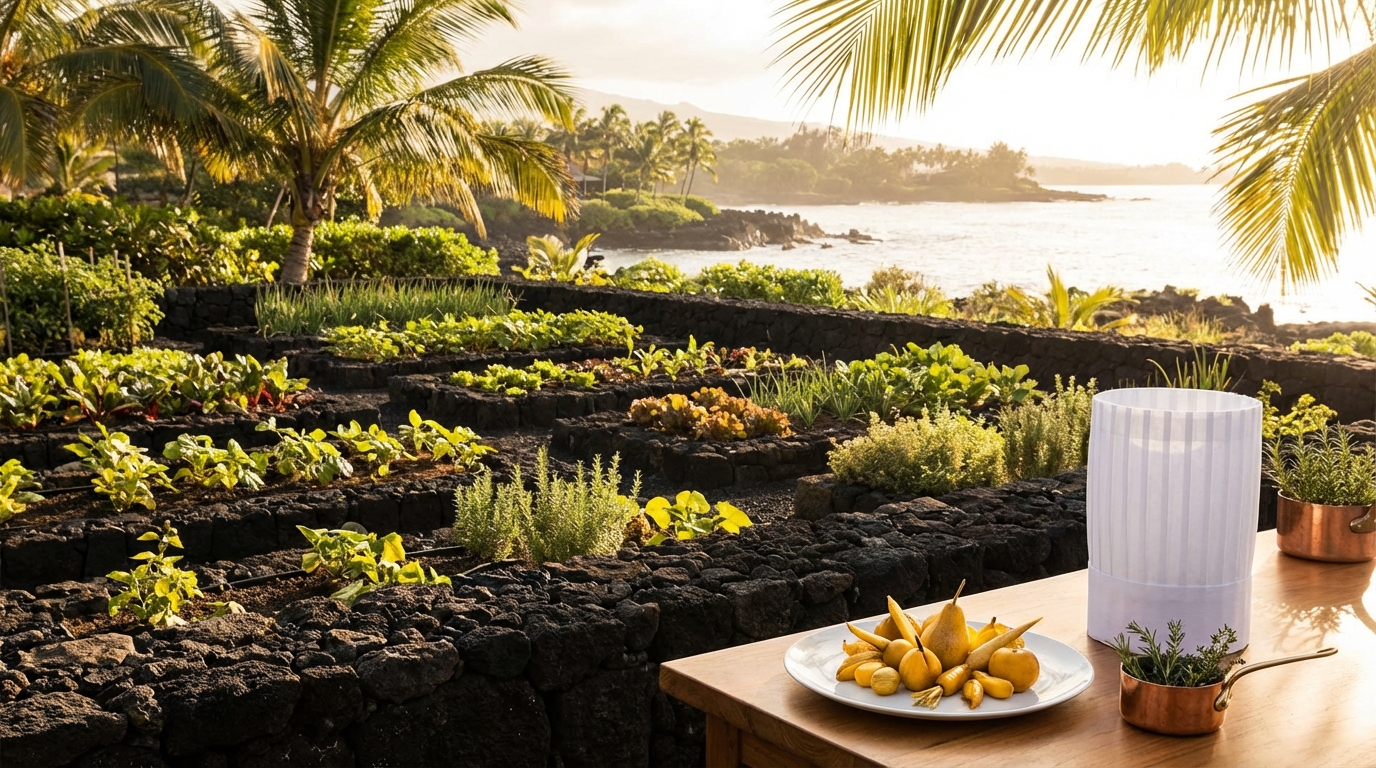
If you are curious how chefs might design a backyard in Hawaii, you can Visit Website that shows real Oahu projects shaped by how people cook, eat, and gather. The short version is this: many newer gardens on Oahu are built around grills, outdoor kitchens, herb beds, and fruit trees, with layouts that feel a bit like a restaurant kitchen stepped outside.
I think this idea surprises some people. You might expect palm trees, a lawn, maybe a few tropical flowers, and that is it. Pretty, but not exactly connected to food or cooking. Then you see a yard where the path leads straight from the back door to a concrete counter with a built-in grill, sink, and a row of herb planters at arm level, and it clicks. Someone planned that space the way a chef thinks about a line: what needs to be within reach, what needs fire, what needs shade, and where people will stand while food is coming off the heat.
This is why Oahu is such an interesting place for people who like restaurants, or cooking at home. The climate is kind to plants people can eat. The food culture is strong. And the idea that your yard can work a little bit like a kitchen is not some abstract design trend. It is just what many families want, especially if they grill or host guests on weekends.
How chefs quietly influence Oahu gardens
When a chef walks through a space, they do not look at it like most of us. They notice where heat will sit, how wind moves, how far they need to walk to get salt, or herbs, or a pan. When that mindset hits a yard, you get something different from a typical decorative garden.
A chef-inspired garden tries to shorten the distance between idea, ingredient, and plate.
On Oahu, this often shows up in three simple ways:
- Food plants mixed with ornamental plants
- Outdoor cooking areas treated like serious workstations
- Seating areas planned around how people eat, not just how it looks in photos
There is nothing magical here. It is not some secret chef code. It is just a habit of seeing the yard as part of the cooking process, not separate from it.
From plate to plant and back again
Think about a dish you like from a local Oahu restaurant. Maybe shoyu chicken with green onions. Maybe poke with fresh herbs and chili. If you pulled that dish apart into ingredients, how many could grow a few steps from your door?
Quite a few, actually:
- Green onions, shiso, and Thai basil in pots
- Chili peppers in sunny beds
- Limes or calamansi as small trees
- Pineapple rings from kitchen scraps turned into new plants
The more you cook, the more these details matter. And the more you notice that the layout of the yard either helps you or slows you down. Chefs tend to have low patience for layouts that slow them down.
If you catch yourself walking the same awkward path every time you cook outside, the problem is not you, it is the layout.
That attitude is what is starting to show up in residential projects on Oahu. Not just big estates. Regular yards, where people care about what they cook and how they spend their evenings.
What a chef-inspired Oahu yard actually looks like
This might sound a bit vague so far. So let us break down some common patterns you see when people design around food, not only around decoration.
1. The outdoor “line” instead of a disconnected grill
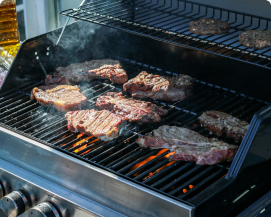
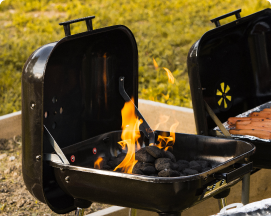
Many homes start with a lonely grill on a slab of concrete. It works, but it is not pleasant to cook there for long. Chefs tend to think in terms of a “line”: a place where a process happens from start to finish.
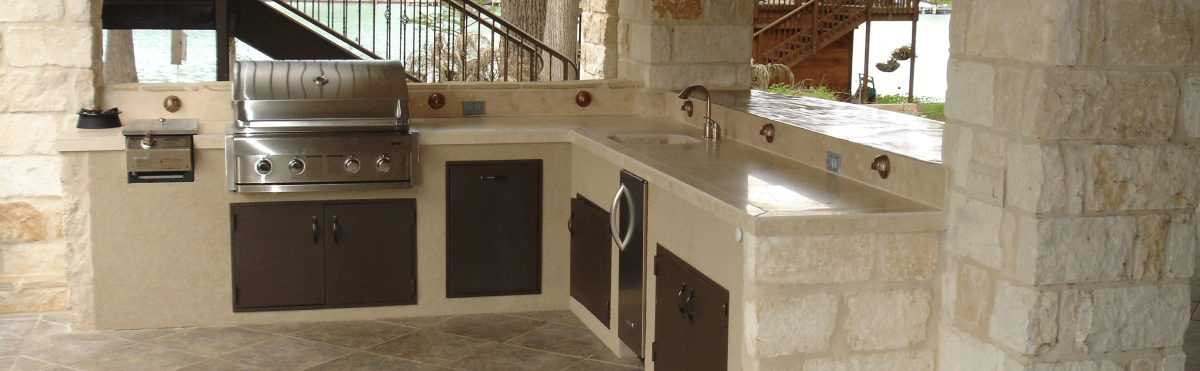
In garden language, that often turns into a small outdoor kitchen. Nothing huge. Just a series of zones that support each step:
| Kitchen step | Yard feature | Why it helps |
|---|---|---|
| Wash | Outdoor sink or simple hose tap with a side table | Rinse herbs and veg without running back inside |
| Prep | Sturdy counter or island | Safe surface for chopping and seasoning |
| Cook | Grill, smoker, or pizza oven | Actual heat source, placed away from kids and plants |
| Serve | Small pass-through ledge or table near seating | Food moves fast from heat to plate |
This line might hug the back wall of the house or sit under a simple roof. The key part is the flow. No awkward gaps between steps. No need to juggle hot trays while unlocking a door with your elbow.
2. Edible plants grouped by how you cook
Many people are told to group plants by water needs or sunlight. That is helpful, but a chef-like eye often adds another filter: which ingredients are used together, and how often.
Think less about “garden beds” and more about “pantry zones” you can walk through.
On Oahu, you might see clusters like:
- A “sauce zone” near the grill with basil, oregano, rosemary, and small tomatoes
- A “garnish corner” by the outdoor sink with green onions, chives, and parsley
- A “heat corner” at the sunny edge with Thai chili, Hawaiian chili, and jalapeños
- A “sweet path” lined with pineapples or dwarf bananas
Does every yard allow that level of grouping? No. Space, light, and soil all have a say. But the concept holds: put the things you use most within a simple, short walk. Frequent ingredients near the kitchen door. Slower growing trees a bit further out.
3. Shade, smoke, and where people actually sit
One thing chefs care about, maybe more than most of us, is comfort during service. They read heat and airflow. In a yard, sun and wind do that job.
On Oahu that often means:
- Grill or smoker placed where smoke will not blow straight into seating
- Overhead cover near the cooking zone to block afternoon sun
- Eating areas oriented to catch trade winds, not turn into hot pockets of still air
You can feel the difference. If you have ever tried to enjoy grilled fish while smoke stings your eyes and your chair sits half in the path, you know what a bad layout feels like.
Translating restaurant habits into home gardens
Many of the little tricks that work in a restaurant kitchen work just fine outside. Not every single one, but more than you might expect. Some of these are extremely practical and not very glamorous, which is probably why they feel realistic.
Prep and mise en place for the yard
Mise en place, the habit of putting everything in place before cooking, does not stop at the door. A yard set up for serious cooking reflects the same idea.
A few examples:
- Hooks for tongs and spatulas close to the grill
- A small shelf with salt, pepper, oil, and a few standard spices
- Cutting boards stacked in a dry corner of the outdoor counter
- One simple storage box for charcoal, wood chips, or grill brushes
This is not design for the sake of design. It is simple: if tools are easy to reach, the cook can stay focused on heat and timing instead of walking circles.
Clean as you go, even in the soil
In a professional kitchen, there is rarely time to stop and reset the whole station. Chefs wipe, clear, and reset constantly. That same mindset can shape how the yard is built.
You might see:
- Permeable patios that rinse clean with a quick spray
- Raised beds with clear timber edges, so soil does not crumble into paths
- Gravel or stepping stones where mud would annoy a cook carrying plates
If you treat the path from the kitchen sink to the grill like the aisle between prep tables, you start caring a lot more about how tidy and safe that path feels.
Zones for quiet, not just for show
Restaurants split their space between kitchen, bar, and dining. Home yards often blend everything together. Sometimes that works, but not always.
Chef-led designs on Oahu often sneak in softer zones:
- A small bench beside a herb bed where someone can sit while keeping the cook company without getting in the way
- A slightly raised deck for the main dining table, so kids and pets flow around it instead of through it
- A lower, cooler corner for slow coffee, dessert, or after-dinner talk
This might sound like overthinking. In practice, these tiny separations keep the cooking area from becoming chaos when you host friends.
Working with Oahu’s climate, not fighting it
Now, there is a catch. Chefs can imagine anything. Plants and weather deal in facts. Some ideas that look great on paper do not work in actual Oahu conditions, especially if someone copied them from a design magazine based in a colder or dryer place.
Many edible plants love Oahu. Some struggle. The trick is to match your cooking favorites with what local conditions will tolerate without endless care.
Common food plants that work well on Oahu
| Plant | Kitchen use | Notes for Oahu |
|---|---|---|
| Thai basil | Curry, stir fry, salads | Loves heat, grows fast, easy to keep near the kitchen door |
| Green onion | Garnish, soups, poke | Grows in pots or beds, constant cut-and-come-again supply |
| Chili peppers | Hot sauces, marinades | Needs sun, can be quite productive in small spaces |
| Lime or calamansi | Dressings, drinks, seafood | Good long-term tree choice if space allows |
| Lemongrass | Broths, teas, marinades | Also works as a fragrant border plant |
| Pineapple | Grilling, desserts, snacks | Slow but rewarding, looks interesting in the yard |
Is everything perfect in the tropics? Not at all. Some classic herb garden plants from cooler places can suffer. Coriander bolts fast in heat. Some lettuces wilt easily. So a chef-inspired yard might treat those as seasonal experiments, not the backbone of the plan.
Sun, shade, and the problem of “too much of a good thing”
Sun helps herbs and fruit, but cooks and guests can cook a bit themselves under a midday sky. That is where thoughtful structure comes in.
Common patterns on Oahu include:
- Lattice or slatted roofs above the cooking station that soften light
- Tree placement that gives morning sun and afternoon shade to seating areas
- Outdoor fabrics or umbrellas tied back to withstand trade winds
The goal is not to block all sun. Food plants still need it. The balance is simple: strong light where plants grow, filtered light where humans stand and eat.
From restaurant inspiration to your own plan
If you like cooking, looking at Oahu yards through this food-first lens can change what you notice. You might start asking different questions.
- Instead of “Where can I put a tree?” you ask “Where will I be when I reach for limes during grilling?”
- Instead of “What fills that bare corner?” you ask “Could that be a bench where my friend sits while I cook?”
- Instead of “Do I want more color?” you ask “Would I actually use more basil or chili here?”
Not every yard can support an outdoor kitchen or a full set of fruit trees. Apartment lanais, small townhome yards, or shared spaces still have limits. But the underlying idea scales down: if you cook a lot, treat your outside space like part of your kitchen, not an afterthought.
Small-space versions of chef-inspired ideas
If you have only a balcony or a tiny patch of ground, you are not shut out. You just have less room, so choices matter more.
- One sturdy planter with your three most used herbs
- A compact electric grill and a small prep table that folds down
- A single chair set where you can sit with a drink while vegetables roast
This will not look like a restaurant terrace in a travel magazine, and that is fine. It still fits the same core pattern: shorten the distance between kitchen and ingredient, give the cook a functional station, and make room for people to share the food nearby.
What you do not need, even if trends say otherwise
This is where I will push back a bit on some common advice. Not every popular outdoor feature makes sense if the focus is food.
- Huge decorative lawns that soak up water but give nothing to the plate
- Complicated water features that sound nice but grow algae and mosquitoes
- Endless plant variety that turns basic care into a part-time job
None of these are wrong by themselves. Some people love them. But if you are trying to build a yard shaped by cooking, you might not want to spend all your care and budget on elements that do not support what happens on the grill, in the pan, or on the table.
If you cook three nights a week outside, your yard is closer to a working kitchen than a showpiece. Let it be honest about that.
That honesty tends to make maintenance easier, not harder. Less fussy lawn, more hard surfaces where smoke and grease are easier to clean. Fewer plant species, more of the things you actually eat and know how to trim.
Reading Oahu yards the way you read a menu
Next time you look at photos of Oahu gardens, or walk past one in person, try this small test. Instead of asking whether it is pretty, ask what someone cooks there.
Questions that help:
- Where is the heat source, if any?
- Can the cook stand in shade while watching the food?
- Where do guests wait, talk, or nibble before the main plate?
- Which plants are there to eat, not just to look at?
When a yard passes this test, it usually feels calm but alive. There are clues that someone uses the space regularly: tongs hanging up, herbs cut back, char marks on the grill surface, maybe a small cutting board drying on the counter.
It does not need to look perfect. In fact, some of the best-feeling outdoor cooking spaces on Oahu look a little lived in. Like a favorite restaurant kitchen that is clean, but clearly used every day.
Common mistakes when people try to copy “chef gardens”
Before closing this out, it might help to look at a few traps that show up when people try to chase this idea purely for looks.
1. Overbuilding the kitchen, underthinking the plants
Some yards end up with a huge grill island, a mini fridge, maybe even an outdoor TV, but almost no thought given to what grows around it. That is more like a tv set than a chef’s garden.
If the main focus is cooking, the plants matter. They add flavor, scent, shade, and a sense of change over time. A bare concrete patio with a fancy grill is not wrong, but it feels more like a showroom than a place where recipes evolve.
2. Planting everything at once
It is tempting to go all in: dozens of herbs, shrubs, and fruit trees planted on the same day. The problem shows up later. Needs differ. Some die. Some overgrow. The whole thing can sag under its own weight.
A slower, more human approach looks like this:
- Start with what you cook already, not what looks trendy
- Plant a small set of herbs and one or two fruit trees
- See what you actually use over six months
- Adjust based on what you reach for, not what you planned on paper
This may sound less ambitious, maybe even boring. It is also closer to how restaurant menus evolve: a mix of steady dishes with a few new tests each season.
3. Forgetting about storage and clean-up
This is the boring part, and it is easy to skip. Where do bags of charcoal go? Where do extra plates sit? Where do you stash the cover for the grill when it rains?
If storage is ignored, all the loose parts end up spread around. The space starts to feel messy even when you are not cooking. It is a small detail with a big effect on how often you use the yard.
Why this matters if you love restaurants
If you care about dining out, chef stories, and food in general, watching this shift in Oahu yards can be satisfying. It is a sign that ideas from the kitchen are leaving the professional world and landing in regular homes in a grounded way.
You see pieces of restaurant logic being repurposed:
- The chef’s instinct to place tools exactly where hands expect them
- The habit of thinking about guest comfort alongside food temperature
- The respect for ingredients, from soil to cutting board to plate
At the same time, home cooks bend those ideas to their own routines. Maybe they do not need a giant prep station, just a small, solid slab next to a charcoal grill. Maybe they prefer a half-dozen herbs that match their own recipes instead of a long list of culinary plants.
There is no single correct version. Some Oahu gardens lean heavy on fruit trees. Others lean on herbs and seating. A few skip edible plants almost entirely but still follow the chef-like logic of flow and comfort.
One last question people often ask
Q: Do you need a professional landscaper or a chef to build a space like this?
A: Not always. Some people like to sketch, test, and adjust their yards over time without any formal plan. That can work quite well, especially if you watch how you actually move when you cook.
That said, if you feel stuck, or your yard has tricky slopes, poor soil, or complicated access, working with someone who understands both Oahu conditions and cooking habits can save a lot of trial and error. A professional can help you avoid obvious mistakes, like putting smoke where guests want to sit or planting trees where roots will fight with pipes.
Either way, the main question is simple: when you step outside with a cutting board in hand, does the space help you cook, or does it get in the way? If the answer is “it helps,” then you are already most of the way toward a chef-inspired garden, even if it is small, imperfect, and still changing.