If you cook a lot, a chef worthy kitchen is not about fancy decor. It is about a layout that lets you move easily, storage that keeps what you need at hand, and tools that match the way you actually cook. A good remodel focuses on workflow first, then style. If you are planning a serious change, a team like Distinct Remodeling can help design around how you prep, cook, plate, and even entertain.
That is the simple answer. The longer answer takes a bit more unpacking, because home kitchens sit in a strange space. They borrow ideas from restaurant kitchens, but they are also living spaces, social spaces, sometimes home office, sometimes homework station. Trying to copy a restaurant back line exactly usually does not work at home. It can feel cold and tiring. So the challenge is to keep the practical side of a pro kitchen, but still have a room you want to sit in with a cup of coffee at 6 a.m.
A chef worthy kitchen is not about looking like a restaurant. It is about cooking in a way that feels smooth, safe, and almost boring, even when you are making five dishes at once.
How chefs think about kitchen layout
Many home remodel plans start with colors, cabinets, and appliances. Chefs usually start somewhere else. They think in stations and steps.
Try this: Think about the last full meal you cooked. Not a snack. A proper meal with at least two hot items. Walk through the steps in your head. Where did you set groceries? Where did you first wash and cut? Where did you stand while stirring? Where did dirty pans end up?
Now ask yourself a simple question: did you walk too much?
If you felt like you took a lot of side steps or turns, your layout is probably fighting you. A remodel is your chance to fix that. Instead of only focusing on the classic “work triangle” between sink, stove, and fridge, it often helps to build clear zones.
Main work zones that matter for serious cooking
- Prep zone near the sink and trash
- Cooking zone around the stove and oven
- Baking zone if you bake a lot
- Plating zone between stove and table
- Cleaning zone around the sink and dishwasher
These can overlap a bit, but if they all live on top of each other, you end up juggling cutting boards over dirty pans, and that is when cooking stops feeling calm.
I find it helpful to sketch the zones before picking a single finish. Even a rough drawing on paper works. Some people think this is overkill, but if you cook many nights a week, it adds up.
If you build your kitchen around how a recipe flows from fridge to plate, many design choices start making themselves.
Prep surfaces that actually match how you cook
Most home cooks do almost everything on one small section of counter. It might be next to the sink or somewhere near the stove. The rest of the counter becomes storage for mail, appliances, and random jars.
A chef worthy remodel flips that habit. It gives you one or two generous, clear prep zones. No clutter. No knife block in the middle. No toaster right where you want to roll dough.
Choosing the right worktop mix
You do not need one perfect surface for everything. In fact, a small mix works better.
| Surface | Good for | Watch out for |
|---|---|---|
| Wood / butcher block | Chopping, bread, pastry, gentle on knives | Needs oiling, can stain with beet juice and wine |
| Quartz | General prep, easy cleaning, looks clean most of the time | Do not put very hot pans directly on it |
| Stainless steel | High heat, messy prep, fast cleanup, very “pro” feel | Shows scratches, can feel cold or harsh to some people |
| Marble | Pastry, chocolate, staying cool for dough | Etches with acid, stains if not sealed and cared for |
I know one home cook who put a narrow stainless counter between stove and sink just for searing and resting pans, then used wood on the island for prep. That mix looked odd on paper, but in real life it works. It feels like the kitchen has different “modes” without you thinking too much about it.
How much counter space do you really need?
This gets personal. A person who cooks once a week does not need the same surface area as someone who runs sourdough, stocks, and sauces at home every weekend.
As a rough guide:
- If you cook daily, aim for one clear, uninterrupted stretch of at least 4 to 6 feet near the sink.
- If you love to host, add a second surface where a helper can work without getting in your way.
- If you bake often, a lower counter section can help with kneading and rolling. Many pros like 32 to 34 inches high for pastry.
One thing people often get wrong is filling the longest counter with fixed items: microwave, knife block, stand mixer, coffee station, all lined up. It looks neat for a photo, but you end up cutting onions in a 12 inch gap. That tiny shift in habit of keeping a large part empty changes how it feels to cook more than any color choice.
The most useful counter in a chef worthy kitchen is not the biggest one; it is the one that stays empty until you start cooking.
Storage that supports fast cooking
A professional line cook knows exactly where things are. Not “roughly” where, but “reach out with your left hand in the dark” where. Home kitchens rarely work that way, yet you can borrow some of that logic.
Think about storage around reach and timing instead of matching cabinet sizes.
Zone based storage ideas
- By the stove: oils, salt, main spices, tongs, spatulas, pan lids
- By main prep zone: knives, cutting boards, mixing bowls, colanders
- By sink: soap, scrub pads, dish towels, compost or trash
- Upper cabinets: plates, bowls, glassware, lighter items
- Deep drawers: pots, pans, heavy appliances
Drawers instead of deep lower cabinets are easier if you cook a lot. You can see what you have without crouching and digging. Shallow drawers right under the main prep zone are perfect for knives and measuring spoons. This sounds basic, but I still see many remodeled kitchens where the knives live across the room from the only nice counter section. Then people wonder why they get bored with cooking.
Open storage vs closed
Open shelves look nice in photos. In real life, they gather dust and grease if you cook often, especially near the stove. I think open shelving works when:
- You keep only daily use items on them.
- You are willing to wipe them regularly.
- You do not try to stack tiny items that fall over.
For spices and dry goods, I like shallow pull out racks or narrow wall shelves with a small lip. Deep spice cabinets hide jars in the back that you forget you own. If you cook a lot, you probably want fresh spices anyway, so visual access helps you rotate them.
Pro level appliances that still make sense at home
It is tempting to buy the biggest range you can afford. Six burners, griddle, double oven. It looks serious. But if your ventilation, counter space, and power supply cannot keep up, that big range becomes an awkward trophy.
Think about appliances as a system, not as single pieces.
The stove and oven question
Most cooks who are really into it will do well with:
- A 30 to 36 inch range or cooktop with at least one strong burner.
- A full size oven that holds a large roasting pan or baking stone.
- Some form of fast, gentle heat like induction for sauces.
Gas has a certain feel that many people like, but induction is quick, precise, and easier to keep clean. Traveling between homes where one has gas and the other has induction, I noticed I burn fewer sauces on induction. The response time is so fast that I catch myself adjusting power more often.
If you love baking across different temperatures at the same time, a separate wall oven can help. If you rarely bake more than one tray of cookies, a single high quality oven is enough.
Ventilation that actually works
This is one of those boring topics that people skip until they regret it. Strong searing, frying, or wok cooking without good ventilation leads to sticky residue on cabinets and lingering smells.
A proper hood should:
- Be at least as wide as your cooktop.
- Have enough pull for your cooking style. Heavy searing and frying need more.
- Vent outside, not just recirculate through a basic filter.
I used to cook in a small apartment kitchen with a decorative hood that barely pulled air. After a few months, every upper surface felt slightly sticky. In a later place, we added a quiet but stronger hood, and the difference in comfort was clear within days.
Refrigeration choices
Chefs often rely on clear, shallow storage. At home, it usually becomes the opposite. Packed, deep shelves where leftovers go to be forgotten.
For a home cook who takes food seriously, I think the key is less about a huge fridge and more about organization:
- Adjustable shelves so tall pots fit when needed.
- Separate drawers for produce and meat.
- Door storage that actually fits the bottles you use.
If you enjoy entertaining or you ferment, a small under counter fridge or beverage center can take pressure off the main unit. I once saw a remodel where a small under counter fridge by the prep area held only stocks, ferments, and ready sauces. It looked odd at first, but for someone who cooks daily, it made a lot of sense.
Lighting that matches real cooking
Many kitchens look fine during the day, then turn gloomy at night. Or they have one bright overhead fixture that throws harsh shadows right where you cut.
Professional kitchens tend to be bright, almost flat in lighting. Home kitchens can be kinder on the eyes but still clear enough to safely mince herbs at 10 p.m.
Three levels of kitchen lighting
- General lighting: ceiling fixtures or recessed lights for full room light
- Task lighting: under cabinet lights over counters, lights over the sink
- Accent / mood: pendants over an island, toe kick lighting, or simple wall lights
If you only pick one thing to improve, under cabinet lighting might be it. It targets the main prep zones and actually changes how you feel when chopping or reading recipes. LED strips or low profile bars are enough. Adding dimmers helps you shift from cooking mode to dining mode without going full “restaurant kitchen” brightness when you just want a late snack.
Flooring that supports long cooking sessions
Standing for hours on a hard surface can wear you out. Many people pick flooring based only on looks or cleaning, then find that their back hurts more after a big weekend cook.
Common options:
| Floor type | Pros for cooking | Drawbacks |
|---|---|---|
| Wood / engineered wood | Warm, slightly softer underfoot, quieter | Can dent or stain with spills if not wiped |
| Tile | Handles spills and heat well, easy to mop | Hard, cold, can be slippery if polished |
| Luxury vinyl plank / tile | Softer feel, good water resistance, more forgiving if you drop things | Quality varies, some people do not like the feel |
| Cork | Very soft and comfortable, quieter | Can stain and dent, needs care around water |
If you pick a harder floor like tile, consider anti fatigue mats in front of the sink and main prep zone. They do not look glamorous, but after a few hours of cooking, you will feel the difference. Some cooks resist mats because they break up the clean look, but in real daily use, comfort often wins.
A sink setup that feels like a small dish station
Professional kitchens run dish stations as tight systems. At home, the sink area often ends up scattered: sponge here, brush there, soap bottle leaking on the counter, no real place for drying.
Single basin vs double basin
There is a lot of debate here. Personally, for frequent cooking, a large single basin usually works better. It fits sheet pans and stock pots. You can still drop a small tub or colander inside for rinsing vegetables.
A double basin can help if you hand wash as you cook and like to keep soapy water on one side and rinse on the other. It really depends on habit. What matters more is depth and surrounding layout.
- A depth of 9 to 10 inches handles large pots without too much splash.
- A sprayer faucet makes cleaning pans and the sink itself easier.
- A narrow, raised back section or small ledge can hold soap and brushes.
One clever idea I have seen in recent remodels is a “workstation” sink with built in ledges for sliding cutting boards, colanders, and drying racks. They turn the sink into a secondary prep zone, especially for washing greens or draining pasta. They are not for everyone, but for heavy home cooks, they can be useful.
Planning for small appliances you actually use
Mixers, blenders, air fryers, rice cookers, espresso machines. They all want counter space. If you leave them out, you lose prep area. If you hide them all, some never get used.
A realistic chef style kitchen accepts that some appliances deserve a “parking spot” in plain sight, while others live in a cabinet but remain easy to reach.
Appliance zones that make sense
- Everyday group: coffee gear, toaster, maybe a small blender, near an outlet and away from main prep.
- Weekly use group: stand mixer, food processor, rice cooker, in a lower cabinet with pull out shelf.
- Occasional group: holiday tools like big slow cookers or special baking gear, in higher or less central storage.
One mistake I made at home was tucking the stand mixer into a deep corner cabinet. It was heavy and awkward to lift out, so I used it less. Later, I gave it a spot on a short section of counter that was not very useful for prep anyway. Suddenly I baked more again. So, storing things “neatly away” is not always the best choice if it means you stop using them.
Building a real chef pantry
For people who like cooking and restaurant culture, the pantry is more than a place to stash snacks. It holds the base of your cooking: oils, vinegars, grains, legumes, canned tomatoes, stock ingredients.
Shallow beats deep for most pantry shelves
Deep shelves look generous but quickly hide items. One practical approach is:
- Use 10 to 14 inch deep shelves for most pantry items.
- Reserve deeper areas only for bulk bags, appliances, or large pots.
- Add pull out drawers or bins where depth is unavoidable.
Labeling helps, but clear groupings help more. For example:
- One section for grains and pasta.
- One for baking ingredients.
- One for canned goods and jars.
- One for snacks and ready items.
If you often recreate dishes from restaurants, you probably carry more condiments and “special” ingredients. Those can live on narrow shelves on the door or in shallow wall racks, almost like the reach in sauce shelves on a restaurant line.
Seating and social cooking
Many home cooks like to have friends nearby while they work. At the same time, they hate being bumped while draining pasta or taking a hot pan out of the oven.
The trick is to separate hangout space from the hot zone, sometimes by just a few inches or a small level change.
Islands, peninsulas, and chef space
Islands often become the heart of a remodel. They can hold prep space, storage, and seating. For serious cooking, think carefully about where the stools go.
- Keep the “chef side” of the island clear for prep and plating.
- Place seating on the opposite side, so guests lean in but do not step into your work zone.
- Leave enough aisle space, usually at least 42 inches, between island and counters.
I once cooked in a kitchen where stools sat directly in the path from fridge to stove. Every time I needed something, I had to ask someone to scoot in. It turned a simple risotto night into a slow traffic puzzle. Moving those stools just 12 inches and orienting them along the side instead of the back of the island changed the whole flow without any new construction.
Materials and finishes that can take real use
Professional kitchens care more about durability and cleaning than about delicate finishes. You do not need to copy that fully, but it makes sense to choose materials that accept a bit of wear without looking ruined.
Cabinet finishes
Flat fronts are easier to wipe down than detailed, carved doors. Matte or satin finishes hide fingerprints better than very glossy ones. If you cook high heat or fry often, lighter colors near the stove hide splatters until you wipe them.
Some people like the look of natural wood that will pick up small dings over time. Others prefer painted finishes that stay more even. Neither is wrong, but if you get stressed by minor chips, a slightly textured or mid tone finish might be kinder to your nerves than pure white.
Backsplash choices
The area behind the stove takes the most abuse. Simple tile with narrow grout lines, stainless panels, or large slabs cut cleaning time. Tiny tiles with wide grout lines can look nice but trap more oil and color. For someone who cooks often, that tradeoff may not be worth it.
Safety for high activity cooking
Chefs work in tight spaces with sharp tools and hot surfaces all around. They manage risk by having clear paths and habits. At home, children, pets, and guests add more moving parts.
Basic safety ideas that matter more when you cook often
- Keep main walkways free from rugs that slide.
- Avoid placing the oven door where it opens directly into a walkway.
- Plan at least one clear counter segment next to the oven for hot trays.
- Store knives in one defined place, not loose in drawers.
- Add good lighting at the top and bottom of any steps near the kitchen.
These points can sound obvious on paper. In a remodel, though, people can get distracted by finishes and forget to check where traffic flows. If you are moving a stove, imagine carrying a heavy, hot cast iron pan from it to the sink. Is there a clear path? Can someone open a fridge door in front of you by mistake? That type of basic walkthrough catches many small issues before they become daily annoyances.
Adapting restaurant ideas without copying blindly
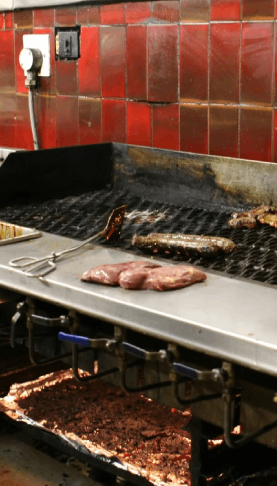
Since the article is for people who like cooking and restaurants, it is tempting to think, “I want my home kitchen to feel like the back of house in my favorite place.” That can work in spirit, not always in exact form.
Ideas worth borrowing
- Mise en place mindset: Storage that keeps ingredients and tools ready in known spots.
- Line of sight: Clear counters and open space between main zones.
- Heat and mess control: Good ventilation and materials that clean easily.
- Station thinking: Separate areas for prep, cooking, plating, and dish handling.
Things that often do not translate well
- Harsh fluorescent level lighting for the whole room.
- All stainless everything, wall to wall.
- Open metal shelving for every single item.
- Gigantic ranges in very small rooms.
The tension between home comfort and pro function is normal. You might want a place that feels warm and relaxed like a café, but still lets you do a fast Sunday service for family like a small bistro. It is fine if that balance tilts a bit one way or the other. No remodel has to be perfectly “chef like” to make your cooking life much better.
Questions to ask yourself before you start remodeling
Before you pick any tile or appliance, it helps to ask some blunt questions. They can be a bit uncomfortable, but they save money and stress later.
- How many nights a week do you actually cook from scratch?
- Which dish do you cook most often?
- What frustrates you in your current kitchen within the first 5 minutes of cooking?
- Do you prefer cooking alone, or with someone beside you?
- Do you host large groups often, or mostly cook for two or three people?
- Are you okay with ongoing care like oiling wood and sealing stone, or do you prefer lower maintenance surfaces?
Your answers might surprise you. Some people think they “need” a double oven, then realize they only bake big once a year. Others never considered a second prep zone, then remember how often a partner tries to chop salad while they work on the main dish.
Bringing it all together without overcomplicating it
If all of this sounds like a lot, that is fair. Kitchen design can become a tangle of small choices. The risk is that you freeze and end up replicating the same layout you had before, just in nicer finishes. That is a missed chance, especially if you care about cooking.
So, if you want one simple path through the noise, you could treat it like a short menu:
- Plan your workflow from fridge to sink to prep to stove to plating to table to sink again.
- Give yourself one generous, always clear prep area with good lighting.
- Pick storage that supports that flow: drawers, clear zones, sensible appliance spots.
- Choose appliances as a group, matched to your actual cooking habits.
- Add lighting, flooring, and sinks that keep you comfortable during long cooking sessions.
If you get these things mostly right, the details of color and hardware start to matter less for daily cooking. They are still nice, of course, but they stop driving the core function.
Common question: Do I really need a “chef worthy” kitchen to cook well?
Short answer: No. Many great meals come out of small, awkward kitchens. A skilled cook can work around clutter and bad layouts.
Longer answer: While you do not need a perfect kitchen, a well planned one lowers the friction of cooking. It makes it easier to try more complex recipes after a long day. It can be the difference between “I will just order out” and “I can throw something together quickly.” If cooking is something you care about, shaping your space around it is not snobbery. It is just practical.
So the real question might be: where does your kitchen slow you down or tire you out right now, and which single change would make the biggest difference in how you cook tomorrow?