If you love cooking at home and exploring local food in Rockport, you probably look at kitchens and dining spaces a bit differently. You do not just see cabinets and counters. You see prep zones, storage for spices, a place for friends to gather, and maybe a quiet corner for a late-night bowl of gumbo. So if you are trying to pick a remodeling company in Rockport Texas, the short answer is this: look for a team that understands food, flow, and daily life, not just square footage and paint colors.
That sounds simple, but it is not always how remodeling projects go. Many homes end up with beautiful kitchens that are awkward to cook in, or dining rooms that look good in photos but never get used. I think the gap often comes from planning that focuses on looks first and daily habits second.
Let us walk through how to approach remodeling in Rockport if food is one of the main reasons you are doing it at all.
How much of your life actually happens in the kitchen?
If you cook often, the kitchen is not just another room. It is where you:
– Chop vegetables
– Prep seafood from the bay
– Pack school lunches
– Set out trays for game days
– Talk while someone leans on the counter with a drink
So it makes sense to start your remodel with a simple question:
Ask yourself: “What do I actually do in my kitchen every week, and what drives me crazy about it right now?”
You can even keep a short list for two weeks. Every time you bump into someone at the fridge or cannot find a utensil, write it down. That list is worth more than any design trend article.
Common everyday problems you might recognize:
– The dishwasher blocks a cabinet when the door is open
– Trash and recycling have no clear spot
– You turn in circles going between sink, stove, and fridge
– There is no place to cool hot pans without stacking them on top of each other
– Guests crowd into the same small corner when you entertain
Those are the little things a good remodel can fix, if you plan for them early.
The work triangle and why it still matters
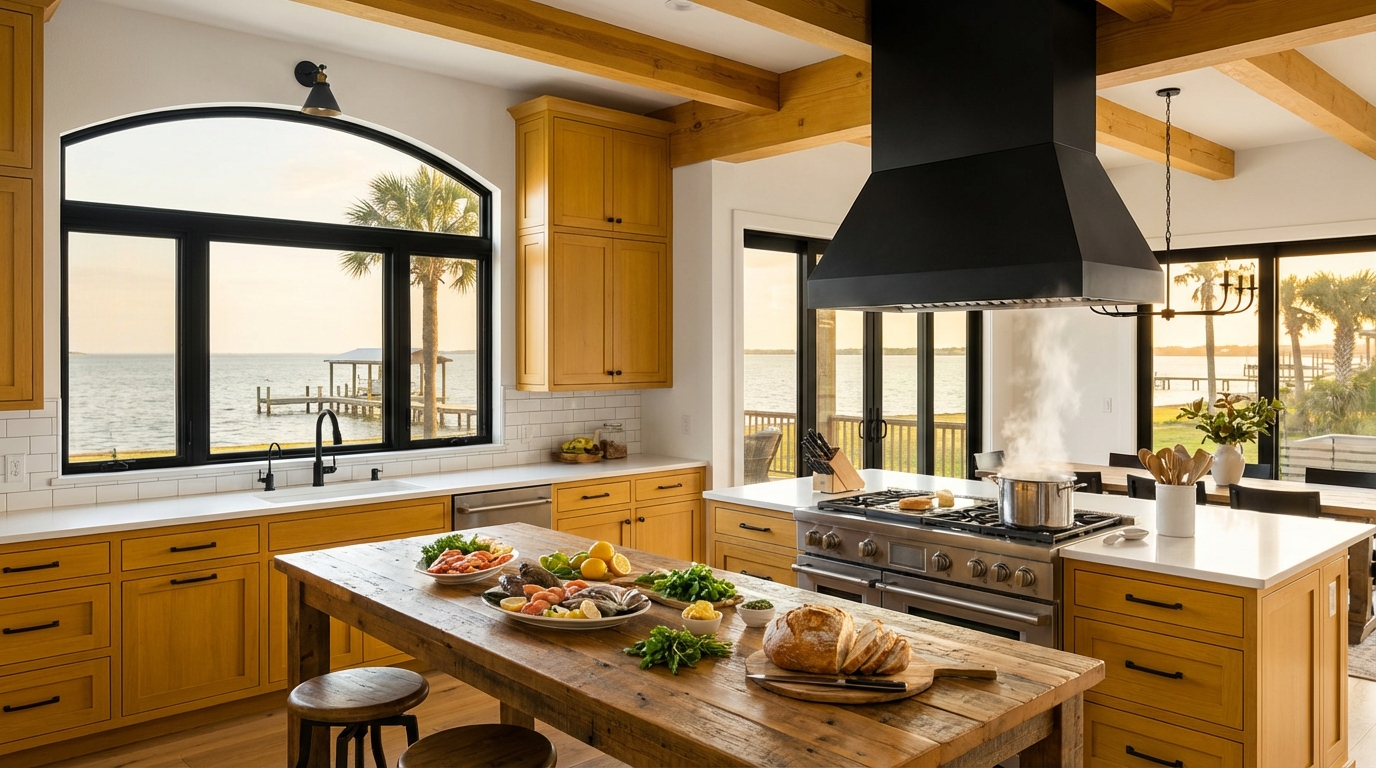
You have probably heard of the kitchen “work triangle”: fridge, stove, and sink forming a rough triangle so you can move easily between them. Some designers say it is outdated. I do not fully agree.
For home cooks, the triangle still helps. It is not a rule you must follow exactly, but it is a useful starting point.
Here is a simple way to think about it:
| Zone | Main job | Closer to |
|---|---|---|
| Fridge & pantry | Storing ingredients | Entry to kitchen |
| Sink & dishwasher | Washing, rinsing, quick prep | Trash, prep counter |
| Stove & oven | Cooking food | Vent hood, landing space |
If you can move between those three points with only a few steps, cooking feels calmer. If you walk around an island ten times for one meal, you feel tired and annoyed.
A simple test: imagine cooking your favorite dinner and trace the steps in your head. If the layout feels like a maze, the design needs work.
Island, peninsula, or no big counter at all?
Many people assume a big island is always better. I do not think that is true. Sometimes an island helps. Sometimes it gets in the way.
Ask yourself:
– Do you have at least 42 inches of space around all sides for walking?
– Do you need bar seating, or would a small table near the kitchen be more useful?
– Will the island be for cooking, serving, or both?
If you love hosting, an island can be great for:
– Spreading out charcuterie, dips, or taco fixings
– Setting up a dessert bar
– Keeping guests near you but out of your direct work zone
If your kitchen is narrow, a peninsula can make more sense. It can still give you:
– Extra prep space
– A few stools
– A natural break between kitchen and living room
And in some small kitchens in Rockport, the right choice is no island at all. Long, clear counters along the wall with good lighting and storage can be far nicer to cook in than a cramped room with a giant island that feels like a roadblock.
Rockport life: salt, sand, and seafood in your kitchen design
Living near the water affects what you cook and how your home wears over time.
Salt in the air, wet towels, sand on the floor, coolers coming in and out. If you ignore that, your kitchen might look tired sooner than you expect.
For food lovers in Rockport, some practical choices help:
Materials that do not mind real life
For cabinets, floors, and counters, think about:
– How easy are they to wipe?
– Will splashes from seafood prep stain them?
– Will they scratch when someone drags a cooler or stool?
Here are a few common options many Rockport homeowners look at:
| Surface | Good for cooks? | Things to know |
|---|---|---|
| Quartz counters | Yes | Resists stains, easy to clean, not great with very high heat |
| Granite counters | Often | Needs sealing, more natural variation, handles some heat |
| Butcher block | Sometimes | Warm look, good for baking zones, needs regular care and oil |
| Luxury vinyl plank flooring | Yes | Handles water and sand, softer underfoot than tile |
| Porcelain tile flooring | Yes | Hard, durable, can feel cold, grout choice matters |
If you cook a lot of seafood, pick counters and backsplashes that will not hold smells or stains. You want to be able to bleach or scrub a bit without fear.
Ventilation for real cooking
This part often gets skipped or done halfway.
If you:
– Sear steaks
– Fry shrimp or fish
– Use a wok or cast iron often
then a good vent hood really matters. Recirculating hoods with simple filters tend to spread smells around. A vent that goes outside, with enough power for your stove size, will keep your home fresher.
I once cooked a big fish fry in a kitchen with a weak hood. The house smelled like oil for two days. It was not pleasant. A strong, well-mounted hood would have made a big difference.
Tell your contractor honestly how you cook. If you fry or blacken food often, say so. Your vent and finishes should match the way you live, not a staged photo.
Storage that matches the way you cook
Food lovers usually own more gear than average. Maybe not as much as a restaurant, but still a lot:
– Dutch ovens
– Sheet pans
– Mixing bowls
– Baking dishes
– Cutlery, knives, measuring cups
– Spices, oils, vinegar, specialty ingredients
If all those items end up in random cabinets, cooking gets slower. You keep bending, reaching, digging for things.
When planning storage, think by category and by height:
| Item type | Good storage spot | Reason |
|---|---|---|
| Pots and pans | Deep drawers below cooktop | Easy to see and grab, no stacking too high |
| Spices | Shallow drawer near stove or pull-out rack | Labels visible, quick reach while cooking |
| Sheet pans | Vertical dividers in lower cabinet | No rattling stacks, simple to pull one at a time |
| Small appliances | Appliance garage or pantry | Counters stay clear, items still handy |
| Oils & vinegar | Small pull-out next to range | No spills across big shelves |
If space allows, a walk-in or cabinet-style pantry can change how your kitchen feels. Labeled bins, shelves by category, and room for extra paper goods make hosting less stressful.
Blending kitchen, dining, and living for gatherings
Rockport has a social food culture. Boils, barbecues, fish fries, big holidays. Many home cooks want a layout that lets them join the fun while cooking.
Open concept is not the only answer, but some level of connection between the kitchen and other spaces helps.
Think about:
– Can you see the living room TV from the stove?
– Is there a clear place to set drinks and snacks where people will gather naturally?
– Are there walking paths that do not cut through your main work zone?
Some people like a half wall, a wide pass-through, or a large cased opening instead of fully open. That can block some noise and mess but keep sight lines.
If you eat outside often, plan a path from the kitchen to the patio that does not feel like an obstacle course. No tight corners with chairs sticking out, no fragile rugs right where drinks will spill.
Outdoor cooking spaces for Rockport food lovers
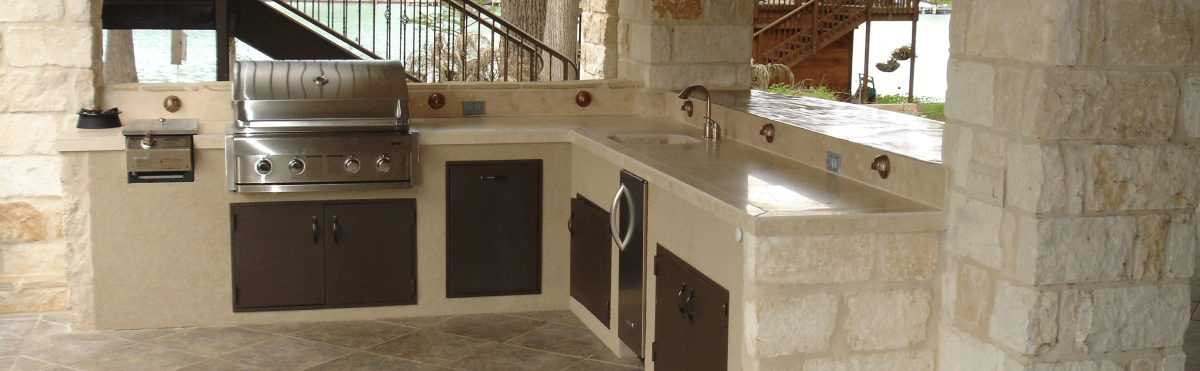
Many Rockport homes are starting to treat the backyard like a second kitchen. If you enjoy grilling, smoking meat, or cooking fish outside, you may want to work that into your remodel.
You do not need a huge outdoor kitchen to enjoy it. A simple, thoughtful outdoor setup can be:
– A built-in or sturdy stand for a grill
– Some counter space on each side
– A small fridge
– Storage for tools and charcoal or pellets
– Shade and a fan for hot afternoons
Before you start, think about:
– Wind: Where does smoke usually blow?
– Sun: Will you be cooking in direct sun at dinner time?
– Neighbors: Will smoke go into their windows?
Good lighting outside matters too. You need to see the color of your meat or fish at night, not guess.
Bathroom updates that make hosting easier
If you are already doing a full home renovation, it makes sense to look at bathrooms as well. This is still tied to food in a roundabout way, because guests at dinner parties use bathrooms, and you likely wash up there before cooking.
Key thoughts for entertaining:
– A half bath near the kitchen or living room keeps traffic away from private areas
– Easy to clean finishes are worth the cost, because you will wipe them often
– Good lighting by the mirror helps for quick touch-ups
For your own use, after long cooking or cleaning days, a walk-in shower with a bench can feel like a small luxury that you actually use often.
How to talk to a contractor when food is your focus
This part is where many projects go off track.
Most people tell a contractor things like “I want white cabinets” or “I like this backsplash.” That is fine, but for a food-centered home, you should start the talk a bit differently.
Try to explain:
– How many people cook in your kitchen at the same time
– Whether you cook daily or just a few times a week
– What kind of cooking you do: baking, grilling, pan searing, big holiday meals
– How often you host, and how many people show up
You might even say something like:
– “On Sundays I batch cook for the week, so I need places to cool many pans”
– “I bake bread twice a week and want a dedicated baking area”
– “We do big crawfish boils once a year and need a path from the kitchen to the backyard”
These details give the remodeling team real problems to solve, not just styles to copy.
Budget choices that matter most to home cooks
You will probably have to make tradeoffs. Almost every remodel does.
From a cooking and hosting point of view, some areas have a bigger everyday impact than others:
Places where spending a bit more helps
- Good vent hood that vents outside
- Durable, easy-to-clean counters
- Solid cabinet boxes and hardware (soft-close drawers, strong hinges)
- Layered lighting: overhead, under cabinet, and maybe a pendant or two
- Quality sink and faucet that can handle large pots
Places where you can hold back a bit
- Very trendy hardware shapes or colors
- Elaborate cabinet door profiles that are hard to clean
- Fancy open shelving everywhere that will collect grease
- Very high-end tile where a simple, clean design would work
I do not think chasing every trend is helpful. In five years, people might call that trend “old” anyway. Focus instead on whether the space works for you on a Tuesday night when you are tired and just trying to get dinner on the table.
Common mistakes when remodeling for food lovers
Some problems come up again and again. You can avoid many of them if you know what to watch for.
Too little counter space around the stove
If you cook with multiple pans, you need landing zones for:
– Hot pots
– Cutting boards
– Seasoning bowls
Try to have counter space on both sides of the stove, even if one side is small. Setting a hot pan on top of a crowding utensil holder is not safe or pleasant.
Overdoing open shelves
Open shelves look nice in photos, but real cooking creates grease and steam. If you fry or sear often, open shelves near the stove will get sticky.
A balanced approach:
– Use a few open shelves for daily dishes or glasses
– Keep most storage in closed cabinets
– Put open shelves away from direct cooking steam if you can
Not planning outlets and power
Serious home cooks often own:
– Stand mixers
– Blenders
– Food processors
– Coffee makers
– Air fryers or toaster ovens
If all outlets end up on one wall, counters will feel crowded. Plan for:
– Enough outlets along the backsplash
– At least one outlet on the island or peninsula
– A dedicated spot for coffee equipment if you care about coffee
Making space for food storage and local ingredients
Rockport cooking often means:
– Fresh fish and shrimp
– Seasonal produce from local markets
– Sauces, rubs, and spices for grilling
Think about cold and dry storage:
– Do you need a full-size fridge, plus a small beverage fridge?
– Would a chest freezer in the garage or utility room help for storing bulk buys?
– Do you need a specific shelf or bin for seafood to avoid cross-contamination?
Some people like to keep a small “entertaining shelf” with:
– Extra napkins and plates
– Serving platters
– Candles or table items
When guests come over, they know exactly where everything is.
Lighting your kitchen like a space you actually use
Many kitchens are either too bright and cold, or oddly dim where you need to see most.
For everyday cooking, you want:
Three basic layers of light
- Ceiling lighting: general brightness, often recessed lights
- Task lighting: under cabinet lights that shine on the counters
- Accent lighting: pendants over an island or table for mood
Under cabinet lighting can be life changing in a quiet way. When you chop an onion and can clearly see the knife and the colors, it just feels safer and more pleasant.
Pick a color temperature that feels natural to you. Many people like something in the soft white to neutral range, not too blue, not too yellow.
A quick note on permits, codes, and safety
You might think permits and code talk are boring. Fair point. Still, for a kitchen or major remodel, they matter, especially when you are dealing with:
– Gas lines
– Electrical work for ovens and induction tops
– Structural changes for larger openings
A good local contractor will know Rockport and area rules and handle that side. If someone tells you to skip permits to “save time,” that is usually a warning sign, not a clever idea.
Bringing Rockport food culture into your design
If you love local restaurants, seafood shacks, and casual spots near the water, you might want tiny hints of that look at home, without copying a theme.
Simple ways to do that:
– Use a few framed menus or food photos from local places you like
– Choose colors that remind you of the coast, but keep them soft
– Add hooks for hats, aprons, or bags near the back door
– Keep a long, sturdy table indoors or outside for shared meals
You do not have to turn your house into a restaurant. In fact, that can feel odd. But you can borrow small ideas, like:
– A sideboard where you set out coffee and dessert
– A narrow shelf for hot sauce bottles
– A chalkboard or whiteboard for weekly menus
One last question: what does a “good” food-centered remodel feel like?
The goal is not a perfect magazine kitchen. Perfection looks nice, but real life is messier.
A good remodel for a food lover in Rockport feels like this:
You can cook a full meal without bumping into someone every minute, tripping over the trash can, or hunting for a pan across the room.
You have:
– Enough storage, but not so much that you forget what you own
– Work surfaces where you need them
– Light where you cut and cook
– Durable finishes that do not make you nervous when things splatter
And when people come over, they actually gather in the spaces you remodeled, because those spaces feel natural.
Short Q&A for Rockport home cooks planning a remodel
Q: I love to cook, but my budget is not huge. What should I fix first?
A: Focus on layout, lighting, and storage before fancy finishes. Move appliances and sinks into better positions if needed, add good task lighting, and add drawers or pull-outs so you can reach what you use most. A well-planned simple kitchen will feel better than an expensive but awkward one.
Q: Is an island always the right choice for a food lover?
A: No. If the room is not wide enough, an island can block you. You might be better off with a peninsula or just long, open counters. The key is clear walking paths and enough space to work without bumping into people.
Q: Do I really need strong ventilation if I do not fry food every day?
A: If you ever cook fish, sear meat, or cook for a crowd, a solid vent that goes outside is worth it. You might not notice it daily, but you will notice the difference after a heavy cooking day when your house does not hold onto smells.
Q: How can I make my kitchen better for guests without turning it into a bar?
A: Create a simple “landing zone” away from your main cooking area. This can be part of an island or a small side counter with space for drinks and snacks. Guests will naturally gather there instead of crowding your stove.
Q: What is one thing people regret skipping in a remodel?
A: Many people later wish they had added more drawers instead of lower cabinets with doors. Deep drawers for pots, pans, and dishes save your back and make daily cooking smoother. They do not look flashy, but they change how the kitchen feels to use.