If water soaks your restaurant kitchen in Salt Lake City, you deal with it fast or you risk shutting down service, losing inventory, and facing health code problems. In most real cases, you need professional help like Water Damage Restoration Salt Lake City to dry everything correctly, clean for food safety, and get you open again as soon as possible.
That is the short answer.
The longer answer is that water in a home kitchen is annoying, but water in a commercial kitchen can be a real threat to your business. You have staff, tickets coming in, prep lists, and refrigeration running all day. There is gas, electricity, hot oil, and sharp tools. Add standing water or hidden moisture under the line, and the risk multiplies fast.
If you cook for a living or run a restaurant, you already know how one small problem at 4 pm can sink a whole night of service. Water is like that, just on a bigger, slower scale. At first it might look like a little puddle around the dish area. A few days later, you smell something off in the walk-in. A month later, a health inspector asks about the dark spot on the wall behind the prep sink.
Why water damage in restaurant kitchens is different
Water in a restaurant kitchen is not the same as water in a bedroom or hallway. Not even close. You have more heat, more grease, more wiring, and far more surfaces that need to be safe for food.
In a restaurant kitchen, water damage is not just about drying the building, it is about protecting food safety and keeping your doors open.
Here are a few ways commercial kitchens in Salt Lake City face special problems when water shows up where it should not.
1. Health code and food safety
One small leak in a storage room at home might wait a week. In a kitchen that handles raw meat, seafood, and dairy, the same leak can turn into a contamination problem. Moisture behind walls, under floor tiles, or inside drywall gives bacteria and mold a place to grow.
For restaurant operators, this links directly to things you live with every day:
- Cross contamination around prep tables and cutting boards
- Standing water near drains that already see food waste and grease
- Condensation on ceilings above cooking and plating areas
- Warped or swollen surfaces that cannot be cleaned properly
Health departments do not care that a pipe burst at 2 am. They care if your surfaces are cleanable, if there is visible mold, and if you have moisture in storage rooms, walk-ins, or near food contact areas.
2. Temperature swings and Utah climate
Salt Lake City is tricky. Dry climate, yes, but winters are cold and pipes still freeze. Summers get hot, and some older buildings struggle with HVAC balance between front of house and back of house.
I have seen older strip-mall kitchens where the prep area stays cold in winter while the dish area is hot and humid all year. That mix creates condensation. It is not dramatic like a burst pipe, but over time it can be almost as damaging.
So there are at least three common sources of water problems in local restaurants:
- Frozen and burst pipes in winter, especially in exterior walls or poorly insulated storage rooms
- Drain backups near dishwashers, mop sinks, and floor sinks
- Slow leaks from supply lines, ice machines, and refrigeration units
Slow leaks are often worse, in a way, because they hide behind equipment. You smell something before you see it. Or you notice staff slipping in the same spot again and again.
3. Heavy equipment and tight layouts
Most restaurant kitchens are crowded. There is never enough space. Heavy appliances sit on top of tile or concrete: ranges, fryers, steamers, coolers. Water runs under or behind them, and you cannot just slide them out by hand like a home fridge.
In many kitchens, the hardest part of water damage is simply reaching the wet area without tearing apart the entire line.
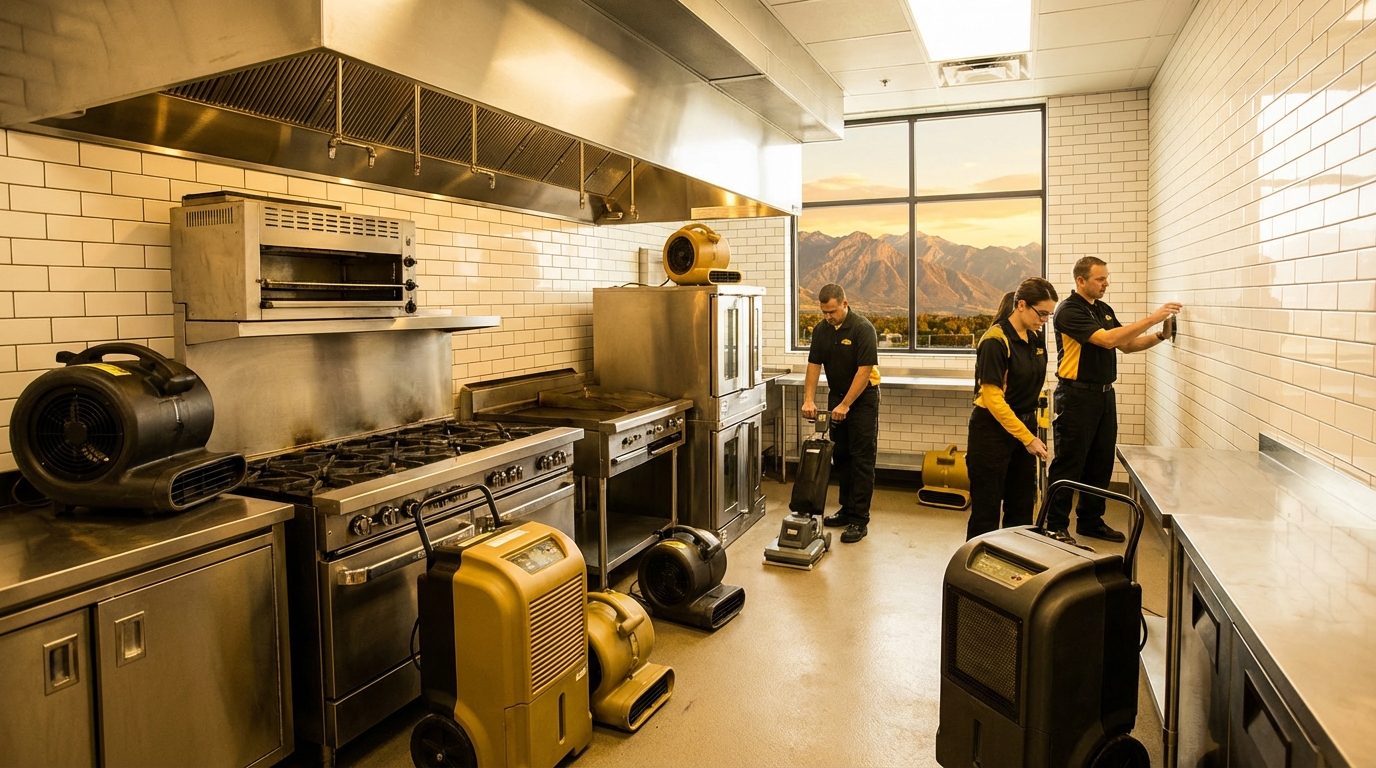
Professional restoration teams that do a lot of work in restaurants usually bring:
- Low-profile air movers that can push air under shelving and equipment
- Moisture meters with probes that reach behind stainless and into walls
- Special floor drying mats for tile or concrete areas
Trying to handle all this with just a mop and a box fan is where many owners, I think, underestimate the problem.
Common causes of water damage in restaurant kitchens
You probably know the obvious ones, but it helps to see them laid out, especially if you are checking your own space and trying to stay ahead of trouble.
| Source | Where it shows up | What you might notice first |
|---|---|---|
| Leaking supply lines | Prep sinks, dishwashers, ice machines | Wet baseboards, swollen drywall, higher water bills |
| Drain clogs and backups | Floor drains, mop sinks, dish area | Slow draining, foul smell, water coming back up |
| Roof leaks | Ceilings over cook line or dry storage | Stains on ceiling tiles, drips during storms |
| Fire sprinkler discharge | Whole kitchen and sometimes dining room | Water from overhead, alarms, wet insulation |
| Refrigeration issues | Walk-ins, reach-ins, beverage coolers | Puddles near doors, ice buildup, mold odors |
| Human error | Anywhere with sinks or containers | Overflowing sinks, hose left running, knocked-over bucket |
Some of these are preventable with good habits. Some are just bad luck. But how you respond in the first hour, and then the first 24 hours, can decide if you lose a day of service or lose weeks.
First steps when water hits your kitchen
When a pipe bursts at 5 pm on a Friday, the last thing you want is a long checklist. Still, having a basic script in your head helps. You can tweak it for your own place, but the logic is the same.
1. Protect people before property
It sounds obvious, but in the stress of tickets printing and staff shouting, people forget this.
If there is standing water, treat it as if it might be in contact with electricity until you know otherwise.
Simple steps:
- Pull staff away from the affected area
- Shut off gas if there is any chance of water near burners or pilot lights
- If safe, cut power to circuits that run through the wet zone
- Block off slippery areas so no one walks through by habit
If it feels even a bit unsafe, you shut the line down. I know that sounds harsh when you have a full book of reservations, but one bad injury costs more than a night of comped meals.
2. Stop the source
This is the practical part you can prepare for now, before anything happens. You should know:
- Where the main water shutoff is for the unit or building
- Who to call for plumbing emergencies
- Who in the staff is allowed to make that decision without waiting for the owner
If the water comes from a roof leak or storm, you cannot stop the sky, but you can:
- Move food and paper goods away from drip zones
- Cover equipment with plastic if you have it
- Put clean containers under active drips to control spread
3. Protect food and equipment
Once no one is in danger and the water is not still rushing in, the next priority is food safety.
Ask yourself a few quick questions:
- Has any water touched open food, thawing items, or uncovered prep?
- Did water get near dry storage like flour, sugar, rice, or spices?
- Are there cardboard boxes on the floor in wet areas?
If the answer is yes, you throw those items away. That feels painful, but water that runs across floors, pipes, or walls is not clean, even if it looks clear. From a health inspector’s point of view, it is contaminated.
For equipment, unplug what you safely can. Do not turn anything back on until a qualified person checks it. Water inside wiring or motors can cause more damage when power returns.
4. Document early
This is the part many restaurant teams skip because it feels tedious in a crisis. I understand that. Still, later, when you deal with insurance or your landlord, you will wish you had more photos.
- Take pictures of the source if you can see it, like a broken pipe or leaking ceiling tile
- Photograph the spread of water across floors and walls
- Capture any damage to food, equipment, or inventory
Even 2 or 3 minutes with a phone can make a real difference when someone else needs proof of what happened and how bad it was.
Why professional restoration is usually worth it for restaurants
There is a common impulse to handle everything in-house. A lot of owners and chefs are used to fixing things themselves. You fix wobbly tables, repair light fixtures, patch walls. But water damage is a bit different.
Here are a few reasons outside help tends to be smarter, even if you feel handy.
1. Hidden moisture and future mold
Water rarely stays where you can see it. It runs along edges, seeps under walls, and is pulled up by porous materials. You might mop the floor and think it is fine, while the base of the drywall behind the line soaks like a sponge.
Professional teams use tools that most restaurants do not have lying around:
- Moisture meters to test inside walls and under surfaces
- Thermal cameras to spot cold, wet spots behind finishes
- Dehumidifiers sized for commercial spaces, not small home units
If that moisture stays, mold growth can start in 24 to 48 hours in the right conditions. That is not alarmist, it is just fairly standard microbiology. Once mold is in walls or ceilings in a food facility, the cleanup is far more invasive and expensive.
2. Speed and coordination with your schedule
One real benefit of hiring a restoration crew that knows commercial work is that they try to work around your hours. I have seen teams:
- Do the loudest work between close and prep
- Set up drying equipment in ways that let line cooks still move safely
- Plan demolition in small sections, so you do not lose the whole kitchen at once
Of course, in some cases you need to close. There is no nice way to say it. If water covered a large area or reached electrical panels, full closure might be safer. But often, with the right setup, at least partial operations are possible.
3. Insurance and documentation
Insurance claims for water damage can get messy. There are questions about:
- What was sudden and accidental, and what was maintenance.
- Which parts are the tenant’s responsibility, and which are the landlord’s.
- How much income you lost while closed.
Professional restoration companies are used to preparing estimates, drying logs, and reports that insurers expect. They track humidity readings, drying times, and affected materials. Most restaurant managers do not want to spend their days writing that kind of report, and I do not blame them.
What a professional water damage restoration process looks like
The exact steps vary by company and by the size of the loss, but there is a basic pattern that shows up almost every time.
| Stage | What happens | How it affects your kitchen |
|---|---|---|
| Assessment | Inspection, moisture readings, photos, safety checks | Short disruption, some equipment moved for access |
| Water removal | Extraction with pumps or wet vacs, removal of standing water | Floors cleared, staff may need to stay out of area |
| Material removal | Cutting out soaked drywall, pulling baseboards, removing ruined ceiling tiles | Noise, dust, some areas taped off with plastic |
| Drying | Air movers and dehumidifiers run for several days | Equipment noise, air flow, trip hazards to manage |
| Cleaning and disinfection | Sanitizing of affected surfaces, odor control, possible HEPA vacuuming | Food safety focus, re-check by management and possibly inspectors |
| Repairs | Rebuilding walls, installing new finishes, repainting | Scheduled work, sometimes done during off hours |
Knowing this sequence makes it easier to plan staff schedules, prep, and communication with guests.
Planning for water damage before it happens
No one wants to think about a pipe bursting, but planning ahead is simpler than scrambling mid-service. It is similar to how you prep your mise en place. You do the work earlier so you can move fast when it counts.
1. Walk your kitchen with “water eyes”
This sounds a bit odd, but try it. Walk your space and ask only one question: “If water came from here, how bad would it be?”
Look at:
- Any pipe that runs through an exterior wall
- Every floor drain and the area around it
- Hoses or flexible lines behind appliances
- Ceilings under bathrooms, mechanical rooms, or roofs
Make a short list, not a book. Maybe 5 to 10 points. Bring that list to your plumber or building manager and talk through what can be improved. Some fixes are simple, like adding insulation, securing a loose line, or clearing a drain more often.
2. Adjust storage habits
Many kitchens break their own rules when it gets busy. Boxes on the floor, dry goods stacked near dish areas, chemicals stored next to mop sinks. From a water perspective, small changes help a lot.
- Keep all dry goods at least a few inches off the floor, even if space is tight
- Store paper goods away from any area that might see splash or leaks
- Use plastic bins for vulnerable items like sugar and flour
This way, a small leak does not turn into a full loss of dry storage.
3. Create a simple emergency card
You do not need a long manual. Most staff will not read it in a rush. Instead, one laminated card by the manager’s station or in the kitchen can be enough.
On that card, include:
- Main water shutoff location and how to reach it
- Emergency plumber phone number
- Restoration company contact
- Landlord or property manager contact
- Who has the authority to close the kitchen if needed
Train key staff on this once or twice a year. Maybe during slower season. It feels minor, but it changes how fast you respond when something happens.
Special problem areas in restaurant kitchens
Not all parts of the kitchen carry the same risk. Some spots tend to cause more trouble after water events. You probably can guess some of these, but a closer look can save you money later.
Dish area and floor drains
The dish area always seems wet, so it is easy to ignore extra moisture there. That habit can hide deeper problems.
Common issues include:
- Grease and food solids clogging drains, leading to backups
- Seals around dishwashers failing, allowing leaks underneath
- Poor slope of floors so water pools in corners
A simple routine like hot-water flushing of drains and scheduled deep cleaning under machine bases can cut risk. Inspection by a plumber once in a while is not overkill for busy restaurants either.
Walk-in coolers and freezers
Walk-ins create a strange mix of moisture and cold. Door gaskets fail, defrost drains clog, and condensation can form on ceilings and walls.
Warning signs include:
- Persistent puddles just inside or outside the doors
- Ice building up where it should not be
- Dark stains or mold-like growth on seals or walls
If water leaks from a walk-in, it can travel under neighboring walls and into adjacent spaces. Restoration teams often have to pull out walk-in base panels or inject dry air around them. That is much harder than dealing with the first small leak early.
Ceilings above prep and cook lines
Anything above food prep is sensitive. If you see:
- Discolored ceiling tiles
- Flaking paint or bubbling finishes
- Random drips after storms
You cannot just replace the tile and move on. You really should track the source. Sometimes it is one bad roofing detail. Sometimes it is a plumbing line from a unit above. Either way, water from above food areas is a red flag both for inspectors and for common sense.
Cleaning and sanitizing after water damage in a food environment
Even after surfaces look dry, your kitchen is not automatically ready for normal service. Kitchens need a higher standard than many other businesses.
Dry is the first goal, but “clean and food safe” is the finish line for restaurant kitchens.
A good post-damage cleaning approach usually covers three broad steps.
1. Remove residues and debris
Water, especially from drains or outside, can carry soil, grease, and other contaminants. After extraction, these residues can stay on floors, lower walls, or equipment bases.
You want:
- Physical removal of any mud, silt, or buildup
- Scrubbing with suitable detergents for grease where needed
- Attention to corners, under shelving, and less visible areas
2. Disinfect contact and near-contact surfaces
Use approved food-service sanitizers. Restoration teams who work often in restaurants usually coordinate with your standard products or provide options that match local regulations.
Focus areas:
- Prep tables, lower shelves, and undersides if they were near splash
- Handles, switches, and control panels that may have been touched with wet hands
- Floors and coving in traffic paths
If any absorbent material in a food-contact area was soaked and cannot be fully cleaned and dried, replacement is usually safer than trying to save it.
3. Odor and air quality
Lingering odors in a kitchen are not just a comfort problem. They can indicate material still damp or organic growth starting. Sometimes the smell comes from inside walls or under flooring, not from open surfaces.
Tools used here can include:
- HEPA filtration machines to reduce particles and spores
- Dehumidifiers to keep humidity in a normal range as things finish drying
- Targeted treatments where smells are coming from, not just air fresheners
Working with landlords, inspectors, and staff
Restaurants sit in a web of relationships: landlord, health department, fire inspector, staff, guests. Water damage stresses all of these at once, which can feel overwhelming. There is no single “right” way to handle this, but a few patterns help.
Landlords and building managers
Responsibility for repairs can be a gray area. Lease terms matter. Still, practically speaking, the fastest way back to service usually comes when you share information openly instead of fighting over every inch from the first hour.
Helpful habits:
- Contact the landlord as soon as you control the immediate emergency
- Share photos and a simple summary of what you see
- Ask directly what they prefer for contractors, but do not delay needed emergency work while waiting
Some owners want to wait for written approval for every step. I think that can cost you crucial time. At least for stopping water and starting drying, quick action is usually safer for everyone.
Health inspectors
Many operators fear calling inspectors, assuming it will trigger closure or penalties. Sometimes it does, but often it is better to be proactive than to hope they do not notice later.
In a food space, inspectors usually care about:
- Standing water or active leaks
- Visible mold or water damaged surfaces near food
- Any sign that cleaning is no longer effective on certain materials
If your restoration team understands food facilities, they can help explain drying and cleaning steps in ways inspectors understand, which reduces confusion.
Staff communication
Kitchens run on trust. If staff think you are hiding a health risk, morale drops and turnover rises.
Practical steps:
- Explain in plain terms what happened and what you are doing about it
- Show them where equipment is safe to use and where to avoid walking
- Invite questions and do not dismiss concerns, even if they sound small
They are the ones spending hours in that space. If they feel part of the solution, they help you watch for new leaks or problems later.
Balancing business pressure with safety and quality
There is a real tension here. Every day closed means lost revenue and possibly lost regulars. At the same time, rushing back to normal with half-dried walls and hidden moisture can lead to mold, ongoing smells, and more closures later.
So how do you balance this? There is no perfect formula, but you can ask a few questions during the process:
- Have all wet materials that cannot be fully dried been removed?
- Are moisture readings back to normal levels in the affected areas?
- Would I feel comfortable serving my own family from this kitchen right now?
If the honest answer to that last question is no, then opening the doors to the public might not be wise yet, even if the bills are pressing.
Frequently asked questions about water damage in restaurant kitchens
Q: Can I just mop up small leaks and skip professional help?
A small spill from a knocked-over bucket is fine to handle in-house. If water reaches walls, runs under equipment, or soaks any building materials, professional drying is usually safer. The cost of one missed wet area can be far higher than the cost of a short, targeted visit from a restoration company.
Q: How long does it usually take to dry a restaurant kitchen?
Many jobs take 3 to 5 days of active drying, sometimes longer if materials are thick or access is limited. That does not always mean you are closed the whole time. With care, some kitchens stay partly open while drying runs in specific zones, but it depends on the layout and severity.
Q: What should I ask a restoration company before hiring them?
Some useful questions:
- How much experience do you have with restaurants or food facilities?
- Can you work around our service hours as much as possible?
- How do you document your drying and cleaning for insurance and inspectors?
- What is your plan to protect food safety during the work?
Q: Will my insurance cover lost income from being closed?
Sometimes, but not always. Business interruption coverage is a separate part of many policies and often comes with conditions and limits. It is better to read your policy during calm times and talk with your agent than to guess during a crisis.
Q: What is the single most helpful thing I can do today, before any water damage happens?
If you only pick one action, walk your space and find your main water shutoff, then show at least two trusted staff members where it is and how to use it. That one step can turn a disaster into a minor incident when something goes wrong.