If you cook at home a lot, an electrician in West Des Moines helps you have a safer kitchen by checking and improving the wiring, circuits, outlets, and lighting that keep your stove, oven, fridge, hood, and small appliances running without trips, shocks, or hidden fire risks. A qualified Des Moines electrical service professional will look at how you actually cook, how many appliances you use, and then match your electrical system to that real daily load, not some vague idea on a drawing.
That is the short answer. The longer answer is a bit more interesting, especially if you like being in the kitchen as much as eating in good restaurants.
Why kitchen safety is not only about sharp knives and raw chicken
Most people who love cooking think about safety in terms of food handling and cuts. You worry about cross contamination, hot oil, and maybe gas leaks. Electrical safety sits in the background, like that outlet behind the mixer you never really look at.
But your kitchen is usually one of the highest power rooms in your home. You may have:
- An electric oven and cooktop
- A big fridge and freezer
- Microwave
- Dishwasher and garbage disposal
- Range hood
- Coffee machine, air fryer, mixer, blender, toaster, slow cooker, rice cooker, and so on
Add them up and the load can be serious, especially when you cook for guests or for the holidays. That is where a good electrician quietly protects you.
A safe kitchen is not just one that looks clean. It is one where the wiring, breakers, and outlets are actually sized and protected for the way you cook.
Sometimes people think this is overcautious. Until a breaker keeps tripping in the middle of a dinner party or, worse, a warm outlet starts to smell odd.
How electricity flows through your kitchen
I think it can help to see your kitchen like a small restaurant line, but inside your wall. There is a path from the main service panel to each circuit, from there to the outlet or appliance, then back again.
Here is a simple table that shows the main pieces and why they matter for a home cook.
| Part | What it does | Why a cook should care |
|---|---|---|
| Main panel | Feeds power to all circuits | If it is old or overloaded, big appliances can trip breakers during heavy use |
| Kitchen circuits | Separate lines for outlets, lights, and large appliances | Dedicated circuits help keep your oven from killing power to your coffee machine |
| Breakers | Shut off power when current is too high | Correct breaker size lowers fire risk from overheated wires |
| Outlets and switches | Give you access to power | Quality and correct placement reduce use of power strips on wet counters |
| GFCI and AFCI devices | Sense faults and cut power quickly | Help protect from shock and from some wiring faults that can start fires |
| Lighting | Illuminates work areas | Better lighting lowers cut and burn risk when prepping and plating |
Once you see it this way, it feels less abstract. Every time you plug in a stand mixer or a high powered blender, you are testing whether that hidden system was designed and installed for what you are doing today, not what people did twenty or thirty years ago.
The quiet problems an electrician looks for in a kitchen
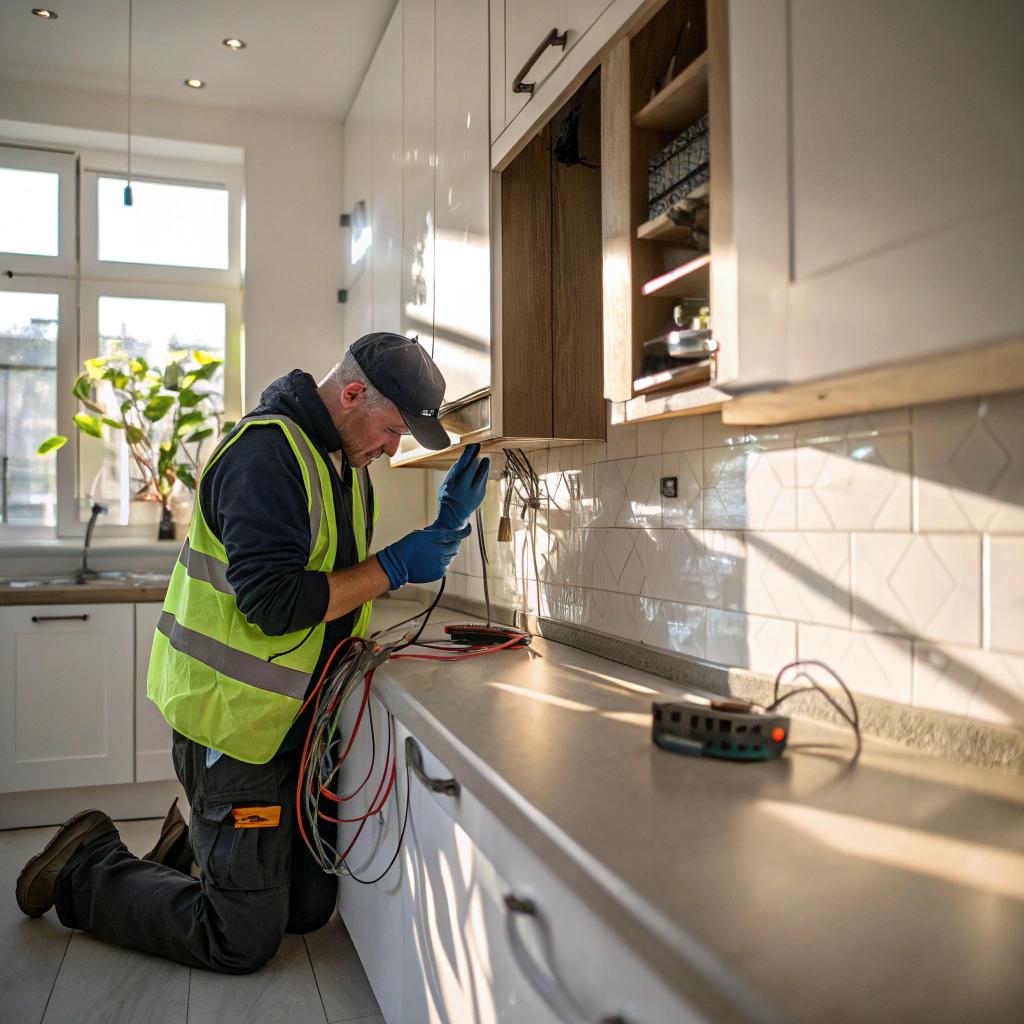
When an electrician walks into a kitchen, they are not just glancing at the panel and checking a few outlets. At least, the good ones are not. They are doing a kind of mental checklist based on what they know often goes wrong in homes that love food a bit too much for their wiring.
1. Overloaded circuits from small appliances
Home cooks today often own more countertop appliances than some small restaurant prep stations. You may have an espresso machine that draws over 1,000 watts, plus a toaster, plus an air fryer, sometimes all on the same outlet strip.
That can overload a standard 15 amp circuit. Breakers do their job and trip, so you flip them back and keep going. Over time, constant tripping and resetting is hard on the breaker and the wiring. It can also train you to ignore the warning sign.
If a breaker trips often when you cook, that is usually not “normal”. It is your electrical system telling you something does not match your usage.
An electrician can separate those appliances on different circuits, move outlets, or upgrade a run to a 20 amp circuit where code allows. The goal is simple: you can run several tools at once without stress on the system.
2. Old or wrong outlets near water
Kitchens mix water, metal tools, and live outlets. Not a great combination, honestly. Ground fault circuit interrupter (GFCI) protection is meant to cut power quickly if current leaks through water or through you.
In some older homes, especially where the kitchen was remodeled in pieces, you may see a mix of old two prong outlets, newer three prong outlets, and maybe one lonely GFCI by the sink. That single GFCI might protect some outlets downstream, but not always the ones you expect.
An electrician will test which outlets are protected and where extra GFCI units should go. They will also check for loose backstabbed connections behind outlets, which can cause warmth and arcing.
3. Loose connections behind stoves and heavy appliances
Pulling out a slide in range or a heavy fridge is not fun, so many people never look behind them. That is part of the electrician’s job. They will check:
- Condition of the power cord
- Outlet or junction box tightness
- Signs of heat on the cover plate
- Any splices done with tape instead of proper connectors
Heat marks, discolored insulation, or a faint burnt smell are all red flags. These often come from loose screws where the wire meets the terminal. Under load, that small gap creates resistance and heat.
4. Lighting that looks nice but hides hazards
Some modern kitchens use many small LED fixtures, under cabinet strips, and recessed cans. The light looks great. The wiring behind those lights can be messy if people added them in stages without a plan.
An electrician will open junction boxes, check load on each lighting circuit, and see if any DIY connections lack strain relief or proper covers. You will probably just notice that the lights stop flickering and switches feel more solid.
What a kitchen focused electrical checkup can include
I do not think every home needs a full rewire, and a good electrician usually does not push that unless there are serious issues. Often, a focused kitchen review is enough to improve safety a lot. It might look something like this.
Visual walk through with a cook’s eye
The electrician should start by asking you simple questions:
- Which outlets do you use the most when you cook?
- Where do breakers trip, and when?
- Have you noticed any buzzing or crackling sounds?
- Are there any warm spots on switches or outlets after long cooking days?
Many people forget to mention little annoyances like a dimming light when the microwave starts. Those details help the electrician see where current surges happen.
Testing outlets, GFCI, and breakers
Next, they use testers to check:
- Correct polarity and grounding at outlets
- GFCI trip and reset behavior
- Arc fault (AFCI) protection where required by local code
- Voltage levels under small load
Sometimes everything works but barely meets standards. That is when a good electrician will explain the risk instead of saying everything is perfect just to be polite. You actually want them to be a bit picky here.
Review of dedicated circuits for big appliances
Most built in kitchen appliances should have their own circuits, such as:
- Electric range or cooktop
- Wall oven
- Microwave (often)
- Dishwasher
- Garbage disposal
- Fridge
If more than one of these shares a circuit, especially with countertop outlets, it can lead to nuisance trips. An electrician can map which breaker controls what and mark the panel clearly. That labeling alone can help during a busy meal when something trips and you need power back without random guessing.
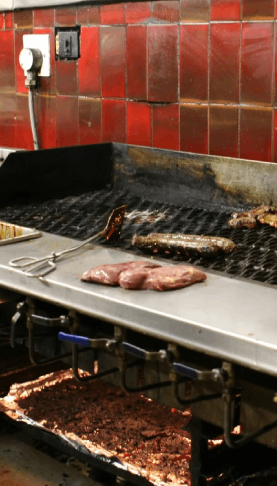
How restaurant kitchens handle power, and what home cooks can learn
You might assume commercial kitchens are always safer. I am not convinced about “always”, but there are ideas from restaurant design that do help at home.
Dedicated zones for heavy appliances
Restaurant kitchens often separate:
- Hot line (ranges, ovens, fryers)
- Cold prep and refrigeration
- Dish area with high water use
Power and plumbing are planned around these zones. At home we mix zones more, which is fine, but an electrician can still borrow the thinking. For example, making sure the fridge and freezer sit on their own circuit, so a trip from the toaster does not quietly thaw everything while you are out.
Plenty of outlets where work happens
Commercial kitchens rarely use long extension cords for mixers or immersion blenders. Outlets are placed near worktables. In homes, many older kitchens have too few outlets, so people add power strips across the backsplash, sometimes near sinks.
If you find yourself relying on a power strip on the counter every day, your kitchen is telling you that the electrical layout does not match your cooking style.
An electrician can add outlets along the counter run, inside appliance garages, or on a kitchen island. Spreading the load around can improve both safety and convenience.
Respect for wet areas
Dish stations in restaurants usually have high splash zones. At home, think of the sink and the area around it. Outlets near these spots need GFCI protection, and their covers should be tight and in good shape. It sounds small, but water finds gaps over time.
When you remodel a kitchen: what to ask the electrician
Many people focus on cabinets, counters, and appliances during a remodel. The electrical plan sometimes becomes an afterthought that fits around the layout. I think that is backwards. The way you want to cook should shape the electrical plan early.
Talk about your cooking habits, not only appliance specs
Do you bake every weekend? Use a high draw espresso machine daily? Run an air fryer and microwave during busy weeknights? Host big family meals? Share this in plain language.
Yes, electricians need the wattage ratings, but the pattern of use matters too. A circuit that handles 20 amps on paper might still struggle if three devices with heating elements often start together.
Plan counter outlets with prep flow in mind
Ask yourself where you usually:
- Chop vegetables
- Roll dough
- Make coffee
- Blend soups or sauces
Then discuss with the electrician where outlets would help those actions. This avoids the classic problem where the only outlet near your favorite prep spot is already blocked by a fridge or microwave plug.
Think about lighting for cooking, not just looks
Pretty pendants over an island are nice for photos, but task lighting matters more for your fingers. A kitchen friendly electrician will suggest:
- Under cabinet lighting so you can see knife work clearly
- Good light over the stove, so you can judge sear and color
- Separate switches for different zones, so you do not need every light at full brightness
LED choices also matter. Very cold light can make food look strange, while very warm light can hide signs of undercooked meat. Somewhere in the natural white range often works best.
Common signs your kitchen needs electrical attention
You do not need to be an expert to spot hints that your kitchen is asking for help. Some signs are subtle, others are hard to ignore.
Frequent breaker trips during cooking
If the breaker trips once during a storm, maybe that is a random event. If it trips almost every time you run the microwave and toaster together, something is off. Replacing a breaker without looking at the load is like changing a smoke alarm battery while ignoring actual smoke.
Warm or discolored outlets
After heavy cooking, gently touch the wall plate near outlets you used. Warmth is a warning. Also check for:
- Yellowing or browning of plastic around slots
- Cracks or brittle feel
- Loose plugs that fall out easily
These are small details, but in a room with wood cabinets and paper towels everywhere, you do not want hidden hot spots.
Buzzing sounds or flickering lights
A faint buzz when lights or appliances start up can come from loose parts, bad ballasts, or vibration. Combined with flickering, it may mean a poor connection in the circuit. In a kitchen, that can show up when a big load like an oven switches elements on and off.
Too many extension cords and power strips
Using one short extension cord for a holiday buffet might be fine. Using several, all the time, near the sink or stove, is not a great long term plan. Extension cords on the floor across walking paths near hot pots are a tripping risk as well as an electrical one.
Balancing safety and convenience without going overboard
Sometimes people react to safety advice by wanting the most complex solution possible. More devices, more tech, more sensors. That can be its own problem. A good kitchen electrician will usually aim for simple changes first.
Examples of small changes with real impact
- Swapping a few worn outlets for GFCI protected ones
- Separating the microwave onto its own circuit
- Adding two or three new outlets to reduce power strip use
- Upgrading under cabinet lights to quality LEDs on a dimmer
- Labeling the panel clearly for all kitchen loads
None of these sound dramatic. Yet together they make daily cooking feel calmer. Fewer trips, more light where you need it, less guessing when something does go wrong.
Good electrical work in a kitchen should feel almost boring. The drama belongs in the recipes, not in the wiring.
How this affects the way you cook and entertain
This might all sound technical, but it shapes real kitchen moments.
Baking days with stand mixers and ovens
Think about mixing dough in a stand mixer while the oven preheats and a second batch rests near the stove. On a weak circuit, starting the mixer at full speed could dim the lights or trip a breaker. With correct wiring, you do not even think about it. You can pay attention to dough texture instead of panel trips.
Coffee routines and early mornings
A high end espresso machine can draw a lot of current when heating. Add a grinder and maybe a toaster, and you have a mini coffee bar load. If this shares a circuit with a fridge or a microwave across the room, things can get unstable. An electrician who asks about your morning routine can group loads more wisely.
Holiday dinners and big family meals
This is where you really stress a kitchen: multiple ovens, warming trays, slow cookers, and helpers plugging in everything they can find. Good circuit planning spreads this load. You can still hit limits, but not in a random way. When you know which outlets are on which breakers, and those breakers are sized correctly, you can plan what goes where.
Questions people often ask about electricians and kitchen safety
Do I really need an electrician if everything “seems” fine?
Maybe not right away. If you never have tripped breakers, your outlets are solid, and nothing smells or sounds odd, you might be in decent shape. Still, if your kitchen is older or you are adding high draw appliances, a checkup can prevent slow building issues that are hard to spot on your own.
Can I just use heavier breakers so they stop tripping?
This is a bad idea. Breakers are sized to protect the wire in the wall. If you put a larger breaker on a smaller wire, the wire can overheat before the breaker trips. That means more fire risk. The correct fix is to lower the load on that circuit or rewire it for higher capacity, not just install a “stronger” breaker.
Are GFCI outlets enough, or do I need AFCI too?
Many codes now expect both types of protection in certain areas. GFCI helps prevent shock near water. AFCI detects some types of arc faults in wiring that could start a fire. An electrician who keeps up with local rules can explain what is required and what is just a good idea. You do not need to guess or buy devices at random.
How often should I have my kitchen wiring checked?
There is no single rule. Some people go decades without a formal check. A rough guide could be:
- When you remodel or add major appliances
- If your home is older than 30 years and has not been inspected recently
- If you notice any of the warning signs we covered
Think of it a bit like servicing a gas range or a hood. You do not need constant visits, but ignoring it forever is not wise either.
What can I do myself, and what should I leave to the electrician?
You can safely:
- Test GFCI outlets using their buttons
- Observe and list any odd sounds, smells, or behaviors
- Reduce power strip use and rearrange appliances to spread load
- Replace light bulbs with suitable ones in existing fixtures
You should leave to a licensed electrician:
- Adding or moving outlets
- Installing new circuits or upgrading breakers
- Working inside the main panel
- Diagnosing repeated trips or warm wiring
Is spending on electrical work really worth it compared to new appliances?
Many people prefer to spend on a nicer range or fridge. I understand that. Those are visible and fun. But a great range on a weak circuit is a bit like a race car on worn tires. It will perform worse and, in some cases, it can be unsafe.
Electrical upgrades often cost less than a top tier appliance and support every device in the kitchen, not just one. And once they are done correctly, you rarely need to think about them again.
If you walk into your kitchen tomorrow and flip on the lights, plug in your mixer, and start cooking without a second thought, that quiet confidence is usually built on the work of someone who knows wiring, not recipes. It is a different skill, but it shapes how safe and smooth your cooking life feels every single day.