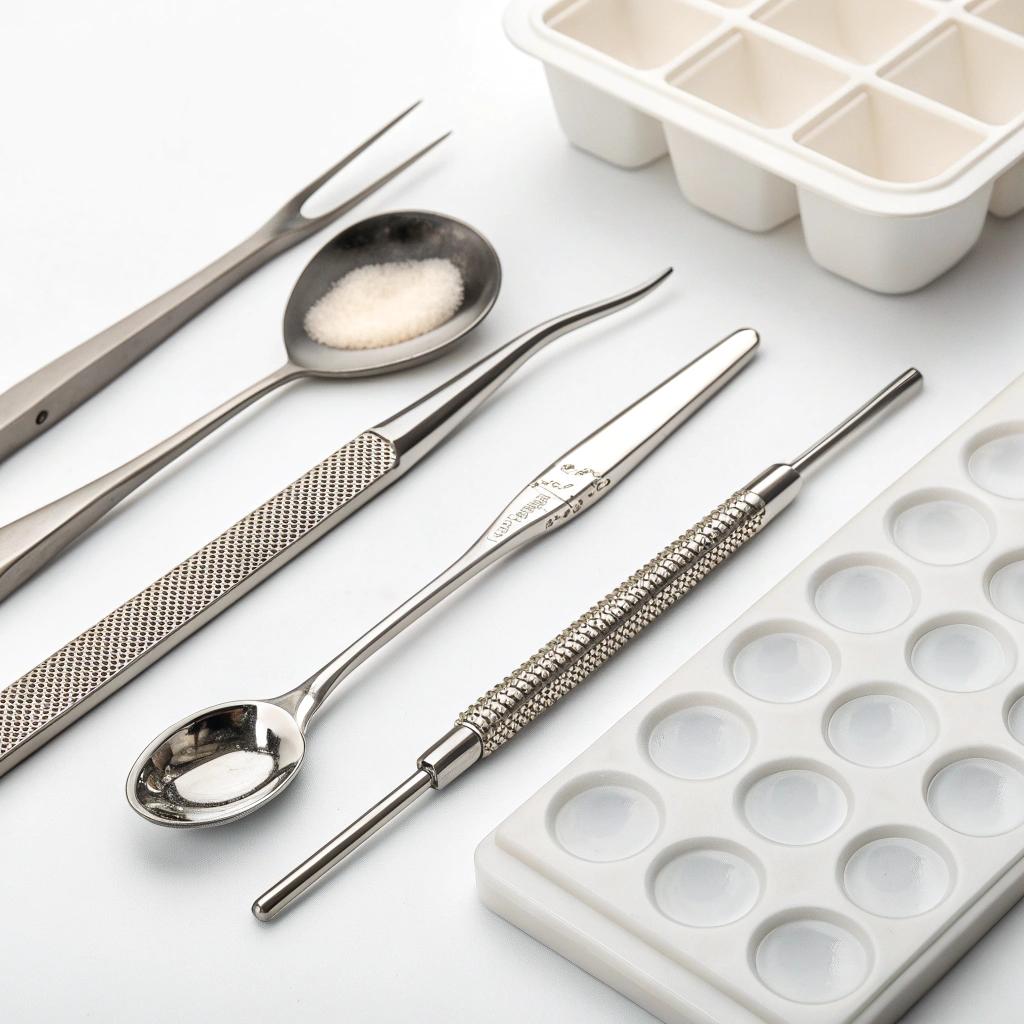
If plating at home feels clumsy, or restaurant dishes always look cleaner and more controlled than yours, the missing link is usually the right tools, not talent. Tweezers, spoons, and molds give you control over tiny details that hands alone cannot manage. Here are five that stand out strongly from user feedback:
Top Plating Tools Our Team Would Pick First
These are pulled from the most trusted options online, filtered by real user reviews, durability, and how well they perform in an actual kitchen, not just in photos.
No products found.
Why Plating Tools Matter More Than You Think
Good food that looks messy will always feel a bit underwhelming. A simple piece of fish, a scoop of ice cream, or a roasted carrot can look impressive with a neat smear, a clean ring of sauce, and a few herbs placed exactly where they belong.
Professional kitchens rely heavily on a small set of tools: tweezers, different spoons, and molds or rings. None of these are fancy by themselves, but together they control height, shape, and negative space on the plate. Without them, sauces spread, crumbs scatter, and garnishes fall wherever they want.
Before buying anything, it helps to understand what each tool actually does, what separates a good one from a bad one, and where you can save money or where cutting corners will just annoy you later.
Plating Tweezers: Precision For Herbs, Garnishes, And Tiny Details
What Plating Tweezers Are Really For
Kitchen tweezers are not medical tools, even if they look similar. They let you place small items exactly where you want them without your fingers blocking your view or crushing delicate leaves.
Good tweezers are used for:
- Placing tiny herbs like micro basil, chervil, or dill tips
- Arranging pea shoots or cress without bruising them
- Setting chocolate decorations, sugar shards, or tuile pieces on desserts
- Fishing small items out of hot liquid when tongs are too big
- Adjusting proteins or vegetables on the plate at the last second
If food looks crooked, cramped, or unbalanced on the plate, tweezers are usually the easiest way to fix that in three seconds instead of smudging everything with your fingers.
Key Features Of Good Plating Tweezers
Not all tweezers are pleasant to work with. Some feel stiff, slip in the hand, or crush herbs rather than holding them lightly.
Things worth paying attention to:
Length
Length affects both control and comfort.
| Tweezer Length | Best Use | Upside | Downside |
|---|---|---|---|
| 6 to 8 inches | Home plating, dessert work, tight spaces | Very easy to control, feels natural in hand | Limited reach over wide plates or large trays |
| 9 to 10 inches | All purpose in most home and pro kitchens | Good balance of reach and precision | Can feel big if you have small hands |
| 10 to 12 inches | Line work, deep pans, grill or plancha | Keeps hands away from heat | Slightly less precise for very tiny items |
Tip Shape And Grip
For plating, always look at the tip. That is where all the work happens.
- Fine pointed tips are best for micro herbs, small petals, and seeds.
- Slightly wider or curved tips help grab noodles, greens, or small vegetables more securely.
- Serrated inner edges help hold slippery items, but if the serration is too sharp it will damage delicate herbs.
Spring Tension
Tweezers should close with light pressure but not feel weak. If tension is too strong, your hand gets tired quickly and fine control disappears. If tension is too loose, things slip.
Good tweezers feel like an extension of your fingers: light resistance, no shaking at the tip, and no struggle to keep them closed for a few seconds.
Material And Finish
Most good tweezers are stainless steel. That resists rust and handles normal kitchen abuse. Look for:
- Smooth edges so they do not cut your fingers
- A matte or brushed finish to reduce slipping when wet
- Dishwasher safe labeling if that matters to you
Pros And Cons Of Plating Tweezers
Why Plating Tweezers Are Worth Buying
- Precise control over tiny garnishes
- Cleaner plates with fewer smudges and fingerprints
- Less bruising of delicate herbs and salad leaves
- Safer handling near heat or in deep pans
- Better consistency if plating multiple plates at once
- Useful beyond plating for cooking tasks like turning small items
Limitations Or Annoyances
- Learning curve if you are used to fingers and large tongs
- Cheap models bend or misalign at the tip quickly
- Overly sharp serrations can damage herbs or soft elements
- Long tweezers feel clumsy on small dessert plates
- Easy to misplace because they are slim and light
Plating Spoons: Smears, Quenelles, And Sauce Control
Different Spoons For Different Jobs
Plating spoons are simply spoons designed around control and accuracy rather than just scooping food. Most kitchens use a small set of shapes and sizes, each with a specific job.
You will usually see three main categories:
- Regular plating spoons with a balanced handle and slightly deep bowl
- Sauce spoons or spoon ladles with a pointed lip and volume markings
- Quenelle spoons with smooth, oval bowls for forming neat scoops
What To Look For In Plating Spoons
Balance And Handle Comfort
The spoon should feel stable when held near the middle of the handle. If all the weight is in the bowl, your wrist works harder and you lose accuracy when drizzling.
A slight curve in the handle often gives a more natural angle when you are plating on a flat table.
Bowl Shape
Bowl shape controls how sauce or puree leaves the spoon.
- Pointed tip lets you draw fine lines or place tiny dots of sauce.
- Rounded, deep bowl is better for quenelles or larger scoops.
- Wide, shallow bowl is ideal for smooth smears across the plate.
A good rule of thumb: the sharper the tip of the spoon, the finer the detail you can draw on the plate.
Size And Capacity
Look at the stated volume if the manufacturer lists it. Common sizes are:
| Spoon Type | Typical Volume | Main Use |
|---|---|---|
| Small sauce spoon | 5 to 10 ml | Dots, small pools, tasting |
| Standard plating spoon | 10 to 20 ml | Smears, moderate sauce portions |
| Large spoon or small ladle | 20 to 40 ml | Larger pools, hearty plating, family style |
Material And Finish
Stainless steel remains the best all round choice for durability and cleaning. A polished bowl helps sauces glide off cleanly, while a slightly textured handle helps you keep grip even if your hands are wet or greasy.
Pros And Cons Of Plating Spoons
What Plating Spoons Do Well
- Allow consistent smear shapes and sizes for each plate
- Help control portion size of sauces or purees
- Create clean quenelles for ice cream, mousse, or soft cheeses
- Reduce mess and drips on plate rims
- Can double as tasting spoons during cooking
- Stand up to heat if made from full stainless steel
Where Plating Spoons Fall Short
- Not much use if you only cook very rustic dishes
- Some specialized shapes are very single purpose
- Cheap thin spoons bend during firm quenelling
- Mirror finishes show scratches quickly
- Multi piece handles can trap food and be harder to clean
Molds And Rings: Stacking, Shaping, And Building Height
Why Plating Molds Matter
Rings and molds bring order to food that would otherwise spread or slump. Rice, tartare, salads, and layered desserts hold their shape when packed into a mold, then stand on the plate as a clean cylinder, square, or dome.
They are also useful for baking small individual portions that can go directly on the plate, like mini flans or layered cakes.
Types Of Plating Molds
Molds come in many shapes, but some are used far more than others.
- Round rings for tartare, rice, potato stacks, and layered desserts
- Square or rectangular molds for more modern looking plating, terrines, and layered salads
- Triangle or custom shapes for more creative or themed plating
- Dome or hemisphere molds for mousses, parfaits, and chocolate shells
What Makes A Good Plating Mold
Material And Thickness
Stainless steel molds are strong, oven safe, and keep their shape under pressure. Thin, flimsy molds deform, which ruins the clean edge you want.
Some home sets also offer food grade plastic molds, which can work for cold dishes but tend to stain and scratch over time.
Edge Quality
Edges should be straight and smooth. A sharp, clean edge is what cuts through layered food when you remove the mold, leaving a tidy profile.
Height And Diameter
Height controls how dramatic your stack will look.
| Mold Size | Best For | Visual Effect |
|---|---|---|
| Short (2 to 3 cm) | Side salads, small rice portions | Subtle elevation, more casual look |
| Medium (4 to 5 cm) | Tartares, main course sides, layered starters | Noticeable height without feeling unstable |
| Tall (6 cm or more) | Complex layers or dramatic restaurant style plating | Very vertical, but easier to topple or collapse |
Non Stick Behavior
Stainless steel itself is not non stick, but a good mold releases more easily if the inner surface is polished. For sticky foods, a light layer of oil, parchment disc, or cling film can help.
Pros And Cons Of Plating Molds
Good Points Of Plating Molds
- Create consistent shapes and portion sizes
- Add height and structure to plates
- Useful for both savory dishes and desserts
- Stainless steel versions can go in oven or freezer
- Help amateur cooks match restaurant style presentation
- Work well for batch plating for guests
Drawbacks Of Plating Molds
- Take up storage space in drawers or cupboards
- Cheap molds can warp or dent quickly
- Food may stick if not greased or lined correctly
- Very tall stacks can collapse if filled badly
- Can make plates feel over designed if used for every element
How Tweezers, Spoons, And Molds Work Together
Each of these tools handles a different part of the plate. When combined, they create a more controlled and deliberate look.
A simple plating sequence might look like this:
- Use a mold to form a neat disc of rice or salad as a base.
- Use a plating spoon to smear a sauce or puree beside or beneath the main element.
- Place the protein or main vegetable leaning on the molded base.
- Use tweezers to add herbs, microgreens, or crispy elements to finish.
Thinking of the plate in layers, where each tool has a specific level to handle, makes plating less stressful and much more predictable.
Buyer Guide: How To Choose The Right Plating Tools For Your Kitchen
Step 1: Be Honest About Your Cooking Style
Before buying a big set, ask a simple question: what do you actually cook and plate most of the time?
- If you often cook tasting plates, small starters, or desserts, precise tweezers and small sauce spoons matter more.
- If you focus on family meals or large plates, a few strong molds and versatile plating spoons may be more useful.
- If you mostly cook stews and one pot dishes, a small, basic kit is enough.
Step 2: Decide On A Starter Kit Vs Individual Pieces
Some buyers like full sets straight away. Others prefer to build their kit slowly. Both approaches can work, but a set only makes sense if you will use most of the pieces.
A practical starting bundle might include:
- One medium length tweezer (around 9 to 10 inches)
- One small sauce spoon and one larger plating spoon
- Two or three molds in different sizes (for example, 6 cm, 8 cm, and 10 cm)
Step 3: Check Build Quality And Real Photos
Photos from real users often reveal more than marketing pictures. Look for:
- Close ups of tips on tweezers to see alignment and finish
- Shots of spoons in actual food to gauge size
- Plated dishes using the molds to see how well they hold shape
If reviews mention bending, warping, or rust after normal washing, skip that product. A small plating tool that fails once usually never gets used again.
Step 4: Cleaning And Storage
Many plating tools are small, and small tools disappear. Consider where they will live in your kitchen.
- Some tweezers come with covers or cases, which helps keep tips straight.
- Flat molds stack inside each other to save space.
- Plating spoons can sit on a magnetic strip or in a dedicated utensil holder.
Dishwasher safe tools save time for most home cooks. Avoid tools with awkward joints, cheap coatings, or rough surfaces that trap food.
Step 5: Choosing A Sensible Budget
High end tools feel nicer, but a moderate budget set can already change your plating. Spending a little more on tweezers and spoons often feels more rewarding than buying a huge set of molds that rarely leave the drawer.
Plating Tool Care: Making Them Last
Cleaning Tips
Clean plating tools as soon as the service or meal is done. Dried sauce on narrow tips is annoying to remove.
- Soak spoons and molds briefly if sauce has dried.
- Use a soft brush on serrated tweezer tips to remove food bits.
- Dry stainless steel thoroughly to avoid water spots and long term staining.
Storage And Safety
Tweezer tips bend easily if thrown into a cluttered drawer. Consider a small utensil organizer, magnetic strip, or cloth roll.
Molds stack, but do not wedge them too tightly or they may warp over time, especially cheaper ones.
Common Plating Mistakes These Tools Help Avoid
Even with the right tools, some habits can hold back your presentation. Knowing these mistakes can help you use tweezers, spoons, and molds more intentionally.
- Overcrowded plates: Just because you can place many garnishes does not mean you should. Use tweezers to add a few controlled touches instead of a handful of herbs.
- Messy sauce placement: Plating spoons give you control, but practice on a spare plate first to adjust thickness and smear technique.
- Unstable stacks: Molds help with shape, but you still need to pack food gently but firmly so that it holds when the mold comes off.
- Ignoring temperature: Warm sauces set quickly on cold plates. Work at a reasonable speed and keep plates at a suitable temperature for what you are plating.
Practical Plating Ideas Using Tweezers, Spoons, And Molds
Simple Starter: Tartar Or Chopped Salad
Use a small ring mold on the plate, spoon your tartar or finely chopped salad mix inside, and press lightly with the back of the spoon. Slide the mold up slowly, then use tweezers to set a small herb bouquet on top and maybe a few capers or pickles around.
Main Course: Protein With Puree And Vegetables
Create a smooth smear of vegetable puree with a plating spoon. Place the main protein just overlapping the smear. Use a mold for a neat side of potatoes or grains. Finish with tweezers by adding crispy bits, herbs, and a few drops of a contrasting sauce.
Dessert: Ice Cream Or Mousse Plate
Use a quenelle spoon to shape the ice cream or mousse. Rest it beside a molded cylinder of crumble or fruit salad. Drizzle sauce with a narrow spoon and tuck in micro herbs, nuts, or chocolate shards with tweezers.
Pros And Cons Summary: Are Plating Tools Worth It?
Overall Advantages
- Make home dishes look closer to restaurant plating
- Bring consistency when plating for guests
- Give better control over sauce and garnish placement
- Encourage more thoughtful plate design and portioning
- Useful for both savory courses and desserts
- Durable when buying decent stainless steel versions
- Help reduce food waste by avoiding sloppy mistakes
Overall Disadvantages
- Extra tools to store and clean in a small kitchen
- Can feel unnecessary if you prefer rustic family style serving
- Some sets include shapes or sizes that rarely get used
- Cheap tools can frustrate you and spoil the experience
- There is a learning curve to using them smoothly
- Too much focus on plating can overshadow flavor if you are not careful
FAQ: Tweezers, Spoons, And Molds For Plating
Are plating tweezers really necessary for home cooking?
Plating tweezers are not strictly necessary, but they help a lot once you start using small herbs, microgreens, seeds, or delicate decorations. For anyone who cares about clean plates and precision, one good pair of tweezers quickly becomes hard to give up.
What size plating tweezers should a beginner buy?
For most home cooks, tweezers around 9 to 10 inches offer the best balance. They are long enough to keep your hand away from food and heat, but still short enough for detailed work on small dessert plates.
How many plating spoons do you actually need?
Two or three well chosen plating spoons cover most needs: one small spoon for fine sauce work and tasting, one medium spoon for smears and quenelles, and optionally one larger spoon or mini ladle for bigger portions of sauce.
What makes a good mold for food plating?
A good mold for food plating has sturdy stainless steel walls, smooth edges, and a polished interior that releases food cleanly. It should not warp with gentle pressure and should feel solid, not flimsy, when you hold it.
Can cookie cutters replace plating molds?
Some cookie cutters can double as molds for cold dishes if they are tall and solid enough. Thin, low cutters often leak or deform, so they work less well for stacked or layered foods. Dedicated molds give more reliable results.
How do you keep food from sticking to plating molds?
Lightly oiling the inside of the mold, lining the base with a small disc of parchment, or using cling film helps reduce sticking. Packing food evenly, not too loosely and not too tight, also improves release.
Are plating tools dishwasher safe?
Most stainless steel tweezers, spoons, and molds are safe for the dishwasher, as long as there are no wooden parts or special coatings. That said, hand washing preserves the finish better and avoids knocks that can bend fine tips.
How do you use plating spoons to make smooth smears?
Place a small amount of puree or sauce on the plate, then press the spoon bowl into the sauce at one edge and drag it in a single confident motion. The smoother the puree and the more polished the spoon, the cleaner the smear will look.
What is the best starter set of plating tools for a beginner?
A simple starter set might include one medium length tweezer, one small sauce spoon, one larger plating spoon, and a few round molds of different diameters. That small kit already covers many common plating techniques without overwhelming you.
Do plating tools actually improve taste or just appearance?
Plating tools do not change the flavor directly, but they influence how food is arranged, which affects how each bite combines elements. Better control over placement can help you create more balanced mouthfuls, so the dish can feel more thoughtful overall.
So, Are Plating Tweezers, Spoons, And Molds Worth Adding To Your Kitchen?
The short answer is yes, if you care how your food looks on the plate and enjoy small improvements over time. A basic kit of tweezers, a couple of plating spoons, and a few molds will not turn every dinner into a restaurant service, but it will give you more control and more room to experiment. And once your hands are used to these tools, it is hard to go back to random drips and piles.