If proofing baskets confuse you or your dough keeps sticking, flattening, or losing shape, you are not alone. Many home bakers struggle to choose the right banneton for sourdough and end up guessing. Here are five top options chosen with real baking in mind:
Top proofing baskets chosen for real home bakers
These are pulled from the most trusted, high rated proofing baskets based on actual user feedback and baking performance, so you can upgrade your bread without trial and error.
No products found.
Why a proofing basket matters more than you think
A lot of people spend time on flour type, hydration, and starter care, but skip proper support during the final rise. Proofing baskets, or bannetons, guide the dough so it rises upward, not outward, and develops that nice plump shape with a stronger crust.
Without a basket, soft dough tends to puddle on the counter. The gluten structure weakens, the loaf spreads and bakes flatter, and scoring is harder to control. A basket sets gentle boundaries, while its surface absorbs a bit of moisture for better oven spring.
A good proofing basket does two jobs at once: supports the shape and manages surface moisture, which both affect crust, crumb, and oven spring.
There is also a visual side. Those spiral flour rings or linen patterns give that bakery look, which might feel minor, but for many bakers it is part of the joy of making bread at home.
Types of proofing baskets and which one fits your baking style
Not all bannetons are the same. The material and shape change how your dough behaves and also how much care the basket needs.
Rattan proofing baskets
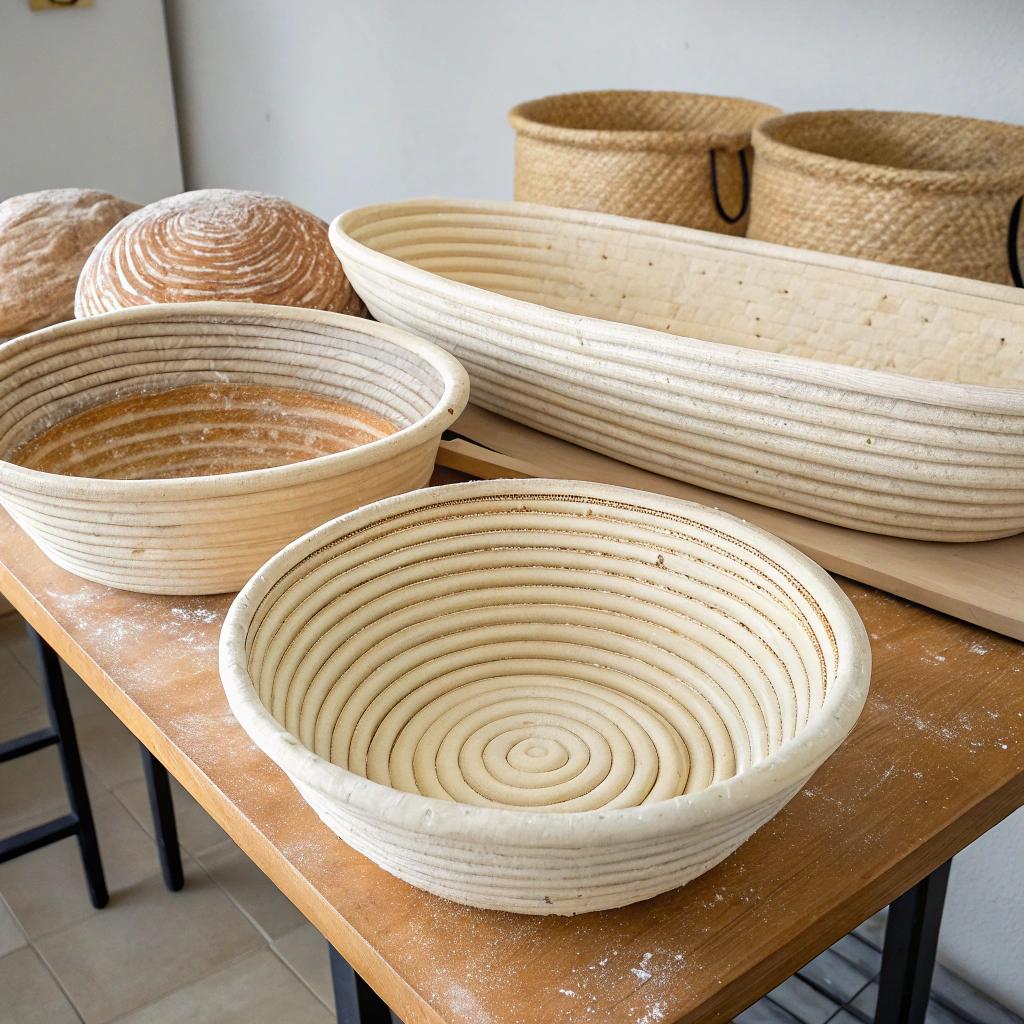
Rattan baskets are the classic choice. They are woven from natural cane and leave those familiar flour spirals on the dough. These baskets are breathable, so they help draw a little moisture from the surface of the dough.
Rattan works very well for sourdough and high hydration doughs, as long as you flour them properly. They are a bit more delicate than plastic, and they are not meant to be washed with soap and water all the time, which can be a little annoying for some bakers.
If a rustic crust and strong structure matter more to you than easy cleaning, rattan is usually the most satisfying choice.
Wood pulp proofing baskets
Wood pulp baskets are made from compressed cellulose fibers. They feel more solid than rattan and have a smoother surface, often with subtle spiral or geometric lines. They absorb moisture well and support the dough firmly.
These baskets can be good for bakers who like a pronounced crust and do not mind a bit of extra drying on the surface. They can also be more fragile if they get soaked or mishandled. Some bakers like them more for professional or frequent baking, where consistency matters.
Plastic proofing baskets
Plastic bannetons do not look as romantic, but they have clear advantages for some kitchens. Many are dishwasher safe, durable, and less likely to crack or deform if they are bumped around.
They do not absorb moisture like rattan or wood pulp, so the crust effect is a bit different. With enough flour or a liner they can still produce good results, especially for lower hydration dough or for bakers who want easier cleanup.
Metal or colander alternatives
Some bakers use mesh colanders or metal bowls lined with floured cloth as a budget alternative. This works to a point, but the structure and moisture handling are not as tuned as proper bannetons.
If bread baking is a regular habit rather than a once in a while thing, a real proofing basket is usually worth the investment.
Main shapes and sizes: getting the right basket for your bread
The size and shape of a banneton should match your usual dough weight and style of loaf. Oversized or undersized baskets both cause issues.
Common basket shapes
The main shapes you will see are:
-
Round: for boules and country style loaves
-
Oval: for batards or sandwich style sourdough
-
Long rectangular: for pan style or bâtard loaves with more structure
-
Specialty shapes: triangular or heart shaped, mostly for fun or special bakes
Round baskets are more forgiving. Oval baskets shine when you want longer loaves that fit better on baking stones or in Dutch ovens that are oval shaped.
Size guide and quick comparison
Here is a simple table to match dough weight with basket size. It does not have to be perfect, but this gives a solid starting point.
| Dough weight (raw) | Typical basket size | Shape | Common use |
|---|---|---|---|
| 400 g to 600 g | 8 inch / 20 cm | Round or oval | Smaller boules, daily loaves |
| 700 g to 900 g | 9 inch / 23 cm | Round or oval | Standard sourdough loaf |
| 900 g to 1200 g | 10 inch / 25 cm | Round or oval | Larger family loaf |
| Up to 1500 g | 12 inch / 30 cm or long batard | Oval / rectangular | Big centerpiece loaves |
It is usually safer to go slightly larger than your usual dough weight, as long as the dough is not lost in a huge basket. If the dough spreads too much and does not rise upward, the basket might be oversized or the dough underdeveloped.
What makes a proofing basket genuinely good?
When judging proofing baskets as a reviewer, a few details stand out. Some are obvious, like shape and size, but others are more subtle and affect long term baking comfort.
Build quality and materials
The weave or mold should feel solid, without loose fibers, deep splinters, or rough seams that catch dough. For rattan, the cane should be smooth and reasonably even, not wildly varying in thickness. For plastic, edges should be rounded and without sharp flash from molding.
Good baskets use food safe materials. Many reputable makers state that their rattan or plastic is food contact safe, and that any dyes or treatments are non toxic. This is worth checking, even if you think the risk is low.
Moisture handling
This part gets ignored a lot. The best proofing baskets handle surface moisture in a predictable way:
-
Rattan and wood pulp absorb a bit of moisture and help create a thin, dry skin on the dough that can be scored well.
-
Plastic does not absorb moisture, so you rely more on flouring, or on using a liner to adjust the surface.
If your dough keeps sticking to the basket, it can be a seasoning issue, poor flouring practice, or just a very slick interior surface. Some bakers like that absorbed layer of flour and dough that slowly seasons the basket over time.
A seasoned proofing basket with a light patina of flour tends to stick less and gives more consistent loaves than a brand new bare basket.
Liner quality
Many bannetons come with linen or cotton liners. These change the surface pattern and usually help with very wet dough. Not all liners are equal though.
Good liners are:
-
Thick enough to hold their shape on the basket
-
Made from cotton or linen that breathes and grips flour well
-
Cut and sewn to actually fit the basket snugly
Thin, loose liners that slide around or bunch up will print wrinkles on your dough and can actually increase sticking.
Weight and feel in the hand
This part seems small, but it affects daily use. A basket that feels extremely flimsy, too sharp on the edges, or hard to grip is more likely to be dropped with dough in it or damaged during washing and storage.
Some bakers like very lightweight baskets for easy handling, while others prefer a bit more heft. The right choice depends on whether you move the baskets around a lot, stack them, or store them in tight places.
Pros and cons of different proofing basket styles
Rattan and wood pulp baskets: strengths and weak spots
Here is a closer look at natural material bannetons, since these are the most popular for serious bread baking.
Advantages of natural proofing baskets
-
Good moisture absorption for a crisp crust
-
Traditional spiral pattern that many bakers love
-
Usually lighter than heavy plastic or metal
-
Breathable structure that supports fermentation
-
Seasoning effect improves non stick performance over time
-
Often available in many sizes and shapes to match artisan loaves
-
Quiet to handle, no clattering sound on counters or stones
Disadvantages of natural proofing baskets
-
More sensitive to water, soaking, and harsh detergents
-
Can develop mold if stored damp or in very humid places
-
Cleaning is more work; usually only dry brushing and quick spot cleaning is possible
-
May warp or crack if exposed to extreme heat or sudden temperature changes
-
Need regular flouring and some care to prevent sticking with high hydration dough
-
Lines and grooves can trap bits of dried dough if not brushed out
Plastic proofing baskets: strengths and weak spots
Advantages of plastic baskets
-
Often dishwasher safe and easier to wash fully
-
More resistant to mold and humidity problems
-
Durable if dropped, banged, or stacked tightly
-
Surface can be very smooth and easy to flour
-
Good for shared or bakery environments with heavy use
-
Do not warp as easily from occasional moisture
Disadvantages of plastic baskets
-
Less moisture absorption, crust texture can be different
-
Surface may need more flour or a liner to prevent sticking on wet dough
-
Sometimes sharp seams that catch dough if quality is low
-
Less traditional look and feel, which matters to some bakers
-
More likely to keep odors if stored around strong smells
How to choose the right proofing basket for your kitchen
Choosing a banneton is not about one magical product. It is about matching what you bake, how often you bake, and how much care you are willing to give your tools.
Step 1: Look at your dough style
Ask a few simple questions about your baking habits.
-
Do you bake mostly high hydration sourdough, basic yeasted bread, or a mix?
-
Do you like very open crumb, or a tighter sandwich style crumb?
-
Do you bake once a week, several times a week, or rarely?
For wet sourdough with open crumb, a natural rattan or wood pulp basket with or without a liner works very well. For softer sandwich dough, plastic with a liner can be perfectly fine and easier to maintain.
Step 2: Decide on shape and size
If your favorite loaf is a round country bread, a 9 inch round basket fits many common recipes. For an oval loaf that fits better in a Dutch oven, a 10 inch oval is often a better match.
It can be useful to weigh your dough batch once, write down the number, and compare it to the size table earlier in this article. Guessing by eye often leads to wrong basket sizing.
Step 3: Consider care and storage
Some kitchens handle constant steam, tiny counters, and cramped cupboards. Others are calmer and have extra shelves. This changes what kind of basket will be pleasant to live with.
-
Small or very humid kitchen: plastic or very well ventilated rattan stored out in the open can help avoid mold issues.
-
Roomy and dry kitchen: natural bannetons can live on open shelves, slowly seasoning between uses.
-
Very limited storage: stackable plastic baskets might be more practical.
Step 4: Check included accessories
Many proofing basket sets include extras like:
-
Linen or cotton liners
-
Dough scraper or bench scraper
-
Scoring lame with blades
-
Cloth bag or box for storage
These can be useful if you are starting from nothing, but they should not distract from judging the actual quality of the basket itself.
How to use a proofing basket the right way
Even the best banneton will fail if used in a rush. A few simple steps make a big difference in performance and in how long the basket lasts.
Seasoning a new basket
When a basket is new, it is usually too clean and too smooth. It needs a bit of flour buildup to become reliably non stick.
-
Lightly mist or wipe the inside of the basket with water. It should be barely damp, not wet.
-
Dust generously with a mix of bread flour and rice flour. Rice flour helps a lot with sticking.
-
Shake out the excess, leaving a thin but complete coating.
-
Let the basket dry fully in a warm, dry place.
-
Use it a few times, each time dusting again with flour mix.
After several uses, a gentle layer of flour and tiny bits of dough remain. This is the seasoning that supports easy release of the dough.
Flouring routine before proofing
Before each use:
-
Make sure the basket is dry and free of big chunks of old dough.
-
Lightly dust with flour, focusing on grooves or corners.
-
For very wet dough, use a rice flour mix or line the basket with a floured liner.
If you notice bare spots where the dough tends to stick, give those areas extra attention.
Transferring dough from basket to baking surface
This is where many loaves collapse or tear.
-
Place your baking sheet, stone, or Dutch oven lid upside down on top of the basket.
-
Hold both together, then flip quickly and confidently.
-
Lift the basket straight up, with no twisting, to avoid dragging the dough.
-
If the dough resists, tap the basket lightly on one side to help release it.
If your dough sticks badly and tears, that is a signal to adjust your flouring, proofing time, or hydration rather than blame the basket alone.
Care and cleaning of proofing baskets
Good care keeps bannetons safe from mold, odors, and structural damage.
Cleaning natural rattan or wood pulp baskets
-
Do not soak them in water. Long soaks weaken the structure.
-
After use, let them dry, then brush off dry flour and crumbs with a stiff brush.
-
If you must remove stuck dough, use a small dry brush or scraper, not metal tools.
-
Sometimes, a very quick light misting and wipe followed by thorough drying in a low oven can help refresh a stale basket.
-
Store in a dry, airy place. Do not seal them away damp.
Cleaning plastic baskets
-
Most can be hand washed with mild soap and warm water.
-
Dry fully before stacking to avoid unpleasant odors.
-
If dishwasher safe, use top rack and a gentle cycle.
-
Inspect for cracks or sharp edges after washes, since heat can sometimes warp thin plastic.
Preventing and handling mold
Mold grows when moisture and organic material combine with poor airflow. Natural baskets are more at risk.
-
Do not store baskets in closed plastic bags while still damp.
-
Give them time to dry in a bright, airy space after each bake.
-
If light mold appears, brushing followed by a short time in a low oven can sometimes fix the problem.
-
If heavy mold or deep stains persist, replacing the basket might be safer.
Common problems with proofing baskets and how to fix them
Dough sticking to the basket
This is the number one complaint with bannetons. It has several common causes:
-
Not enough flour, or using only wheat flour on very wet dough
-
New unseasoned basket
-
Over proofed dough that has become fragile and more sticky
-
Very humid environment that keeps the surface too damp
Solutions include using a rice flour mix, seasoning the basket, controlling proofing time better, or adding a liner for problem doughs.
Basket smell or discoloration
Odors usually show up when baskets stay slightly damp in closed cupboards. Discoloration can occur from repeated washing or from dough with dark ingredients.
Drying baskets fully, airing them regularly, and avoiding heavy washing usually limits these issues. Slight discoloration is normal and does not always mean poor hygiene if the basket is kept dry and brushed.
Warped or cracked baskets
Warping comes from sudden temperature changes or long exposure to moisture. Cracking can arise from impact, old age, or over drying.
If warping is mild, the basket may still work. If cracks are deep or catch dough, the basket will be harder to keep clean and may need replacement.
Who benefits most from investing in a quality banneton
Not every kitchen needs a large set of proofing baskets, but some bakers will see a clear benefit.
-
Sourdough bakers who bake weekly or more often
-
People chasing consistent shape and scoring for display or sharing
-
Anyone frustrated with flat, spreading loaves on a baking tray
-
Bakers who like trying higher hydration doughs and more open crumb
-
Small home bakeries or cottage businesses selling bread locally
If bread is just an occasional side project, a lined bowl might be enough. If it is something you care about and repeat often, a good banneton pays for itself in better structure and less wasted dough.
FAQ: Best proofing baskets (bannetons) for bread
What size proofing basket is best for sourdough bread?
For most sourdough recipes that use 500 g to 800 g of flour, a 9 inch round or oval basket works well. If your raw dough weight is around 700 g to 900 g, a 9 inch banneton is usually a safe pick. Larger loaves near 1 kg or above match better with 10 inch baskets.
Are rattan proofing baskets better than plastic for bread?
Rattan is better for many sourdough bakers because it absorbs moisture and creates a drier surface that scores well. Plastic can still work, especially with liners and careful flouring, and is easier to wash. The choice depends on how much you value crust texture and how much cleaning effort you accept.
Do you need a liner in a proofing basket for bread?
A liner is helpful but not always required. For high hydration dough that tends to stick, a floured linen or cotton liner gives extra insurance. For lower hydration or well seasoned baskets, many bakers prefer to skip the liner and enjoy the direct spiral pattern from the rattan or wood pulp.
How do you keep bread dough from sticking to proofing baskets?
Use a mix of bread flour and rice flour to dust the basket or liner. Rice flour resists absorbing water, so it stays dry and reduces sticking. Season the basket with repeated use, avoid over proofing, and make sure the basket is fully dry before adding fresh dough.
Can you wash proofing baskets with soap and water?
Natural rattan and wood pulp baskets should not be soaked or washed heavily with soap, since this weakens the material and encourages mold. Instead, let them dry, then brush them clean. Plastic baskets can usually be washed with mild soap and water, and sometimes in a dishwasher if the maker allows it.
Are proofing baskets worth it for beginner bread bakers?
For a beginner who plans to bake bread only once in a while, a simple bowl with a floured towel can work. For a beginner who is serious about learning sourdough and baking regularly, a good proofing basket is worth it, because it gives better structure and more reliable results while learning.
How many proofing baskets should a home baker own?
Most home bakers do well with two baskets: one round and one oval, or two of the same if they often bake double batches. This lets you proof multiple loaves at once or try different shapes using the same dough.
Do proofing baskets change the flavor of bread?
Indirectly, yes. They do not add flavor like herbs or grains, but they affect crust, shape, and how the dough ferments on the surface. Better structure and a properly dried surface can lead to deeper browning and more complex flavors from the Maillard reactions in the oven.
Is a wooden bowl a good replacement for a bread proofing banneton?
A wooden bowl with a well floured towel can work for basic proofing. It does not typically manage moisture and shape as precisely as a shaped banneton, and it will not leave the same patterns, but for casual baking it is acceptable. For consistent artisan style loaves, a purpose made proofing basket performs better.
One last question bakers often ask
Is buying a good proofing basket really going to improve bread quality, or is it just a nice extra?
A well chosen banneton will not fix weak dough, poor fermentation, or wrong oven temperature on its own. But it does remove one variable that often gets in the way: poor support during the final rise. By shaping the loaf, managing surface moisture, and making scoring more predictable, it raises the ceiling on what your dough can become. For anyone serious about better bread at home, that is more than just a nice extra.