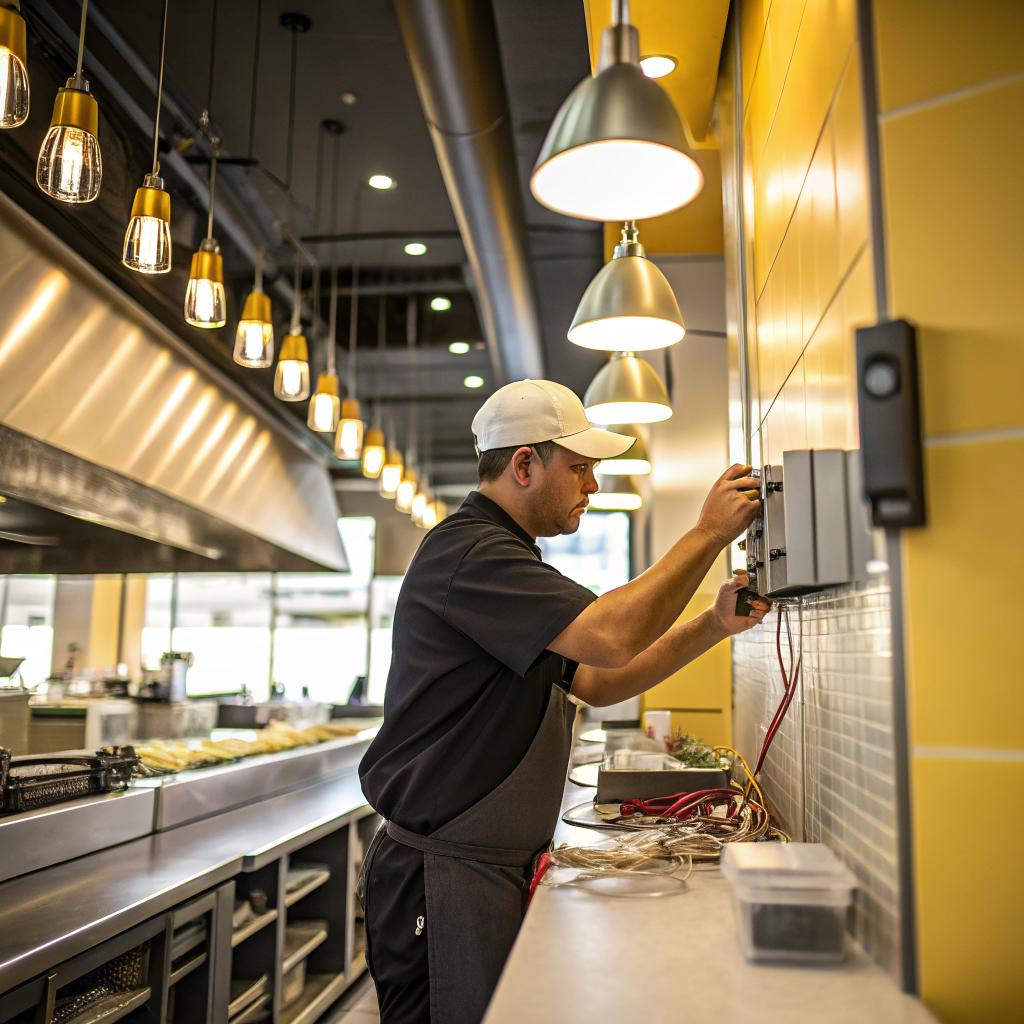
If you run a restaurant, you need an electrician in Greensboro in the same way you need a good supplier, a reliable dishwasher, or a working hood vent. You rely on electricity for almost everything in your kitchen and dining room, so having a trusted electrician Greensboro on your side is not optional; it is part of keeping your doors open and your guests safe.
That may sound a bit strong at first, but think about your last service rush. Ticket machine printing non-stop. Hood fans on full speed. Ovens, warmers, lowboys, dish machine, POS screens, patio lights. Electricity runs through every part of that picture, quietly, in the background. Until it does not.
Why restaurants are harder on electrical systems than homes
Cooking fans sometimes underestimate how rough restaurants are on wiring and equipment. A home kitchen gets busy during holidays and weekends. A restaurant kitchen does that every day.
You have:
– Heat from ovens, grills, steamers
– Moisture from dish areas and humid cooking lines
– Grease in the air that settles on everything
– Long hours of use, often from early prep to late cleanup
All of that wears on outlets, breakers, and panels. Cords get yanked. Equipment is moved and plugged into outlets that were never meant for that load. Temporary fixes become permanent.
Commercial kitchens push electrical systems close to their limits, often for 10 to 14 hours a day, which makes small problems turn into big failures very quickly.
A house might handle a loose outlet for months before anything happens. In a restaurant, that same small issue can show up as:
– Tripped breakers during Saturday dinner
– Freezers rising a few degrees and spoiling food
– Lights flickering in the dining room while guests eat
So while a homeowner might call an electrician once every few years, a restaurant really should think of a local electrician as part of the ongoing support team, like refrigeration and fire protection companies.
Safety first: protecting staff, guests, and your building
When people talk about restaurants, the focus is often on flavors, service, and decor. Electrical safety sounds boring in comparison, but it is what keeps those other things possible.
Restaurants mix three risky elements:
– High power equipment
– Metal surfaces
– Water
That combination can go wrong fast.
Common electrical risks in restaurant kitchens
Here are some issues that pop up often in busy kitchens:
- Extension cords under mats or taped to the floor
- Overloaded power strips behind bars or hostess stands
- Outlets too close to prep sinks without proper protection
- Improvised repairs with tape instead of real fixes
- Old fluorescent fixtures buzzing and running hot
I have walked into kitchens where the espresso machine, blender, and POS station all sat on one cheap power strip. It worked, until it did not. The breaker tripped twice during brunch, which was annoying. What people forget is that heating at that overloaded spot could have started a fire.
A licensed electrician will not just fix the one outlet. They will look at:
– Circuit capacity
– Wire size
– Breaker type
– How the equipment is actually used during service
Sometimes that means hearing something you do not like, such as: “You cannot safely run all of this from that corner.” But that kind of honesty is worth far more than a quick “it will probably be fine.”
A restaurant does not just need working power; it needs safe power that can handle real service conditions without putting people at risk.
Many local codes also require regular checks for ground fault and arc fault protection in areas with water or high heat. A good electrician will be familiar with Greensboro regulations and can tell you what you actually need, not just what sounds luxurious.
Keeping the cold chain and hot line steady
Food safety is where electrical problems hurt the most. A broken light is annoying. A failed freezer can damage your entire food inventory.
Restaurants rely on:
– Walk-in coolers and freezers
– Under-counter fridges on the line
– Prep coolers
– Holding cabinets and warmers
– Heat lamps
All of these depend on steady, correct voltage. Low voltage or spikes can shorten compressor life or cause equipment to shut off without any warning to staff.
Why outages hit restaurants harder
If your home fridge goes out overnight, you might lose a few groceries. At restaurant scale, one bad night can mean:
– Hundreds or thousands of dollars of product lost
– Questions about food safety from inspectors
– Angry guests if you have to cut menu items last minute
A local electrician who understands restaurants can suggest simple protections, such as:
- Dedicated circuits for walk-ins and key refrigeration
- Surge protection for sensitive equipment
- Alarm systems that alert you if temperature rises above a set point
- Backup options for short outages, based on your size and budget
None of this has to be fancy. Sometimes just separating a walk-in from a circuit that also powers non-critical outlets is enough to avoid a crisis.
When power problems threaten your cold storage, they do not just affect food; they affect your menu, your costs, and your reputation with guests who expect consistency.
Front-of-house: lighting, comfort, and the guest experience
People who love restaurants also care about how a dining room feels. Lighting, temperature, and sound all play a part in how your food is experienced.
An electrician touches more of this than most owners realize.
Lighting that makes your food look like it tastes
Good lighting is not only for looks. It helps:
– Servers read tickets and checks
– Guests see menus without pulling out their phones
– Bartenders work safely with glass and sharp tools
If lighting is too dim, the space feels gloomy. If it is too bright or harsh, it feels like a cafeteria. A skilled electrician can:
– Replace old fixtures with newer, more focused ones
– Set up dimmers where they make sense
– Reduce glare on polished tables or glossy menus
– Fix flicker that annoys both staff and guests
And in the kitchen, clear, bright light above prep tables and cook lines reduces mistakes. A cook who can see color clearly is far less likely to send undercooked meat or poorly seared dishes.
Heating, cooling, and ventilation
HVAC work often involves separate contractors, but the power supply that feeds your rooftop units, make-up air, and hood fans is squarely an electrical job.
If power to a hood fan fails during service, you do not just have heat. You may also have:
– Smoke filling the kitchen and dining room
– Strong odors that guests carry home in their clothes
– Fire system triggers if heat builds up under the hood
Bad electrical supply to HVAC can also show up in subtle ways:
– Dining room that never quite reaches the set temperature
– Short cycling units that wear out much faster
– Constant humidity that makes guests uncomfortable
A restaurant electrician can confirm that your units have correct voltage, secure connections, and panels sized to handle them. It is not glamorous, but it affects every plate you serve.
Why you should not rely on DIY fixes in a restaurant
A lot of independent owners are used to solving problems themselves. Tight margins push people to patch things. To be blunt, that can backfire fast when electricity is involved.
I have seen:
– Electrical tape used to “repair” damaged cords
– Extension cords feeding equipment full time
– Junction boxes without covers, hidden above ceiling tiles
– Old, ungrounded outlets still in use behind stainless tables
These might work for a while. The problem is that you rarely see the warning signs. Wires heat up behind walls. Connections loosen. One busy Friday later, your staff smells something strange, and suddenly service stops while you try to figure out which breaker went.
You would probably never tell a home cook to install a commercial gas line alone. Electricity deserves the same respect in a work kitchen.
Building, expanding, or redesigning your space
If you are planning a new restaurant, adding a bar, or just moving equipment around, bring an electrician in early. Not at the very end when walls are closed and outlets are already in the wrong places.
Planning for real-world kitchen use
On paper, it is easy to draw a line with ovens here, fryers there, and a prep table over there. In real life, cooks shift stations. Equipment gets swapped. Seasonal menus change.
A local electrician who has worked in multiple restaurants will think about:
– Where power drops make sense for today and for future menu changes
– How many circuits your line cooks really need under pressure
– Where staff will actually try to plug in spare equipment
If you have ever had to run a cord across a doorway because a new piece of equipment arrived with nowhere to plug in, you know how annoying poor planning can be.
Meeting code without going overboard
Restaurant owners sometimes feel caught between spending too little and spending too much. Some upgrades are legally required. Others are just nice to have.
An experienced electrician can walk through your plan and explain, in plain language:
– What code demands for your type of kitchen
– What inspectors in Greensboro tend to look for
– Where you can phase work over time instead of all at once
You might hear, for example, that certain dining room outlets need special protection, while some decorative features are optional from a code perspective.
That kind of guidance keeps you from wasting money in the wrong places while still keeping your kitchen safe and legal.
Dealing with emergencies: when power fails at the worst time
Power problems rarely happen at 3 p.m. on a quiet Tuesday. They show up right before a full reservation book.
Here are some real situations that restaurants face:
– The range and flat top suddenly lose power halfway through service.
– The main panel trips repeatedly when the second fryer turns on.
– The POS system goes dark, but only in half the dining room.
– Outdoor seating lighting fails during a busy summer night.
In those moments, you do not have time to scroll through search results and guess which company can help. This is where having a regular electrician relationship in Greensboro pays off.
Why a standing relationship matters
When you have worked with the same electrician before, they:
– Already know your layout and panels
– Understand which circuits feed key equipment
– May keep records of past repairs and weak spots
That shortens diagnosis time and reduces repeat issues.
Some restaurants arrange simple service agreements or at least keep one trusted contact. You do not need a complex contract, but you do need a plan.
A good electrician becomes part of your emergency toolkit, sitting right alongside spare fuses, backup paper menus, and a flashlight in the manager’s office.
If you have never had to send guests home because of a power failure, that may sound dramatic. Ask around. Many owners have that one night they still remember where a single failed breaker or bad connection cost them a full service.
Saving money without making risky cuts
It is easy to think of electrical work as just another expense. That view can lead to putting off inspections or repairs until something breaks hard.
Some savings from proper electrical work are quiet and gradual:
– Lighting upgrades that cut your power use a bit each month
– Correctly wired equipment that lasts more years before replacement
– Fewer service calls to other trades caused by underlying power problems
For example, a walk-in compressor that often runs on low voltage can fail early. Replacing that compressor, plus lost food and downtime, easily costs more than a visit from an electrician to balance loads and confirm proper supply.
Here is a simple comparison that many owners find helpful:
| Electrical habit | Short-term look | Real long-term impact |
|---|---|---|
| Skipping yearly panel checks | Saves one service visit fee | Higher risk of surprise outages and damaged equipment |
| Using extension cords for permanent equipment | Avoid one outlet install | Trip hazards, fire risk, frequent breaker trips |
| Ignoring minor flickers or buzzing | No downtime this week | Potential wiring failure during peak hours |
| Installing correct circuits and outlets early | Higher up-front cost | Smoother service, fewer breakdowns, safer staff |
Nobody likes extra costs. But some costs are really just delayed bills from past shortcuts. In a restaurant setting, those delayed bills tend to arrive at the worst possible time.
How to choose the right electrician for your restaurant
Not every electrician is a good fit for a commercial kitchen. Some mainly work on homes, and that is a different world.
Here are a few things to look for when you talk with potential providers.
Ask about restaurant-specific experience
Questions you might ask:
- How many restaurants or bars have you worked with in the past year?
- Have you done work in active kitchens, not just new builds?
- Are you familiar with local health and fire inspection expectations?
- Can you schedule work during off hours when needed?
If they answer in vague terms or only talk about houses, you might want to keep looking.
Check communication style
You are going to be talking about panels, circuits, and code. Not every owner has a technical background, and that is fine.
Notice whether the electrician:
– Explains things in simple language
– Listens to how your kitchen actually works during service
– Offers options with clear pros and cons
– Is willing to say “I do not recommend that shortcut”
Sometimes you will disagree. You may feel that a cheaper fix is enough for now, and they might not. That back and forth is normal. What matters is that they can explain why they feel strongly about certain issues, especially safety.
Look for reliability, not perfection
No contractor will always be free right when you call. But you can watch for patterns like:
– Do they show up roughly when they say they will?
– Do they clean up after work, especially in food areas?
– Do they follow up on recurring issues instead of just resetting a breaker and leaving?
You are not looking for a superhero. You are looking for a consistent partner who treats your kitchen as something more than just another job site.
Electricity and the culture of your kitchen
This part might sound a bit soft, but it matters. A well maintained electrical system affects how your staff feels at work.
Think about a kitchen where:
– Lights flicker over the line
– One outlet by prep is half melted, so people avoid it
– Bar staff argue over which blender can run without tripping the breaker
Problems like these send a quiet message: “The space you work in does not really matter.” Over time, that wears on people.
Compare that to a kitchen where:
– Outlets are solid and logically placed
– There is enough power for the real workload
– When staff report issues, something actually gets checked
That does not fix every staffing challenge, of course. But it supports a culture where tools are respected. Cooks and servers feel that their working environment is not just held together with tape.
Common questions restaurant owners ask about electricians
1. How often should my restaurant have its electrical system checked?
For most restaurants, a full electrical review every one to two years is a good baseline. High volume places with older buildings might want yearly checks, especially for panels, main connections, and heavily used circuits.
If you notice recurring breaker trips, hot outlets, or equipment acting strangely, do not wait for the next scheduled visit. Call sooner.
2. Can I just have my general contractor handle electrical work?
General contractors may coordinate electrical work, but they are not a replacement for a licensed electrician. Most reputable contractors bring in licensed trades for anything beyond very minor tasks.
For day-to-day issues in your restaurant, it is better to have a direct relationship with an electrician instead of relying on a middle layer every time.
3. What should I fix first if my budget is tight?
While each place is different, a simple order that often makes sense is:
- Anything that poses a clear safety risk, such as burnt outlets, exposed wires, or frequent overheating
- Problems that affect food safety, like unreliable power to refrigeration
- Issues that disrupt service, such as key equipment sharing weak circuits
- Lighting and comfort upgrades that improve the guest experience
An honest electrician will help you prioritize instead of trying to push everything at once.
4. Do inspectors really care about electrical details in restaurants?
Yes. Fire and building inspectors focus heavily on electrical safety, especially near hoods, exits, and high moisture areas. Health inspectors may also comment on things like unsafe cords near prep or dish stations.
A restaurant that keeps its electrical system in good shape tends to have smoother inspections overall. You remove one major source of stress from those visits.
5. Is it worth building a long-term relationship with one electrician instead of shopping around each time?
For a restaurant, in most cases, yes. When someone knows your building, panels, and equipment history, they can find and fix problems faster. They are also more likely to understand your service patterns and work around them.
You can still ask for quotes on bigger projects. But for day-to-day maintenance and emergencies, having one consistent contact usually saves time, money, and a lot of frustration.
If you think about your own kitchen, is there any electrical issue you have been ignoring or “working around” during service?