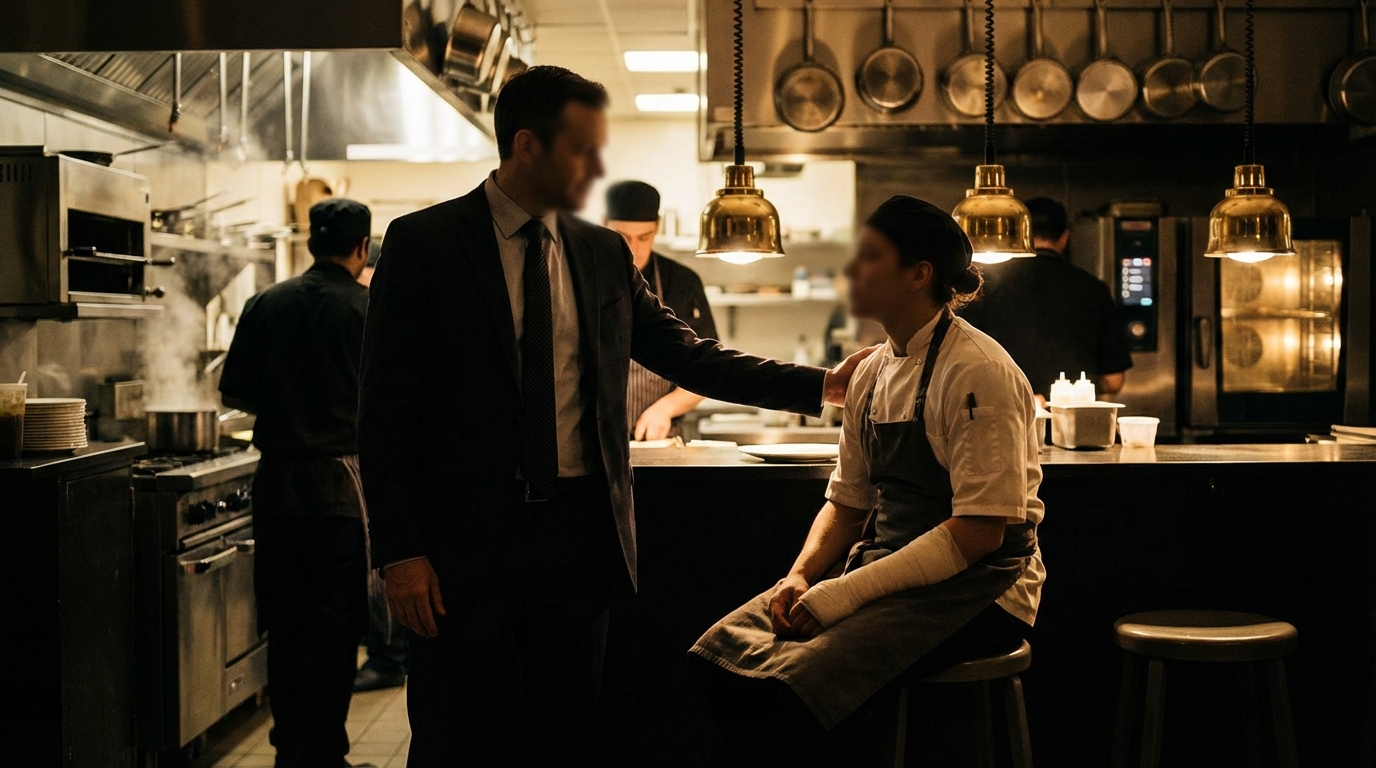
If you are a cook, server, dishwasher, bartender, or any other restaurant worker and you get hurt on the job, the Law Offices of Anthony Carbone protect you by handling your workers compensation claim, investigating how the injury happened, dealing with the insurance company, and, when needed, filing personal injury or third party lawsuits so you can recover medical costs, lost wages, and other damages. That is the short version. The longer story is a bit more complicated, and honestly, a lot more relevant to what happens behind the scenes in a kitchen or on a busy dining room floor.
Why restaurant workers need a lawyer in the first place
On paper, restaurant work looks simple. You cook, you serve, you clean, you go home. But if you have ever spent a Saturday night on the line or covered a double shift on your feet, you know how physical it is. Hot oil, sharp knives, wet floors, rushing around with plates in both hands. Things go wrong.
And when they do, you do not just deal with a sore back or a cut finger. You deal with:
- Missed shifts and lost tips
- Medical bills that arrive faster than paychecks
- Managers who tell you to “use your own insurance first”
- Pressure to come back to work before you are ready
- Confusing workers comp forms and strict deadlines
In many restaurant injury cases, the hardest part is not the pain itself, but the pressure to keep quiet and keep working.
This is where a law office that focuses on injury and workers compensation actually matters. Not because lawyers are magic, but because the system is not built for you to casually handle on your own while you are trying to figure out if you can still hold a pan or carry a tray.
Common restaurant injuries they see all the time
Lawyers who work with injured restaurant employees tend to see the same patterns. Kitchens and dining rooms differ from place to place, but injuries repeat. It helps to see how your situation might fit into something they already know how to handle.
1. Burns, scalds, and kitchen heat injuries
If you cook, you accept some risk. Minor burns happen. You might not even think about it. But there is a big difference between a quick splash of hot water and a deep burn that needs medical care.
Some examples:
- Oil popping out of a fryer onto arms, chest, or face
- Boiling water spilling from stock pots or pasta pots
- Steam burns from opening ovens or steamers too quickly
- Faulty equipment causing sudden flare ups
When burns go beyond a basic first aid situation, they can lead to infections, scarring, and time off work. That is where workers compensation and, sometimes, a separate claim against a manufacturer or contractor comes in.
A serious burn in a restaurant kitchen is not “just part of the job” when it puts you out of work and leaves permanent damage.
2. Cuts, lacerations, and amputations
Sharp knives and slicers make service possible, but they also create risk. If you chop vegetables fast enough every night, something will eventually slip. There is also glassware, broken plates, can openers, and more.
Some injuries are simple cuts that heal with a bandage. Others are deep lacerations that damage tendons or nerves. There are also rare but serious cases where fingertips are lost to slicers or mandolines.
Lawyers step in when:
- You need surgery or stitches
- You lose range of motion in your hand or fingers
- You cannot safely handle knives, pans, or plates for a while
- Your employer does not complete an incident report or refuses to send you for treatment
3. Slips, trips, and falls
Front of house, back of house, it does not matter. Floors are often wet or greasy. Add low lighting, cluttered walkways, and constant movement, and you get falls.
Common situations:
- Server slips on a spill that was not cleaned up
- Dishwasher falls near a sink because mats are missing or worn out
- Cook trips over boxes, cords, or low shelves in a narrow aisle
- Bartender falls on broken glass or spilled drinks
These falls can cause sprains, fractures, torn ligaments, or back injuries. Some workers feel embarrassed and want to “walk it off.” Then they wake up the next day and cannot move their neck or lift their arm.
4. Repetitive strain and overuse injuries
This category is easy to ignore because there is no single accident. It builds over time.
For example:
- Line cooks with shoulder or elbow pain from constant lifting and reaching
- Servers with chronic knee or ankle pain from long shifts on hard floors
- Bartenders with wrist problems from repetitive pouring or shaking
- Dishwashers with back pain from bending and twisting
These injuries can still be work related, even if you cannot point to one exact moment when it happened. The law does allow for that, but many employers or insurers resist these claims. That is one area where having a law office in your corner is very practical.
5. Assaults, harassment, and violence
Restaurants are social. Alcohol is often involved. Tempers rise. Sometimes customers cross the line. Sometimes co workers do. It can turn into physical confrontations or ongoing harassment.
Lawyers in this field do not only handle physical accidents. They also deal with situations where you are harmed by violence, threats, or abuse at work, including:
- Physical attacks from customers or other staff
- Sexual harassment or assault
- Harassment that triggers serious anxiety or trauma
A restaurant job should not mean you accept violence, harassment, or unsafe conditions as part of the deal.
How the firm protects injured restaurant workers step by step
Every case is a little different, and I do not think there is a single script that fits everyone. Still, most situations follow a rough pattern. It helps to see what actually happens when you call a law office like this after a kitchen or dining room injury.
Listening to what happened and where you work
The first step is simple: conversation. You explain:
- What you do at the restaurant
- How long you have worked there
- Exactly how the injury happened, as far as you know
- What your employer said or did afterward
- What treatment you have had so far
Good lawyers ask follow up questions specific to restaurant work. Things like:
- How many hours you usually work per week
- Whether you are paid hourly or rely on tips
- If you were told to clock out before finishing side work
- Whether you ever reported unsafe conditions before the injury
These details matter because they affect both your claim and the value of your lost income.
Sorting out workers compensation vs other claims
In many restaurant injury cases, you are looking at two possible paths:
| Type of claim | What it is | What it can cover |
|---|---|---|
| Workers compensation | Insurance that covers most work injuries, regardless of fault | Medical treatment, part of lost wages, some disability benefits |
| Personal injury / third party claim | Claim against someone other than your employer or co worker | Medical costs, full lost wages, pain and suffering, and more |
The law office helps you figure out if you only have a workers comp case or if there is also a valid claim against someone else. For example:
- A delivery driver from another company hits you behind the restaurant
- A contractor installed a fryer or floor surface in a dangerous way
- A product like a slicer or blender was defective and caused your injury
Workers compensation usually covers basic benefits, but it does not pay for pain and suffering. That extra part can matter a lot if your life changes after a serious injury.
Dealing with insurance companies so you do not have to
If you have ever tried to talk to an insurance adjuster while you are in pain and worried about rent, you know how stressful it is. They sound friendly, but their goal is to pay as little as possible.
The law office takes over communication and:
- Files your workers comp claim properly
- Tracks deadlines so you do not miss them
- Collects medical records and accident reports
- Pushes back if your treatment is cut off too early
That gives you more space to focus on healing and figuring out what your next steps are at work. Or outside work, if you cannot safely go back.
Fighting denied or delayed claims
Many restaurant workers hear some version of this after an injury: “We are not sure this is work related” or “You waited too long to report it.” Sometimes they are given wrong information on purpose. Sometimes managers simply do not understand the rules.
The firm steps in to:
- Challenge wrongful denials of workers comp
- Request hearings when needed
- Bring medical experts to explain how the injury is job related
- Show timelines that match your work schedule and symptoms
I think this is an area where many workers blame themselves, but often it is more about paperwork and proof than blame.
Measuring lost income for tipped workers
This part is tricky. When you are a salaried worker or paid at a flat hourly rate, lost wages are easier to calculate. For servers, bartenders, and other tipped workers, income changes from week to week.
To handle this, the law office may look at:
- Your pay stubs and tip records over several months
- Holiday and weekend patterns when your income is higher
- Statements from co workers or managers about typical earnings
The goal is not a perfect number. It is a fair estimate of what you usually earned, not just your base pay of a few dollars per hour.
What restaurant owners and managers often get wrong about injuries
Restaurant culture can be tough. Many kitchens pride themselves on working through pain, double shifts, and minor injuries. That culture bleeds into how injuries are handled, and not always in a legal way.
“If you report this, I might get in trouble”
Some managers worry that every reported injury will cost them their job. So they pressure workers not to say anything, or suggest using personal insurance instead of workers comp.
The reality: workers comp exists for work injuries. That is what it is for. Trying to hide an injury can cause legal problems for the employer, not just you.
“You are a contractor, not an employee”
Another common tactic is to call kitchen staff or delivery workers “independent contractors” to avoid paying benefits. On paper, you look self employed. In practice, you are treated like an employee.
Lawyers look past labels and check how the job works in real life:
- Do you have a set schedule?
- Does the restaurant control how you do your work?
- Do you wear a uniform or use their tools and equipment?
- Do you work mainly for that one place?
If the answer to most of those is yes, the law might treat you as an employee, even if the paperwork says otherwise.
“You waited too long to say anything”
In a busy restaurant, it is common to get hurt and keep working until the rush is over. You may not fill out an incident report right away. Maybe there is no clear process for that. Maybe you do not want to look weak in front of the team.
Later, your employer might claim that since you did not report it instantly, it must not be real. That is not how injuries work. Many injuries, especially back, knee, and repetitive use ones, show up clearly only after a shift or two.
A law office can often still connect the dots between your job and the injury, as long as you speak up within the legal time limits in your state.
How legal help affects your life outside the restaurant
It is easy to think this is only about paperwork and money. But if you work in restaurants, your job is part of your day to day rhythm. Injury changes that rhythm and, in some cases, your whole path.
Paying medical bills without drowning in debt
Emergency room visits, follow up care, physical therapy, surgery. These add up quickly. Workers comp is supposed to cover treatment that is reasonably related to your work injury.
When a law office is involved, they can:
- Push for approvals for tests or therapy that doctors recommend
- Challenge attempts to cut off care too soon
- Make sure bills go through the workers comp system instead of your personal insurance where possible
Figuring out when and how to return to work
Going back to work is not just about a doctor saying you are “cleared.” For example, you may be allowed to work but with restrictions like:
- No lifting over a certain weight
- No standing longer than a set number of hours
- No repetitive bending or twisting
In a restaurant, these limits can be hard to follow. The law office can push your employer to respect those restrictions, or, if they refuse, adjust your benefits. They can also help if the restaurant says there is “no light duty” and tries to cut you off completely.
Handling permanent changes or disability
Some injuries heal, and you go back to exactly what you did before. Others leave you with limits. Maybe you cannot safely handle heavy pans, work doubles, or stand for 10 hours anymore.
In those cases, the firm looks at long term disability benefits and, when possible, compensation for permanent damage. That can be a complicated process, especially when you are still figuring out what your new normal looks like.
How restaurant workers can protect their rights right after an injury
You cannot stop every accident, but you can make it easier to protect yourself if something happens. Some of this sounds obvious, but in the middle of a rush it is easy to skip steps.
1. Report the injury as soon as you can
This is not about being dramatic. It is about having a record. Tell a manager, and if there is an incident form, fill it out. Take a photo if they post it or give you a copy.
2. Get medical care, even if you feel unsure
Many kitchen workers are used to working through pain. But small injuries can become bigger ones if you ignore them. If your employer has a process for sending you to a clinic or doctor, use it. If you need the ER, go there.
3. Write down what happened
When you get home, or on your break, take notes:
- Time and date
- What you were doing
- Who saw it
- What equipment or area was involved
Memories fade. A simple note on your phone can make a huge difference months later.
4. Keep track of missed work and out of pocket costs
Save:
- Doctor and pharmacy receipts
- Parking or transportation costs to appointments
- Notes about shifts or events you missed, like big holidays or banquets
Lawyers can only claim what they can show. Records matter.
5. Talk to a lawyer before signing anything
Some injured workers are offered small settlements early on. It might be tempting when you are short on cash. But once you sign, you may not be able to ask for more even if your injury turns out worse than you thought.
Before you give a recorded statement or accept money to “walk away,” talk to a lawyer who understands restaurant injury cases.
Why restaurant experience matters in a law office
There is a difference between a lawyer who just sees “another injured worker” and one who understands what a dinner rush feels like, or how prep shifts work. They do not have to be former cooks or servers, but they should ask the right questions.
For example, someone who knows restaurant life will understand why:
- You did not leave in the middle of service to go to the ER
- You might not remember the exact second a repetitive injury started
- Your income changes a lot between weekdays and weekends
- Missing peak season can cost more than missing a random Tuesday
This context helps the lawyer tell your story more clearly to an insurance company, judge, or jury.
Common questions restaurant workers ask lawyers
Do I need to pay legal fees up front?
In most personal injury and workers comp cases, law firms work on a contingency fee. That usually means you do not pay up front. They are paid a percentage of what they recover for you.
If there is no recovery, there is usually no fee. That model exists so injured people can get help, even when they are already short on money.
What if I am undocumented or do not have papers?
This is a place where fear keeps many workers quiet. But in a lot of states, including New Jersey, workers comp benefits apply regardless of immigration status. You still have rights if you are hurt on the job.
That said, each situation can be sensitive. Talking privately with a lawyer can help you weigh risks and options in a more realistic way, instead of relying on rumors in the kitchen.
Can I be fired for filing a workers comp claim?
Employers are not allowed to punish you for exercising your legal rights. Retaliation laws exist, though they can be complicated to enforce. Some restaurants still find indirect ways to make life harder for workers who speak up.
If your schedule is cut sharply, you are suddenly written up for small things, or you are pushed out after filing a claim, that might be part of a retaliation case. A law office can review what is going on and explain your options.
What if I already went back to work but I am still in pain?
Going back too soon happens a lot. You think you can handle it, or you feel pressured, then realize your body is not ready. In many cases, you can still ask for more treatment or an adjustment in your work limits.
Do not assume that saying “yes” to coming back means you gave up all rights. You did not.
Is every injury worth calling a lawyer about?
Not every small cut or bruise needs legal help. If it heals quickly and you miss no work, you might be fine handling it with your employer.
But if you:
- Need more than basic first aid
- Miss shifts or lose serious income
- Have pain that lasts more than a few days
- Feel pressured to hide it or use your own insurance
Then speaking with a lawyer, especially one who often handles restaurant injuries, is usually a smart step. At least you know where you stand, instead of guessing.
What should I ask a lawyer in the first call?
You do not need fancy legal terms. You can keep it simple. For example, you might ask:
- “Have you handled restaurant worker cases before?”
- “How do you get paid in a case like mine?”
- “What problems do you see with my situation?”
- “What should I do right now, before my next shift?”
If their answers are clear and practical, and they do not just tell you what you want to hear, that is usually a good sign.
What is one thing most injured restaurant workers get wrong?
Many wait too long, thinking the injury will pass, or they feel loyal to their restaurant and do not want to cause trouble. Loyalty is not bad, but it should not cost you your health, your savings, or your future ability to work.
Your body is what makes your job possible. Protecting it with medical care and, when needed, legal help is not overreacting. It is just taking your own work and life as seriously as you take your food and your guests.