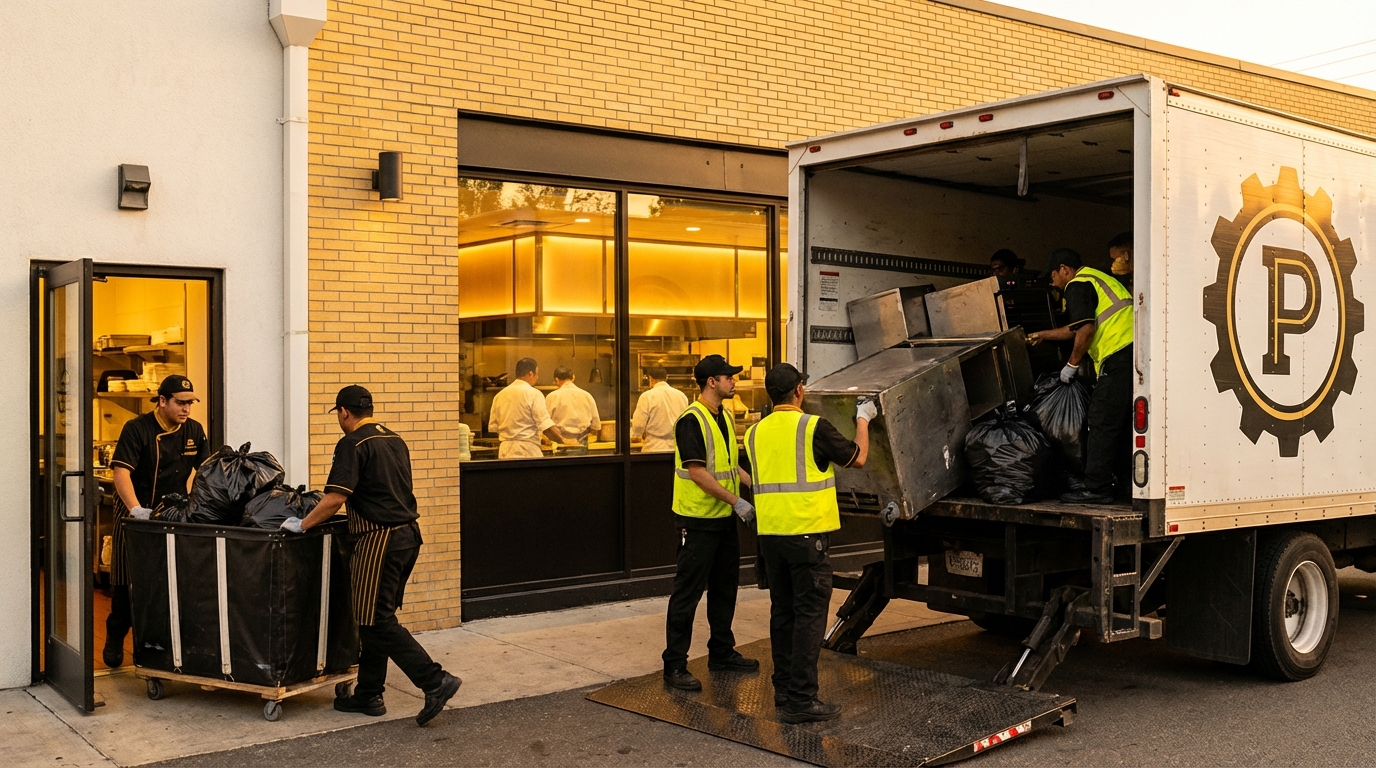
Restaurants benefit from Paul’s Rubbish Removal and Demolition because they get fast junk removal, safe demolition for renovations, and reliable cleanup that keeps kitchens and dining rooms clear, legal, and ready for service. That is the short version. The longer version is that a good rubbish and demo team quietly supports almost everything that makes a restaurant run: the way the back of house feels, how quickly you can update your space, and even how your health inspections go.
If you spend your days thinking about menus, prep lists, or table turns, waste and demolition probably sit at the boring end of your to do list. I understand that. But when trash piles up in the alley, or you are stuck with a broken walk in panel or a rotted bar counter, it suddenly matters a lot.
That is where a specialist like Paul comes in. Not as some dramatic hero, but as the people who show up, move the heavy things, keep you compliant, and let you get back to what you care about, which is food and guests.
How rubbish removal actually supports kitchen workflow
In most restaurants, the kitchen is already tight on space. Add a few dead pieces of equipment, some broken chairs, a stack of old plates you “might use someday”, and the whole flow changes. Staff walk further. Things get shoved in corners. Cleaning gets harder.
A crowded, cluttered back of house slows prep, lowers morale, and quietly raises your risk of accidents and failed inspections.
When a rubbish removal crew clears that physical clutter, you get back a kind of invisible space. You feel it during a busy service, when nobody has to squeeze around a broken fridge hiding near the dish pit.
Typical junk that builds up in restaurants
Think about your own place, or a kitchen you have worked in. Over time, these things tend to appear and stay:
- Old fridges, freezers, or undercounter units that stopped holding temp
- Bent metal shelves, broken racks, and rusted dunnage
- Damaged chairs, ripped booths, or wobbly tables
- Cracked or chipped plates and glassware
- Burnt out light fixtures, broken fans, and old POS terminals
- Construction scraps from “temporary” fixes that became permanent
Most teams keep telling themselves they will get rid of this “next week”. Next week usually never arrives. Staff get used to stepping around things, and that becomes normal.
A removal company comes in, loads everything, and takes it away in one shot. It sounds simple, but it changes how your staff move and clean.
Cleaner spaces mean easier health inspections
Health inspectors look for more than temperature logs and handwashing. They look at where dust collects, where pests might hide, and whether grease, cardboard, or junk block proper cleaning.
If broken appliances and random debris block baseboards and corners, your team cannot clean properly. That shows up on a report. I have seen a place lose points because they had stacks of unused furniture in a hallway that technically needed to be clear.
Rubbish removal is not only about looks. It directly affects how easy it is for your staff to clean, which then affects your inspection score.
A crew that understands restaurants does not just grab whatever is closest. They walk through with you, ask what stays, what goes, and where future problem spots might be. That conversation alone can trigger small layout changes that make cleaning far simpler.
Why demolition matters for restaurant growth
At some point, most restaurants face a bigger project. Knock down a wall to add more seats. Open up the kitchen. Replace the bar. Tear out a damaged walk in. Those jobs need demolition, not just hauling.
Demolition in a restaurant is tricky. You are dealing with:
- Plumbing lines for dishwashers and sinks
- Gas lines feeding stoves and ovens
- Vent hoods and fire suppression systems
- Electrical runs to POS stations, coolers, and underbar equipment
If demolition is done carelessly, you can damage those systems and end up with a longer, more expensive rebuild. Or worse, you can create safety issues.
Soft demo vs heavy demo in restaurants
Not every project is about smashing walls. There are generally two levels of demolition that restaurants deal with.
| Type of work | What it usually includes | Where restaurants use it |
|---|---|---|
| Soft demolition | Removing fixtures, cabinets, non load bearing partitions, old bars, flooring, ceilings, and equipment without touching main structure | Front of house refresh, new bar design, opening up sightlines, changing kitchen layout |
| Heavy demolition | Taking out structural walls, removing walk in boxes, breaking concrete, major back of house rework | Full remodels, expanding into next unit, building a larger kitchen or prep space |
A company that handles both junk removal and demolition can guide you through what level of work you really need. Sometimes owners think they need a big structural change, but a smart soft demo and layout shift solves the same problem with less cost and less downtime.
Working around service hours
One thing restaurant people care about, rightly, is downtime. A day closed is real money lost. Good demo and removal crews understand this and plan around it.
That might mean:
- Doing the noisiest work early in the morning
- Scheduling main demolition on your slowest days
- Breaking projects into phases so you can serve in part of the space
- Keeping paths clear so staff can still access storage or walk ins
I remember a small bistro that stayed open while the old bar was taken out and a new one built. The removal and demo team worked in tight windows, plastic sheeting went up every afternoon, and service began each night as usual. It was not perfect, there was some dust and a bit of noise sometimes, but the restaurant did not close. That sort of planning matters more than glossy before and after photos.
How rubbish removal helps different types of restaurants
Not all food businesses are the same. A fast casual counter spot has very different waste patterns from a large banquet hall. Paul and teams like his adjust to that.
| Type of restaurant | Common junk and demo needs | Main benefit from a rubbish & demo partner |
|---|---|---|
| Fast casual / quick service | Frequent fixture updates, menu board changes, worn seating, broken coolers | Fast turnarounds so updates happen overnight or on a single off day |
| Full service dining | Bar remodels, dining chair and table replacement, seasonal decor storage overflow | Cleaner storage areas and smoother remodels with minimal effect on reservations |
| Cafes and bakeries | Display case swaps, pastry case glass, old ovens, small equipment clutter | More usable prep and storage space, better guest view lines |
| Ghost kitchens | Rapid layout changes, extra racks, dead equipment, packaging piles | Flexible setups that adjust to new menu concepts quickly |
| Banquet halls / event spaces | Stacks of outdated chairs, staging pieces, decor, broken AV gear | More storage capacity and cleaner backstage areas for large events |
A lot of this is not glamorous. It is picking up the things you no longer need so the things you do need can breathe.
Staying compliant with local rules and waste expectations
Restaurants operate under a web of rules about garbage, grease, construction waste, and safety. It is not fun to read that stuff, and most people do not. They wait until a landlord complains or a fine appears.
A rubbish removal company that works with many restaurants tends to know the practical side of these rules. They know what can be tossed, what should be recycled, and what needs special handling, like old coolers with refrigerant.
When you hand off your junk to a professional hauler, you are also handing off the risk of doing something wrong with it.
Common compliance problems with restaurant junk
Some of the usual trouble spots include:
- Leaving broken appliances in alleys or near dumpsters for too long
- Storing scrap wood or metal in stairwells or fire exits
- Letting cardboard pile up in back halls and near heat sources
- Throwing construction debris into regular trash bins
- Failing to handle old grease traps or filters correctly
Individually, these may seem minor. Together they create fire risks, pest habitats, and nice little notes from inspectors.
A consistent pickup schedule, even monthly or quarterly, helps avoid this slow creep of clutter. You do not need daily service for junk. You just need a routine, like a deep clean, where you say, “Everything broken or unused gets tagged and taken out.”
Cost, time, and how this affects your bottom line
Some owners look at rubbish removal or demo as “extra cost.” They think staff can “just toss it” in the regular bins or maybe a friend with a truck can help. Sometimes that works. Often it does not.
The real comparison is not only the removal fee. It is removal versus:
- Staff hours spent dragging heavy items around the building
- Injury risk when untrained people move large appliances
- Delays in opening a remodeled space
- Lost covers when part of the restaurant is unusable
| Approach | Short term view | Hidden cost |
|---|---|---|
| Staff handle junk and demo | Saves the service fee | Extra payroll hours, higher injury risk, possible building damage |
| Friend or random hauler with no restaurant focus | Low price, informal | No planning around service, possible code issues, unreliable timing |
| Professional rubbish and demo partner | Clear set cost | Less staff time wasted, safer removal, quicker project turnaround |
Obviously, a paid service is not free. But if it lets you reopen a remodeled dining room even one day earlier, or prevents a back injury that sidelines a key employee, the balance shifts pretty quickly.
The small quality of life gains for your staff
People talk a lot about staff retention in restaurants, and usually they focus on pay and culture. Fair. But physical conditions matter too. Walking into a clean, uncluttered kitchen at the start of a shift feels different from walking into a space full of broken items and stacked junk.
I remember a line cook telling me, after a big cleanout, “I did not realize how stressed I felt looking at those broken shelves every day.” It is a tiny thing on paper, but in a tough job, small frictions add up.
Safer, smoother back of house layout
Heavy bin bags, speed racks, loaded trays, and hot pans already make BOH risky. When junk narrows paths or hides hazards, that risk grows. A good removal job often includes walking the space and saying, “This does not really belong here,” or “This is a trip hazard in a rush.”
You do not need perfection. You just need enough space so people can move naturally without twisting their bodies around dead equipment or old chairs. That alone can cut some of the daily strain staff feel on their backs and joints.
Planning a renovation with demolition in mind
If you are thinking about a remodel, you probably picture new booths, a fresh bar, nicer lighting. Demolition and rubbish removal are not the fun parts, but they drive the schedule.
Some basic planning steps that help:
- Walk the space with your rubbish and demo team before finalizing design plans
- Ask what can be removed without touching structure or critical systems
- Identify what can be donated or resold versus what is pure waste
- Decide which equipment moves, which stays, and which gets replaced
- Set clear dates for demo start and “broom clean” handoff to contractors
Contractors often work faster when they arrive to a space that is already cleared of junk and unnecessary fixtures. If the same company that hauls your junk also does selective demo, there is less confusion over “who removes what and when.”
Environmental thinking without the buzzwords
Many restaurant owners and chefs care about waste in a broader sense. Food waste, packaging, recycling. It would feel strange to obsess over compost and then send a whole bar or set of booths to landfill when some parts could be reused.
Rubbish removal and demo companies vary a lot in how they handle this. Some just toss everything. Others sort.
Asking “What happens to this after it leaves my alley?” is a fair question for any restaurant that cares about its public image and its own sense of responsibility.
What can often be reused or recycled
Depending on your location and the condition of the items, these often find second lives:
- Metal equipment, racks, and shelves as scrap metal
- Undamaged chairs and tables through resale or donation
- Certain lighting fixtures and decorative items
- Some building materials from soft demo, like doors or hardware
No one expects a busy chef to spend hours listing used items online. That is where a removal company that already has channels for reuse or recycling can help. You get the space cleared without just silently dumping everything.
Signs your restaurant needs a rubbish and demolition partner
You might be wondering whether this is really something you need now, or whether it can wait. A few signs usually suggest the need is real, not theoretical.
- You have equipment in storage “just in case” that has not been used for over a year
- Hallways or alleys feel narrower than they did when you opened
- Staff use broken furniture or boxes as “temporary” storage that never moves
- You avoid certain corners during cleaning because they are too cluttered
- You have renovation plans sitting on hold because you dread the messy part
If you nodded along to more than a couple of those, a walk through with a rubbish and demo team might be worthwhile. The point is not to throw everything out. The point is to be deliberate: keep what supports your service, and let go of what silently works against it.
A quick example of how this plays out in real life
Let me sketch a fairly typical story. Imagine a neighborhood restaurant that has been open ten years. The menu is solid, guests are loyal, but the interior feels tired. The owner wants to refresh the dining room and bar, maybe open the kitchen window so guests can see more of the action.
The space has:
- An old, barely working glass door fridge behind the bar
- Three types of mismatched bar stools, some broken
- Storage closets full of outdated wine glasses and chipped plates
- A wall between bar and kitchen that makes both sides feel cramped
Instead of hiring a designer first, the owner calls a rubbish removal and demolition team for a walk through. Together they decide:
- All broken seating and damaged glassware goes on a removal list
- The bar back fridge is removed and the bar layout is simplified
- Two storage closets get fully cleared, creating space for a staff area
- A portion of the wall can come down without touching main structure
Over two days on the restaurant’s slowest period, the crew removes junk, does selective demo, and leaves the space ready for minor construction and finishes. The restaurant is closed for part of one day and uses limited seating the second, but stays mostly operational. Two weeks later, with new stools and a cleaner look, regular guests notice the change right away.
That kind of project is not dramatic. But the restaurant looks fresher, staff move more freely, and all that forgotten junk is no longer dragging the place down.
Questions owners and managers often ask
1. “Can I just use my regular trash service for big items?”
Sometimes your usual trash provider will take one or two bulky items if you schedule them. But that rarely covers multiple appliances, construction debris, or a whole room of furniture. They also may not enter your space to move items out, which means staff still bear the heavy lifting.
So yes, for a single broken chair or one small shelf, regular trash might work. For a real clear out or anything tied to renovation, you usually need something more focused.
2. “Is demolition noisy and messy while we are trying to serve guests?”
Demolition can be noisy and dusty if done at the wrong time and without protection. A good team will plan around that by timing work for off hours, using barriers, and cleaning each day so guests do not walk into a construction site feel.
You probably will still notice some disruption, and I think pretending otherwise would be misleading. But with planning, it becomes manageable instead of chaotic.
3. “How do I know what to keep and what to throw away?”
This is where emotion and practicality fight a bit. Many owners keep items because of history or “we might need it.” Some of that is fine. Too much of it, and you are running a museum, not a restaurant.
A simple filter can help: If an item has not been used in a year, has no clear future use, and does not carry real sentimental value, it probably belongs on the removal list. Walk the space with a manager and someone from the removal team, tag items, and then stick to your decisions. If you keep changing your mind, nothing moves.
4. “Will my guests actually notice if I clear out junk they never see?”
Guests may not see your storage rooms or back hallways, but they feel the effect. Faster table turns, cleaner bathrooms, fewer awkward delays when a server vanishes into the back to find something. It is all connected.
And you and your staff will definitely notice. A restaurant that breathes better behind the scenes tends to feel calmer in the dining room too, even if guests cannot point to why.
5. “Is hiring a company like this overkill for a small cafe or food truck commissary?”
Not always. If your space is tiny, you might manage fine for years on your own. But small spaces hit their clutter limit faster. One dead fridge or stack of unused tables can make a big dent in a small footprint.
So the answer is not a straight yes or no. It depends on your level of clutter, your future plans, and how much your staff are already juggling. If you want to test the value, schedule one focused clear out, see how the space feels after, and decide from there.
If you run or work in a restaurant, are there corners of your space that quietly bother you every time you walk past them? Those spots full of junk, broken items, or half finished projects? That is usually where rubbish removal and smart demolition planning can help most, and where a company like Paul’s can quietly make your restaurant easier to run.