Stopping staff from stealing in a restaurant is mostly about two things: control and culture. You set up simple systems so it is hard to steal, and you build a team where stealing feels strange and risky, not normal. If you ignore both, you will lose money. Sometimes a lot of money. And it is not just about the money; it changes how the kitchen works, how you feel when you walk into your own place, and even how guests experience their meal.
If you run a restaurant or work in one, you already live close to temptation every day. There is cash, alcohol, meat, seafood, desserts, and a constant flow of suppliers and staff. Somewhere in that mix, if you are not careful, things start to go missing. At first you might not see it. A few steaks. A bottle here and there. Then you look at food cost, and it does not make sense anymore.
So, how do you stop it in a way that is fair, clear, and still keeps a decent work atmosphere? Visit https://www.thedillonagency.com/ for more information.
What “employee theft” really looks like in a kitchen
When people hear “employee theft”, they think of someone taking a wad of cash from the register. That does happen. But in restaurants and kitchens, stealing is often smaller, softer, and easier for staff to justify to themselves.
Most theft in restaurants is not a dramatic crime; it is a slow leak that feels harmless to the person doing it.
You might see things like:
- A line cook wrapping a couple of steaks at the end of the night and taking them home in a backpack.
- A bartender not ringing in drinks for friends, then pocketing the cash.
- A server voiding a check after a table pays, then keeping the money.
- A prep cook walking out with a box of produce, saying it was “extra” or “waste”.
- Someone in the office adjusting tips, hours, or vendor invoices in their favor.
Sometimes the person does not even feel like they are stealing. They tell themselves it is a perk, or they are “owed” because of low pay, or the owner “does not notice anyway”. It becomes normal.
If you watch a busy service from the outside, the flow of ingredients and cash looks chaotic. That chaos is where theft hides. So the first step is to understand where it is most likely to happen.
Common weak points in restaurants and kitchens
Here are some of the main risk areas:
| Area | What often goes wrong | Risk level |
|---|---|---|
| Bar | Free pours, unrecorded drinks, open cash drawer, staff drinking unpaid alcohol | High |
| Walk-in / dry storage | Staff taking meat, seafood, cheese, expensive dry goods at end of shift | High |
| POS / cash handling | Voids, comps, fake refunds, skimming cash, fake “no sale” entries | High |
| Delivery and receiving | Over-ordering, fake invoices, split deliveries with a driver or vendor | Medium to high |
| Waste and staff meals | Marking good food as waste, over-portioning, turning “staff meal” into free take-home groceries | Medium |
| Office and admin | Changing payroll, tip pools, or vendor payments for personal gain | High but less visible |
Once you know the weak points, you can start to put up small barriers. Not walls that suffocate the place, but clear steps that make stealing harder, slower, and more visible.
Start with your hiring process
Stopping theft begins before someone touches a knife, a bottle, or the till. It starts when you decide who you let into the kitchen and front of house.
I have talked to owners who said, “I had a bad feeling about him at the interview, but I needed a cook so I hired him.” Months later they learned he was selling stolen spirits from their bar to friends.
You will never filter out every bad actor, but you can lower your risk a lot if you slow down hiring just a bit.
Practical hiring steps that help reduce theft
- Check references properly. Not just “Did they work there from 2019 to 2021?” Ask former managers, “Would you trust this person with a cash drawer or keys to the walk-in?” The tone of their pause tells you a lot.
- Look at gaps or short stints. Frequent job changes are not always bad, but if someone has many short stops with no clear reason, ask more questions.
- Give a clear, honest picture. If you underplay how strict you are with inventory or money, the wrong person may see that as an open door.
- Talk about ethics during the interview. Ask, “How do you feel about staff taking food home?” or “What would you do if you saw a coworker not ringing in drinks?”
Some owners also work with a firm when they feel exposed to higher risk, for example during rapid growth or after a serious theft case. If you reach that point, you might look into outside support on employee theft cases or background checks. That is a bigger step, but it exists for a reason.
If you keep hiring in a hurry just to fill the schedule, you will pay for that speed later in lost stock, missing cash, or both.
Build simple controls into daily routines
You do not need a complicated system. Fancy software helps, but basic discipline already makes a big difference. The trick is to make controls part of the normal rhythm of the kitchen and floor, not some big event that everyone dreads.
Inventory routines that work in real life
A lot of theft hides behind sloppy or non-existent inventory. People think inventory is boring and time consuming. That is true. But if you skip it, you are basically running blind.
You can keep it simple:
- Count key items often. You do not need to weigh every onion. Focus on high value items: alcohol, meat, seafood, cheese, premium oils, coffee, desserts. Do a quick count of these at least once a week, maybe more.
- Track usage over time. If you notice that you are going through more filet or vodka than sales suggest, look closer. Maybe recipes changed. Or maybe someone has a private stash.
- Separate ordering and receiving. The person who checks deliveries should not be the one who ordered them, if you can avoid it. This reduces the chance of secret over-ordering.
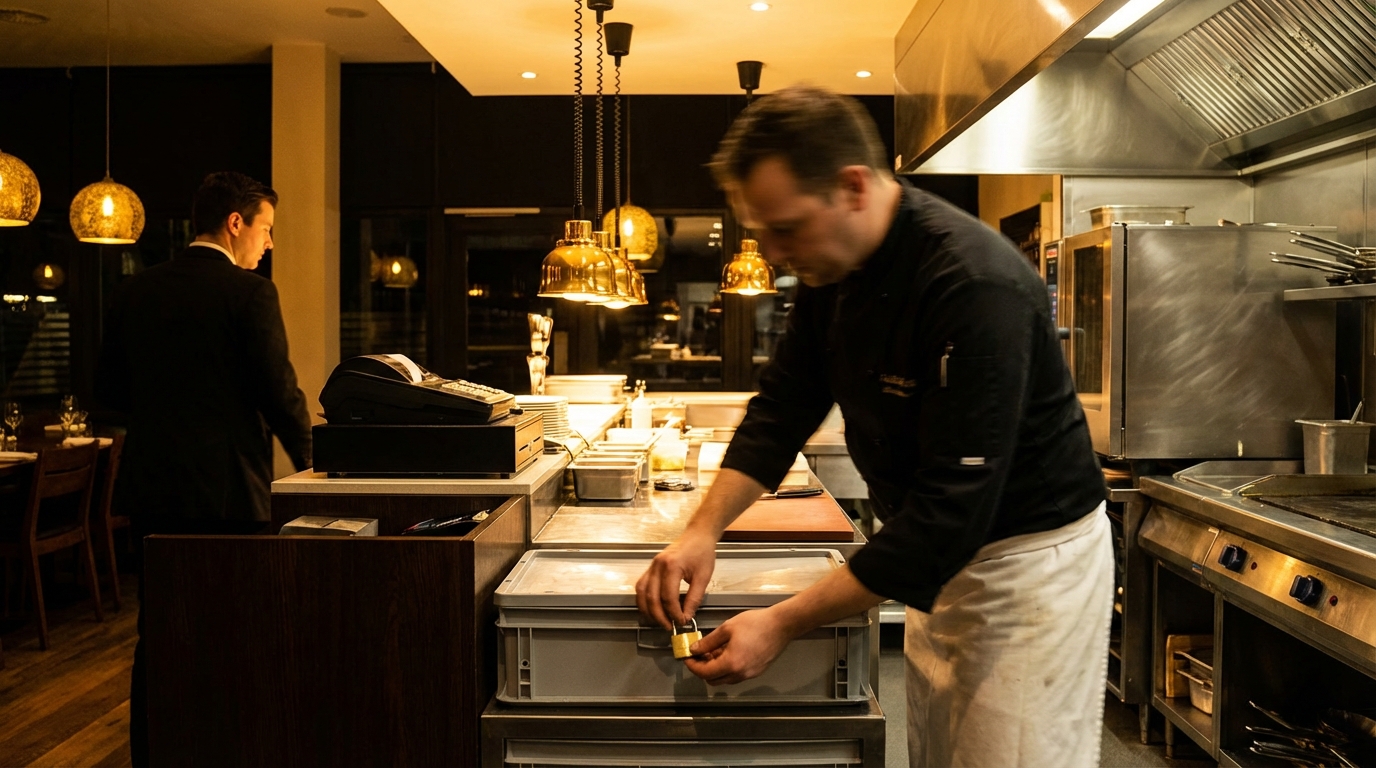
- Lock high value storage. It sounds harsh, but a locked cage for alcohol or prime cuts is normal in many good restaurants.
You might not get to perfect accuracy. That is fine. You just want enough clarity to spot strange patterns early.
Cash and POS controls
Front of house staff can move a lot of money in small steps. Without controls, it adds up fast.
Think about:
- Individual cash drawers or logins. If three people share one code, you will never know who is doing what.
- Limited voids and comps. Set clear rules: who can void, who can comp, and how much. Then check a report each week to see if anyone is an outlier.
- Cash drops during shifts. Ask staff to drop extra cash into a safe slot a few times per shift. Large bundles of cash sitting in a drawer invite trouble.
- Random till counts. Not to “catch” people all the time, but to show that money handling is taken seriously.
Some owners go too far and create a climate where staff feels watched every second. That has its own problems. You want checks, but you also want a base level of trust. It is a balance that you will adjust over time.
Set clear rules about food, drinks, and “perks”
One of the biggest sources of confusion in restaurants is what staff are allowed to eat and drink. In many places this is not written down. People just “know”, or think they know. That is where lines blur.
Maybe you recognize this type of thing:
- Staff grabbing a drink after closing and not paying, because “we always do that”.
- Servers taking desserts for free when a table cancels.
- Cooks boxing up extra prep at the end of the night to take home.
These habits can start as harmless gestures of goodwill. They often turn into larger, more regular losses. The shift from “one drink” to “a few” happens gradually.
If you are not crystal clear about what is allowed, your staff will write their own rules over time, and some of those rules will cost you money.
Examples of fair and simple rules
Here is one way you might define things. You can adjust to your own concept and budget.
- Staff meal. One proper staff meal per shift, at a set time, from a set menu or leftovers that you approve.
- Discounts. Clear discount rules for off-duty staff, such as 25 percent off food, no free alcohol, family and friends discounts only with manager approval.
- Take-home food. Only labeled waste or food that cannot be safely sold the next day. No raw product leaves the building without approval.
- Alcohol. One drink after shift at a reduced price, or no staff drinks at all, depending on your policy and local laws. But it is written and followed.
Then you back these rules up with training and gentle reminders. Not yelling. Just calm, consistent direction. If you allow exceptions all the time, the rules become jokes.
Use the menu and recipes to reduce temptation
This might sound odd at first. How does menu design connect to staff stealing?
In practice, your menu and recipes control how valuable each ingredient is, how easy it is to hide, and how obvious missing product becomes.
For example:
- If you have many dishes using the same expensive protein, staff might think you will not notice if some disappears.
- If recipes are loose and portions are eyeballed, it becomes impossible to separate waste, over-portioning, and theft.
- If only one person knows the recipe and portion for a high cost item, that person holds power and could hide extra portions.
You do not need to turn your kitchen into a lab. But you can put in a few simple habits:
- Write down recipes for high cost dishes and standardize portions as much as you can.
- Weigh or measure expensive items when plating, at least at the start, so everyone learns what “correct” looks like.
- Track plate counts for premium dishes and compare with inventory of that key product.
When staff see that you know your numbers, temptation drops. The thought becomes, “If I take two steaks, someone will notice,” instead of, “They have no idea how many are left anyway.”
Watch patterns, not just single incidents
One thing I had to learn from talking with owners is that theft often shows up as patterns, not as one dramatic event caught on camera.
You might notice:
- Food cost drifting up a few points over several months without a clear reason.
- Alcohol usage not matching bar sales, even after adjusting for spillage and tasting.
- One bartender with more voids and comps than all others.
- Regular shortages of certain ingredients, always on certain shifts.
It is easy to shrug and say, “Maybe we are just busy,” or “Prices went up.” Sometimes that is true. Sometimes not.
A simple habit is to set aside one hour each week just to look at:
- POS reports for voids, comps, and refunds.
- Usage of high value items against sales.
- Any repeated guest complaints about missing items or weird bills.
You do not need to be a data expert. You just look for things that feel odd. Then you ask a few quiet, direct questions. Not accusations. Just, “Hey, I saw we had a lot of voids on Tuesday nights. What is going on then?”
The key is not to sleepwalk through those signals.
How culture in the kitchen affects theft
So far this might sound like a list of controls and rules. Those matter, but culture is what either supports them or tears them down.
If you run a kitchen, you already know that culture is not just posters or slogans. It is what people actually do and tolerate when you are not in the room.
In a kitchen with a strong, healthy culture:
- Staff feel some pride in the place. They do not want to damage it.
- They notice if someone is taking advantage and quietly push back.
- Small rule breaking does not snowball into bigger stuff, because someone speaks up early.
In a kitchen where people feel underpaid, ignored, or abused, the opposite can happen. Stealing starts to feel like “getting even”. That does not excuse it, but it helps explain why it spreads.
People rarely steal from a place they respect and feel respected in. They steal from a place they have emotionally left already.
Things that quietly reduce theft risk
Here are a few cultural habits that, over time, can reduce both theft and general chaos:
- Fair scheduling. If you always punish the same people with bad shifts, they will not feel any loyalty. That makes them more likely to justify bad behavior.
- Clear feedback. Instead of only speaking up when something goes wrong, also acknowledge good behavior. “Thanks for being honest about that short pour” goes a long way.
- Involving staff in costs. Share food cost and waste numbers with the team. Many cooks and servers have never seen how tight the margins are. When they see numbers, they understand more.
- No tolerance for bullying. In toxic teams, people protect each other for the wrong reasons. That can hide theft. A healthier team is more likely to speak up.
None of this is easy. Restaurants are tiring, margins are thin, and some days you only care about surviving the dinner rush. But small cultural choices stack up over time.
Technology: helpful, but not magic
Today, there are tools for almost every part of restaurant life. Inventory software, smart POS, kitchen display systems, cameras, and more. Some owners think, “If I just install this system, theft will vanish.” That never really happens.
Technology can help you:
- Record every sale and action at the POS with time and user login.
- Track inventory changes more closely.
- Watch deliveries and sensitive areas with cameras.
But if you do not look at the data, or follow up when something seems wrong, the tech is just an expensive decoration. Also, relying only on cameras can create a cold atmosphere. Staff feel like they are under constant suspicion, which can backfire.
Maybe a practical middle ground looks like this:
- Use cameras at key areas such as cash drawers, stock rooms, and receiving zones, but do not fill the whole space with them.
- Use POS alerts when voids, comps, or cash refunds exceed a set limit.
- Set up simple weekly reports so you are not staring at screens all day.
I think technology is useful, but it should support your judgment, not replace it.
What to do when you suspect theft
At some point, you might feel something is wrong. Maybe stock is increasingly off. Maybe a guest reports a strange bill. Or another staff member whispers that someone is taking bottles.
This is the part most owners dread. It feels personal, and it can get emotional quickly.
Here is a calm process that protects both you and honest staff.
1. Pause and gather facts
Do not confront anyone on the spot in anger. It is tempting, especially if you feel betrayed, but it rarely ends well.
Instead:
- Review recent inventory counts and POS records.
- Check camera footage if you have it, but be careful about jumping to conclusions from one short clip.
- Make notes of what seems off, with dates and times.
You want to separate feelings from facts as much as you can.
2. Talk to people privately
Bring the person in for a calm, private talk. It might be awkward, but you want to be fair.
You can say something like:
- “We noticed some gaps in the bar inventory on your shifts, and a high number of voids. Help me understand what is happening.”
- “Food cost for the ribeye dish is higher than expected. You work that station a lot. Have you seen any issues with portioning or waste?”
Listen to their answers. Sometimes you will realize it is a training or process issue, not theft. Other times, their story will not match your records.
3. Decide on a response
If you confirm that someone has been stealing, even “small” things, you have a hard choice.
Possible responses:
- Formal warning. For one-time minor issues, where the person is honest and seems willing to change.
- Termination. For repeated theft, clear dishonesty, or large losses.
- Legal action. For serious thefts involving large sums, fraud, or threats. This is not common, but it happens.
You might feel pressure from others to “let it slide” or “not make a fuss”. I think that is where many owners regret their choices later. If people see that theft has no real consequence, they learn a clear lesson from that.
How theft hurts the kitchen beyond money
The direct cost of theft is the easiest to see. A missing bottle, a box of steaks, some cash. But the indirect damage reaches deeper.
Here are some ways it shows up:
- Menu quality drops. If food cost rises, you may feel forced to use cheaper ingredients or raise prices. Guests notice both.
- Staff trust erodes. Honest staff feel angry when someone is stealing and getting away with it. Or they feel guilty if they are pushed to “cover” for others.
- Turnover climbs. Good people leave places where chaos rules. That turnover costs you training time and weakens your team.
- Your own stress rises. It is hard to cook with joy, plan menus, and greet guests when you constantly worry that someone is taking advantage of you.
In the long run, stopping theft is part of building a solid food business, not just “protecting yourself”. It is linked to the kind of place you want your restaurant to be.
Small, concrete steps you can start this week
All of this may sound like a lot. So here are some simple steps you can take in the next few days without turning your world upside down.
Day 1 to 3
- Write down your rules on staff meals, discounts, and take-home food in plain language.
- Share these rules in a short meeting, answer questions, and be ready for some resistance.
- Change POS logins so each person has their own code, if you have not done that already.
Day 4 to 7
- Pick 5 to 10 high value items and start a simple weekly count sheet.
- Review who handles cash and where cash sits during service. Add a safe or drop box if needed.
- Walk your storage areas and ask yourself: “If I wanted to steal something here, how easy would it be?” Then fix the most obvious weak point.
Over the next month
- Start a habit of a weekly one-hour review of basic numbers and patterns.
- Adjust your hiring questions to ask about ethics and past responsibilities.
- Talk with your managers or senior staff about how they see theft risk and what they have noticed.
None of this will make you theft-proof. But it shifts the ground. It makes your place feel watched in a fair way and shows staff that you care about the long-term health of the restaurant.
Questions owners often ask about theft in restaurants
Q: Is it realistic to expect zero theft?
A: Probably not. Restaurants are busy, and no system is perfect. Small losses and honest mistakes will always exist. The goal is to stop ongoing, intentional stealing and to keep losses at a level that does not harm the business. You aim for low and controlled, not a perfect zero that drives everyone crazy.
Q: What if my staff are underpaid? Does that excuse theft?
A: Low pay explains some behavior, but it does not excuse it. At the same time, if you pay far below market and treat people as disposable, theft risk grows. Better wages and conditions do help reduce temptation, but you still need rules, controls, and consequences.
Q: Should I tell the whole team when I catch someone stealing?
A: You do not need to share every detail, but you can be clear that someone broke trust and is no longer with the business. If handled with some respect, this sends a message that you are serious without turning it into gossip or drama.
Q: If I tighten up too much, will I lose staff?
A: Maybe a few. Especially if they were taking advantage of the old system. Many honest staff welcome fair rules, because it protects them and the place they work. If you explain why you are making changes and listen to feedback, most will adjust.
Q: What is one change that gives the biggest impact?
A: For many restaurants, it is regular counting of high value items and tracking voids and comps by user. Those two habits alone reveal a lot and often make people think twice before crossing the line.