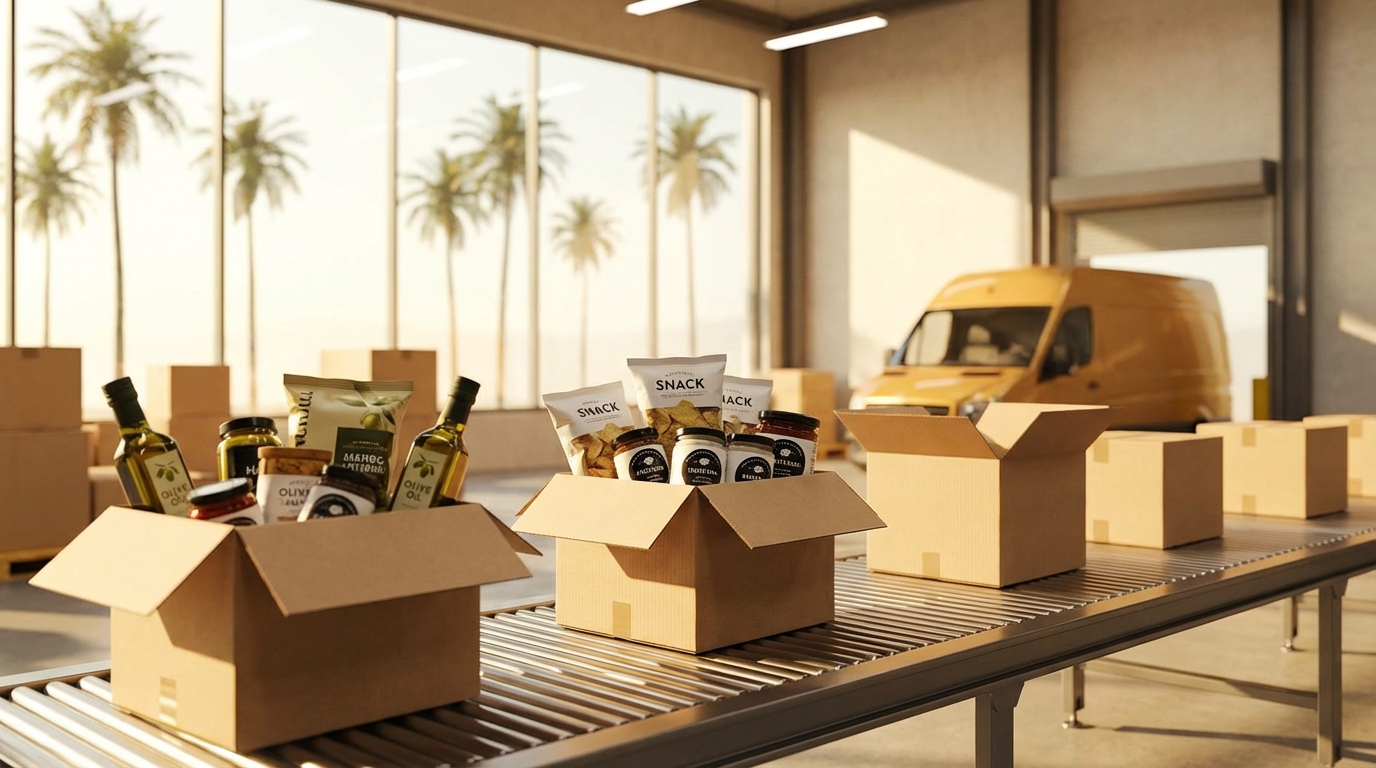
Food brands work with ecommerce fulfillment California providers so they can ship orders fast, stay on top of strict food rules, cut shipping costs, and keep customers happy without turning their kitchen or small warehouse into a packaging maze. If you are selling sauces, snacks, frozen meals, spices, or any food item online, a partner like 3PL California can handle storage, packing, and shipping, while you focus on recipes, quality, and brand story.
That is the short version.
The longer version is a bit more interesting, especially if you enjoy cooking or run a restaurant and you are curious how food actually travels to people who order online. It is not just boxes and barcodes. There is cold storage, use-by dates, packaging choices, bundle offers, and a lot of small details that can go wrong if nobody is paying attention.
Good ecommerce fulfillment for food brands is really about making sure the product that leaves the warehouse is as good as what left your kitchen.
Let me walk through how this works in California, why it matters, and where it connects back to actual food, not only logistics charts and inventory screens.
Why California is such a big deal for food ecommerce
California is a strange mix for food brands. On one hand, you have huge markets like Los Angeles, the Bay Area, San Diego, and a long list of smaller cities and college towns where people order food online all the time. On the other hand, you also have very strict rules for food storage, labeling, and handling.
If you are shipping from California, you get some clear benefits:
- Large population in one state, so your parcels do not travel very far
- Access to major ports for imported ingredients or packaging
- Strong cold-chain infrastructure for frozen and refrigerated products
- Plenty of carriers and shipping options to compare
But you also face some real pressure:
- Higher warehouse and labor costs compared to many other states
- Strict health codes for any food storage and packing activity
- Complex sales tax rules if you sell across states
So a food brand that starts in a home kitchen or a small commissary often hits a wall. You can only package so many jars or pouches yourself. You can drop off only so many parcels at the post office before you lose your whole day to shipping.
This is where ecommerce fulfillment in California steps in and starts to matter in a practical way.
What an ecommerce fulfillment partner actually does for a food brand
A lot of people think fulfillment is just someone else putting your product into a box and printing a label. That is part of it, but for food, the list is longer and more sensitive.
Storage that matches how real food behaves
Food is not like books or t-shirts. It spoils. It absorbs smell. It melts. It can break. The warehouse setup matters more than many new brands expect.
A good California fulfillment center for food will typically offer different storage zones, for example:
| Storage Type | Typical Use | Key Concern |
|---|---|---|
| Ambient (room temperature) | Spices, dry snacks, coffee, tea, shelf-stable sauces | Moisture control, odor transfer, pest control |
| Refrigerated | Dairy items, fresh sauces, some ready-to-eat meals | Stable temperature, cross-contamination |
| Frozen | Ice cream, frozen meals, frozen fruits and veggies | Constant low temperature, quick loading/unloading |
If you run a restaurant and have ever rearranged your walk-in fridge so things stop getting lost at the back, you already understand the basic idea. The difference is scale and tracking.
Inventory tracking with expiry dates, not just quantities
For food, the question is not only “how many units are left” but also “which batch expires first”. This is where terms like FIFO and FEFO appear.
- FIFO: First In, First Out. Older stock ships first.
- FEFO: First Expired, First Out. Products with the nearest expiry date ship first.
It sounds small, but if you send out newer stock first by mistake, older stock sits on the shelf and then you end up writing it off. I have seen brands lose a whole season of flavored snacks this way simply because no one set rules for expiry handling.
If your fulfillment partner does not track expiry dates and batches, you are the one who ends up paying for the waste.
Picking and packing orders so the product survives the trip
Now we reach the part customers actually see: the box, the insulation, the ice packs, the bubble wrap, the note, all of it.
For food, packaging choices are not just about looking nice on Instagram. They affect shelf life and safety. Some common details a fulfillment center in California should handle well:
- Using insulated liners for temperature-sensitive items
- Choosing the right number and type of ice packs
- Keeping heavy jars away from fragile bags or pouches
- Using tape and labels that hold up during summer heat
- Adding allergen notices or ingredient cards if needed
If you have ever opened a parcel with a smashed jar of sauce soaked into a bag of coffee, you know how fast a customer can go from curious to angry.
How this connects to people who love cooking and restaurants
You might be wondering, if you are more of a cook or restaurant person, why this behind-the-scenes fulfillment talk even matters. The answer is simple. Many of the products that inspire home cooks and restaurant menus today start as small online brands.
Think about some examples:
- A chef who bottles a special chili oil and sells it nationwide
- A bakery that freezes croissants and ships bake-at-home packs
- A restaurant that sells their spice blend to loyal guests
- A home cook who turns a family sauce recipe into an online brand
Every one of these ideas sounds romantic at first. Then the first hundred orders arrive. Then the first thousand. Suddenly there are packing tables everywhere, and the kitchen feels more like a shipping station than a creative space.
Fulfillment is not the glamorous part of food, but it is often the step that keeps a good product alive long enough to become known.
If you like discovering interesting condiments or snacks online, solid fulfillment is the reason those products show up fresh, not spoiled or broken. It keeps the connection between the recipe creator and the person tasting the final dish.
Where ecommerce fulfillment California really helps food brands grow
Let us look at some areas where a California-based fulfillment partner adds real value, beyond the usual “we ship orders for you” line.
Faster shipping to a large portion of your customers
California holds a big slice of the US population on its own. Add nearby states like Arizona, Nevada, Oregon, and you get a strong region for food ecommerce. Shorter shipping routes mean:
- Less time in transit for perishable items
- Lower chance of temperature abuse during summer
- More customers who can get 1 to 2 day delivery
If you sell frozen, chilled, or fragile food, those extra hours matter. A frozen meal sitting in a hot truck for four days is not the same as one delivered in one or two days.
Better control of cold chain for frozen and chilled products
Cold chain is the path your food takes while staying at the right temperature. This starts at your production site and continues through storage, packing, and shipping. Break that chain for a few hours and quality drops fast.
Many California fulfillment centers that specialize in food have:
- Refrigerated and frozen docks, so pallets do not sit in the sun
- Insulated packing areas
- Processes for pre-chilling boxes and gel packs
- Carrier pick-ups timed to reduce waiting in uncooled trailers
You might think this level of detail is overkill. Then you send ice cream samples to food bloggers and they arrive as soup. People remember that, and not in a good way.
Cost, margins, and that tricky balance between quality and price
Food margins are often thin. Packaging, ingredients, shipping, returns, all of it eats into the small gap between your production cost and what the customer pays. Many founders, honestly, underestimate fulfillment costs when they start.
Typical cost areas food brands deal with
Here is a simplified view of cost buckets that hit your bottom line when you work with a fulfillment provider.
| Cost Type | What It Covers | Why It Matters For Food |
|---|---|---|
| Receiving | Checking, counting, and logging incoming inventory | Catch mislabels, damaged cases, wrong batches |
| Storage | Shelf, bin, pallet, or cubic footage fees | Cold storage usually costs more than ambient |
| Pick and pack | Labor to pick items and pack an order | Extra care needed for fragile or cold items |
| Packaging | Boxes, tape, inserts, insulation, ice packs | Heavier and bulkier for chilled and frozen foods |
| Shipping | Carrier charges to move the parcel | Speed and weight have a big effect on cost |
| Special projects | Kitting, relabeling, bundling, custom work | Common for gift sets or seasonal boxes |
I think food brands sometimes focus so much on ingredient quality and branding that they treat logistics as an afterthought. That is understandable. Recipe testing is more fun than reading rate sheets. But if you ignore fulfillment costs, your pricing model falls apart when you reach volume.
Kitting, gift boxes, and bundles for food brands
A lot of food brands do not just sell one item. They sell sets: tasting packs, starter kits, sampler boxes, “try all our flavors” bundles. Assembly of these kits takes time, space, and some attention to detail.
Why kitting matters for your customer experience
Think about a box of three sauces for home cooks. The customer opens it and finds:
- Three correct sauces, not a random mix
- A recipe card or serving suggestion
- Maybe a small thank-you note or a QR code for more recipes
Now imagine the same box with one wrong flavor and no context. The whole product feels less thoughtful. Even if the actual liquid inside the bottle is identical.
Good fulfillment centers treat kitting as a process, not a last-minute job. They work from clear instructions, sample kits, and they usually scan items to confirm that each kit has the right content.
How ecommerce systems connect: from your online store to the warehouse floor
On the tech side you want your online store, marketplace accounts, and inventory to talk to the warehouse. If you use tools like Shopify, WooCommerce, Amazon, or Etsy, most fulfillment partners in California will have apps or connectors so orders flow in automatically.
Why this matters more for food than for other products
Food has expiry dates and sometimes seasonal flavors. When your store and your warehouse are not connected well, a few annoying things can happen:
- You sell items that are actually out of stock
- You keep a seasonal flavor listed long after it runs out
- You undercount inventory and reorder too early
All of these problems cost money, but they also confuse your customers. They order a pumpkin spice spread in December, and you send an apology instead of a jar. Not a great moment.
Shipping choices: speed, cost, and food safety
There is no single perfect shipping method for all food brands. The right mix depends on the product and your audience. Some people do not mind getting shelf-stable snacks in five days. Others expect ice cream to arrive frozen by the next afternoon.
Questions to ask yourself about shipping
Before you even talk to a fulfillment provider, it helps to be honest on a few points:
- Can my product survive 3 days in transit during summer without refrigeration?
- Do I want to offer overnight shipping, or is that too expensive for my price point?
- Am I willing to restrict shipping zones during hot months?
- What is my refund policy if products arrive melted or spoiled?
Many brands promise fast and perfect shipping without really testing it. I think it is better to run a few trial shipments, even to yourself or friends in other states, and see how the food arrives.
Real test orders beat assumptions. Ship your own product to a far zip code and open it like a customer would.
Regulation, labeling, and staying out of trouble
Food brands in California have to deal with health departments, FDA rules, and local requirements. While your fulfillment partner is not your lawyer or food safety consultant, they still touch your product and packaging, so they have to follow certain rules.
What you should expect from a food-friendly fulfillment partner
Some basic indicators that a fulfillment center takes food seriously:
- Clean, organized storage areas with clear separation from non-food items
- Pest control program and records
- Temperature logs for chilled and frozen zones
- Rules for handling damaged or returned food products
- Policies to avoid cross-contact for allergens where possible
If a provider treats your hot sauce the same as random hardware parts, that is a red flag. Food has different risks. A broken seal is not just annoying. It can be unsafe.
Common mistakes food brands make with ecommerce fulfillment
It is easy to say “just find a good partner and you will be fine”, but brands still run into predictable problems. Let me point out a few that come up a lot, and where I think some people have blind spots.
1. Waiting too long to move out of self-fulfillment
At the start, packing your own orders makes sense. You learn what customers order most often, you see how the packaging holds up, and you save money. But there is a tipping point where your time is better spent on product and marketing, not loading tape guns.
A rough sign you waited too long is when:
- Your kitchen or backroom is stacked with boxes and labels
- You avoid new product tests because you cannot handle more packing
- Customer emails pile up because you are at the post office all day
I am not saying you must outsource as soon as possible. Some people actually enjoy the packing part for a while. But if shipping tasks start blocking your growth, that is a problem.
2. Ignoring packaging weight and size
This one feels small at first, then turns into a real cost leak. If your box is larger than needed, or your ice packs are heavier than they should be, your shipping cost climbs for every single order.
Work with your fulfillment partner to test box sizes and packaging formats. Sometimes going from a 12 inch box to a 10 inch one saves a couple of dollars per shipment. Over hundreds or thousands of orders, that is a lot of money that could go into better ingredients or marketing.
3. Underestimating summer heat
Heat is the quiet enemy of food shipping. A chocolate bar that ships perfectly in March can arrive as a slab in August.
Food brands often test shipments in mild weather and assume they will behave the same year-round. Then a heatwave hits and suddenly customer complaints spike. Planning for seasonality with your fulfillment partner is not optional for temperature-sensitive products.
How restaurants can use ecommerce fulfillment to extend their brand
Restaurants are in a unique position. They already have brand recognition, recipes, and loyal guests. But their reach is limited by the walls of their dining room and maybe a local delivery radius. Ecommerce fulfillment lets them send a piece of their menu further.
Common products restaurants ship
- House sauces and condiments
- Spice mixes and rubs
- Ready-to-heat frozen dishes or meal kits
- Branded pantry items like pickles, oils, or syrups
Some restaurants try to handle this shipping from their own kitchen or storage room. It seems logical at first: you already have staff and a space. Yet restaurant kitchens are designed for fast service, not cartons and carrier labels.
By offloading shipping to a fulfillment partner, restaurants can send products nationwide without turning their prep area into a warehouse. That leaves more room for cooking and service, which is the main reason they exist in the first place.
What to look for in a California ecommerce fulfillment partner for food
Even if this whole topic feels a bit dry, choosing the right partner is one of those decisions that will either quietly support you or cause endless headaches later.
Key areas to check
- Food experience
Ask what types of food they already handle. Dry only, or also refrigerated and frozen? - Storage and handling standards
Visit if you can. Look at cleanliness, organization, and how they handle spills or broken items. - Technology
Do they connect easily with your ecommerce platform? Do they track expiry dates and batch codes? - Shipping options
Can they offer reliable 2 day service to your main regions? What about insulated packaging? - Communication
When something goes wrong, who do you talk to? How fast do they respond?
Sometimes a smaller, more focused fulfillment partner will care more about your food brand than a huge warehouse that stores everything from toys to car parts. Bigger is not always better here. That might sound obvious, but it is easy to get impressed by glossy sales decks and forget the basic question: “Will this partner take care of my product the way I need?”
How better fulfillment shapes customer loyalty for food brands
Let us zoom out for a moment. Why does all this behind-the-scenes detail matter to the person who just wants tasty food at home?
What customers actually notice
Most customers never think about fulfillment directly. They notice outcomes, such as:
- Did the parcel arrive on time, or at least roughly as promised?
- Did everything inside look clean, intact, and well packed?
- Did chilled or frozen products feel properly cold?
- Did any items leak, break, or explode during transit?
If those boxes are checked, they focus on flavor. Then they tell friends, post photos, or reorder. If those basics fail, your recipe hardly gets a chance to speak for itself.
So fulfillment is not just logistics. It directly affects how people remember their first taste of your brand. That first touch at the door can make the difference between a one-time purchase and a long-term fan.
One last thing: asking the right questions before you grow
Food brands are usually started by people who care about taste and quality. Logistics comes second, or third. I think that is fine at the beginning, but before your volume jumps too high, it helps to ask a few hard questions:
- Can my current setup handle double the orders without delays?
- Do I have a clear view of inventory and expiry dates?
- Are customers happy with shipping speed and condition right now, or just tolerating it?
- Am I spending time on packing that would be better spent on recipes, content, or restaurant service?
Sometimes the honest answer is that you are not ready to outsource yet. That is fine. In other cases, you realize you are already past the point where a fulfillment partner would help, and you are just holding on because change feels risky.
So maybe the more useful way to end this is with a simple question and answer.
Q: How do I know if ecommerce fulfillment in California is worth it for my food brand?
A: Start with three checks. First, run the numbers. Compare your current cost per order, including your own time, with what a specialized fulfillment partner would charge. Second, look at your customer feedback around shipping and condition of products. If complaints are creeping up, that is a signal. Third, think about your plans. If you want to grow beyond your local area or current volume, you probably need support that goes beyond your own packing table. If all three areas point in the same direction, then working with a California ecommerce fulfillment partner is not just an option, it becomes part of how your food brand can stay fresh, reliable, and actually enjoyable to run.